






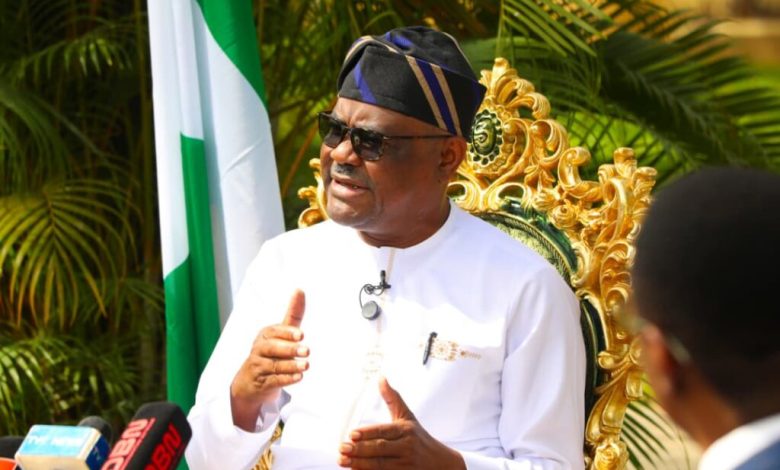
 Amnesty International has issued a sharp rebuke of Federal Capital Territory Minister Nyesom Wike following what it described as a “reckless and violent” comment directed at a journalist during a live television appearance—an incident that is already reigniting concerns about press freedom and political intolerance in Nigeria.
In a statement posted on its official X (formerly Twitter) account on Saturday, Amnesty International said Wike’s remark—“If there’s any way to break the screen, I would have shot him…”—crossed a dangerous line, particularly given his position as a senior government official. The group warned that such language, even if not intended literally, could embolden hostility toward journalists and contribute to a climate where media workers feel increasingly unsafe.
A Dangerous Signal from the Top
Amnesty’s criticism is rooted not just in the words themselves but in their broader implications. In Nigeria’s already tense media environment, statements perceived as threatening from high-ranking officials can carry weight beyond the moment.
“Such reckless rhetoric risks normalising violence against journalists,” the organisation said, adding that it raises “serious concerns about the safety of media practitioners.”
The group also pointed to potential breaches of broadcasting standards, urging the Nigerian Broadcasting Commission to investigate and enforce existing rules governing on-air conduct.
Press Freedom Under Pressure
While Nigeria operates a vibrant and often adversarial press, tensions between public officials and journalists are not new. From verbal confrontations to occasional physical harassment, reporters—particularly those covering politics—frequently navigate a hostile landscape.
Incidents like this matter because they reinforce a pattern. When public office holders resort to combative or violent language, it can signal to supporters and security agencies alike that the press is an adversary rather than a democratic institution.
That perception has real-world consequences. Journalists in Nigeria have, in recent years, reported intimidation, arbitrary arrests, and, in extreme cases, physical attacks—often linked to their reporting on government actions or political actors.
What Is Known—and What Is Not
At the centre of the controversy is a televised interview during which Wike allegedly made the remark. As of now, there has been no official clarification or retraction from the minister. It is also unclear whether the comment was made in frustration, jest, or as part of a broader exchange—details that could shape public interpretation but do not diminish the seriousness of the language used.
No regulatory action has yet been announced by the broadcasting authorities.
Calls for Accountability
Amnesty International has demanded that Wike publicly withdraw the statement and apologise, stressing that public officials have a heightened responsibility to model restraint.
“Mr Wike must withdraw his violent statement immediately and apologise,” the organisation said.
The call places pressure not only on the minister but also on regulatory bodies and the federal government to signal where they stand on the issue.
Why This Matters Now
The controversy comes at a time when Nigeria’s democratic institutions are under scrutiny, particularly regarding accountability and civic freedoms. The media remains one of the few avenues for public scrutiny of power, and any perceived threat—verbal or otherwise—can have a chilling effect.
For ordinary Nigerians, the implications are indirect but significant. A weakened or intimidated press ultimately limits access to information, reduces transparency, and narrows the space for public debate on issues that affect daily life—from governance in Abuja to service delivery across the states.
What to Watch
The next steps will be telling. Whether Wike responds with a clarification or apology, and whether the Nigerian Broadcasting Commission takes any action, will shape how seriously such incidents are treated going forward.
Equally important will be the reaction from media organisations and civil society groups, whose responses often determine whether such moments fade quickly or become catalysts for broader conversations about press freedom and political accountability in Nigeria.