










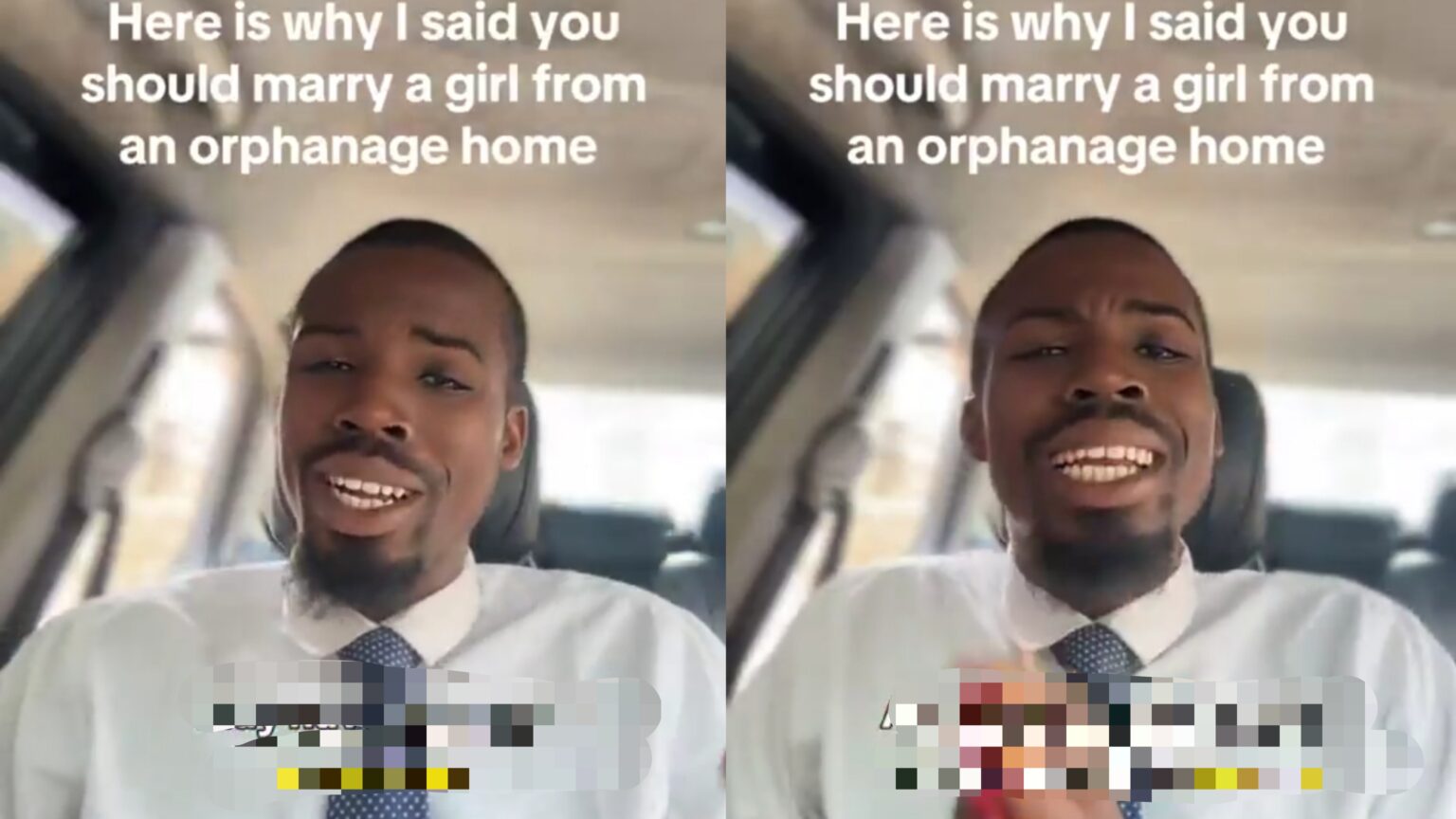
 A viral video circulating across social media platforms has triggered heated debate in Nigeria’s digital space after a man advised men to consider marrying women from orphanage homes, claiming such unions are more likely to be “peaceful” due to reduced family pressures.
The comments, which quickly spread across TikTok, X, and Facebook, have been widely condemned by some users as insensitive and reductive, while others argue they reflect frustrations some men express about extended family interference in marriages.
A statement that sparked outrage and debate
In the now-viral clip, the man insisted that his position was based on personal observation rather than an attempt to demean anyone.
“As a man, if you want to get married, marry a girl from an orphanage home if you want to have peace,” he said. “Otherwise, there are a lot of problems you may have in your marriage.”
He further argued that some marriages become strained due to financial expectations from extended family members of the wife, claiming that women without such family ties might reduce those pressures.
“Instead of you to marry a woman that will be giving you problems… it is better for you to marry a girl from an orphanage home or an orphan,” he added.
However, he also warned against exploitation, stressing that orphaned individuals must not be taken advantage of. “If they get you arrested, you definitely go for it,” he said, cautioning that legal consequences apply where abuse or manipulation occurs.
Marriage, family pressure, and a sensitive Nigerian context
In Nigeria, marriage is often viewed as a union between families rather than just individuals. Extended family expectations — including financial support, cultural obligations, and communal responsibilities — frequently shape marital dynamics. This reality has long been a source of tension in some relationships, particularly in urban areas where economic pressures are already high.
However, experts and social commentators have repeatedly warned against generalisations that reduce women — or any group — to perceived “advantages” in marriage negotiations.
Orphanhood, in particular, is a sensitive social issue in Nigeria, where many children lose parents due to poverty, conflict, or health-related causes. Advocacy groups have consistently stressed the need for dignity, protection, and equal treatment of orphans, rather than framing their circumstances as relational “benefits.”
Backlash over tone and implications
While some online users interpreted the man’s comments as a critique of excessive family interference in marriages, many others accused him of promoting a harmful stereotype that could expose vulnerable women to manipulation.
Critics argue that framing orphaned women as preferable marriage partners risks reinforcing social stigma and could unintentionally encourage exploitative behaviour, even if the speaker warned against it.
Others, however, say the viral reaction reflects a broader conversation about the pressure extended families can place on young couples — a long-running issue in many Nigerian households that often remains unspoken until conflicts arise.
Legal and ethical concerns
The speaker himself acknowledged the legal risks of exploiting vulnerable individuals, noting that marriage must be based on mutual consent, love, and understanding.
“You need to understand that going for orphanage girl is not an automatic fact… there must be an establishment of love,” he said, attempting to clarify his position.
Despite this disclaimer, legal and social commentators online have pointed out that intent does not erase the potential harm of framing vulnerable groups in instrumental terms.
What happens next
As the video continues to circulate, it adds to Nigeria’s ongoing social media-driven debates about marriage expectations, gender roles, and family interference in relationships. While no official response has been issued by regulatory or advocacy bodies, the controversy reflects how quickly personal opinions can escalate into national conversations in the digital age.
What remains to be seen is whether the discussion will shift toward constructive engagement on marital pressures in Nigerian society — or remain another cycle of viral outrage without deeper policy or cultural reflection.