










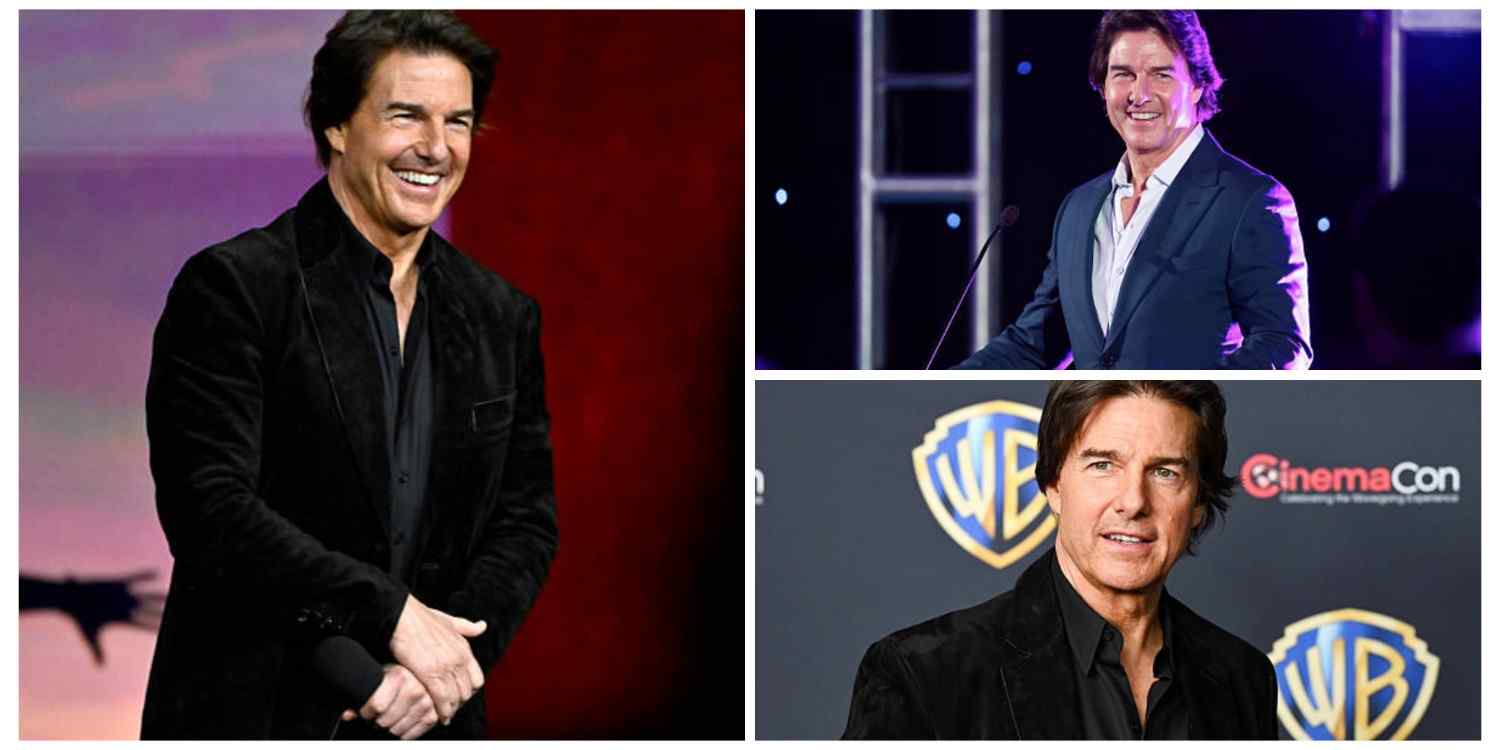
 Few actors have shaped modern Hollywood’s commercial and cultural identity as consistently as Tom Cruise. More than four decades after his debut, Cruise remains a defining figure in global cinema—not merely for longevity, but for his ability to repeatedly reinvent his appeal while anchoring some of the industry’s most profitable films.
As of 2025, his movies have grossed over $13.3 billion worldwide, placing him among the highest-earning actors in history. Yet beyond the numbers lies a more significant story: Cruise has become a one-man institution in an era where traditional movie stardom is increasingly diluted by streaming platforms and franchise-driven casting.
Early life: instability and ambition
Born on July 3, 1962, in Syracuse, New York, Cruise—originally Thomas Cruise Mapother IV—grew up in a household marked by frequent relocations and financial strain. He attended about 15 schools in 14 years, a level of instability that shaped both his discipline and adaptability.
For a brief period, he considered joining the Catholic priesthood, enrolling in a seminary in Cincinnati before leaving after a year. That early pivot hinted at a pattern that would define his life: a willingness to abandon one path entirely in pursuit of another.
By the time he graduated from Glen Ridge High School in 1980, his focus had shifted decisively to acting.
Breakthrough and rise to global fame
Cruise’s early roles in films like Endless Love (1981) and The Outsiders (1983) positioned him as a promising young actor, but it was Risky Business (1983) that turned him into a breakout star.
His ascent accelerated with Top Gun, where he played a U.S. Navy fighter pilot. The film’s success not only made Cruise a household name but also established a template for the high-adrenaline, charisma-driven roles he would refine over decades.
Through the late 1980s and 1990s, he balanced commercial appeal with critical ambition. Performances in Born on the Fourth of July and Jerry Maguire earned him Academy Award nominations, while films like A Few Good Men and Interview with the Vampire showcased his range.
The “Mission: Impossible” era and reinvention
Cruise’s most enduring contribution to cinema may be the Mission: Impossible franchise, which began in 1996. As Ethan Hunt, he redefined action stardom by performing increasingly dangerous stunts himself—a strategy that has become central to his brand.
Unlike many actors whose franchises outgrow them, Cruise has remained the defining force behind Mission: Impossible, guiding its evolution into one of the most successful action series globally.
This hands-on approach to filmmaking—particularly his insistence on practical effects—has distinguished him in an industry increasingly reliant on CGI.
A career that defied industry shifts
In the 2000s and 2010s, Cruise continued to adapt, working with major directors like Steven Spielberg on Minority Report (2002) and War of the Worlds (2005), while also taking risks with roles in Collateral (2004) and Tropic Thunder (2008).
His 2022 return in Top Gun: Maverick proved particularly consequential. Released after the COVID-19 pandemic disrupted cinemas worldwide, the film was widely credited with drawing audiences back to theatres—an outcome that industry analysts say helped stabilise box office revenues during a fragile recovery period.
That impact goes beyond Hollywood. In markets like Nigeria, where cinema chains rely heavily on blockbuster imports, such films directly influence ticket sales, employment, and the viability of theatrical releases.
Awards, recognition and influence
Cruise has received numerous honours, including three Golden Globe Awards and multiple Academy Award nominations. In recent years, his recognition has extended beyond acting.
In December 2024, he received the United States Navy’s Distinguished Public Service Award for his contributions to military representation in film. By March 2025, he had also been awarded the British Film Institute Fellowship, one of the highest honours in global cinema.
These accolades reflect not just artistic merit but his broader cultural influence.
Personal life and public scrutiny
Cruise’s personal life has often attracted as much attention as his films. His marriages to actresses Nicole Kidman and Katie Holmes, along with his high-profile relationships, have kept him in the public eye.
Equally significant is his long-standing association with the Church of Scientology, which has drawn both support and criticism. The relationship has periodically influenced public perception of Cruise, particularly in Western media.
Wealth, control and longevity
By 2026, Cruise’s net worth is estimated at around $600 million, largely built on backend deals, production roles, and a consistent ability to deliver box office hits.
Unlike many actors, he has maintained unusual control over his projects, often serving as both star and producer. This dual role has allowed him to shape not just performances but the direction of entire franchises.
What his career means today
Cruise’s continued dominance raises a broader question about the future of movie stardom. In an era increasingly driven by intellectual property rather than individual actors, he remains one of the few performers capable of drawing audiences based on name recognition alone.
For the global film industry—including Nigeria’s growing cinema market—this matters. His films often set performance benchmarks that influence distribution strategies and investment decisions.
What next?
With Mission: Impossible—The Final Reckoning (2025) signalling a possible turning point, attention is shifting to what Cruise does next. Whether he continues pushing physical limits or transitions into more behind-the-scenes roles will shape the next phase of his career.
What remains clear is that Cruise is no longer just a movie star. He is a system unto himself—one that has repeatedly adapted to industry disruption and, in many cases, outlasted it.