








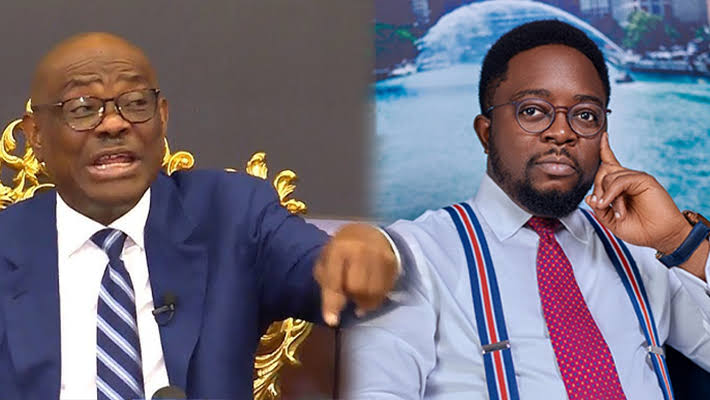
Nigeria’s already fraught political atmosphere took a sharper turn this week after the Minister of the Federal Capital Territory, Nyesom Wike, said he “would have shot” a television anchor over comments about the country’s democratic trajectory—remarks that, even when later softened, have triggered fresh concerns about intolerance of dissent and the shrinking space for critical journalism.
Wike made the statement during a media interaction in Abuja while reacting to comments by Channels Television anchor, Seun Okinbaloye, who had warned on Politics Today about the dangers of a weakening opposition ahead of the 2027 elections. The minister’s choice of words—particularly in a country with a long history of political violence—has drawn criticism from media professionals and civil society groups, who argue that such rhetoric, even if figurative, risks normalising hostility toward journalists.
A Flashpoint Over Journalism and Power
The controversy stems from Okinbaloye’s on-air remarks questioning whether Nigeria is drifting toward a de facto one-party system. He pointed to internal crises within opposition parties, especially the African Democratic Congress (ADC), warning that a lack of competitive politics could undermine democratic accountability.
Wike, however, accused the journalist of abandoning professional neutrality by expressing a personal opinion during an interview. “If there is any way to break the screen, I would have shot him,” the minister said, before clarifying that he did not mean the statement literally but was angered by what he described as a breach of journalistic standards.
His clarification has done little to quiet criticism. For many observers, the issue is less about literal intent and more about tone and power dynamics: when a senior government official invokes violence—however rhetorically—against a journalist, it raises questions about how criticism is received at the highest levels of government.
The Deeper Political Context
The exchange comes at a sensitive moment in Nigeria’s political cycle. With less than two years to the next general elections, the opposition landscape is increasingly fragmented. The Independent National Electoral Commission (INEC)’s recent decision to derecognise the leadership of the ADC following a court ruling has intensified uncertainty around one of the parties seen as a potential coalition platform.
The ADC has rejected INEC’s position, describing it as questionable and vowing to proceed with its internal processes. The presidency, in turn, has warned the party against defying the electoral body, calling any such move “lawless.”
This standoff underscores a broader concern among analysts: that institutional decisions, even when legally grounded, can have political consequences that reshape the balance of power. In this case, the weakening of an opposition platform—whether by internal crisis or regulatory action—feeds into fears that the ruling party could consolidate dominance by default rather than through competitive strength.
Why This Matters Now
For ordinary Nigerians, the debate may appear distant, but its implications are immediate. A less competitive political environment often translates into weaker accountability, fewer policy alternatives, and diminished leverage for voters. At the same time, tensions between government officials and the media can influence how freely information circulates—especially on contentious issues such as governance, elections, and public spending.
Nigeria’s democratic history offers cautionary lessons. From military-era press crackdowns to more recent disputes between regulators and media houses, the relationship between power and the press has often been uneasy. While the country has sustained over two decades of uninterrupted civilian rule, concerns about democratic backsliding—particularly around institutions and political pluralism—have persisted.
What Is Known—and What Isn’t
What is clear is that Wike made the remark and later attempted to walk it back, framing it as an expression of frustration rather than a threat. It is also established that INEC has taken a position on the ADC leadership dispute, and that both the party and the presidency are holding firm.
What remains uncertain is how these developments will evolve. Will INEC’s stance withstand legal and political challenges? Can opposition parties reorganise in time to mount a credible challenge in 2027? And perhaps most immediately, will this episode lead to a broader reckoning over the boundaries between political authority and media freedom?
What to Watch
In the coming weeks, attention will likely focus on three fronts: legal challenges to INEC’s decision on the ADC, reactions from media and civil society organisations to Wike’s comments, and signals from other political actors about the health of Nigeria’s multi-party system.
For now, the episode serves as a reminder that Nigeria’s democratic stability depends not only on elections, but on the everyday interactions between power, institutions, and those tasked with holding them to account.