









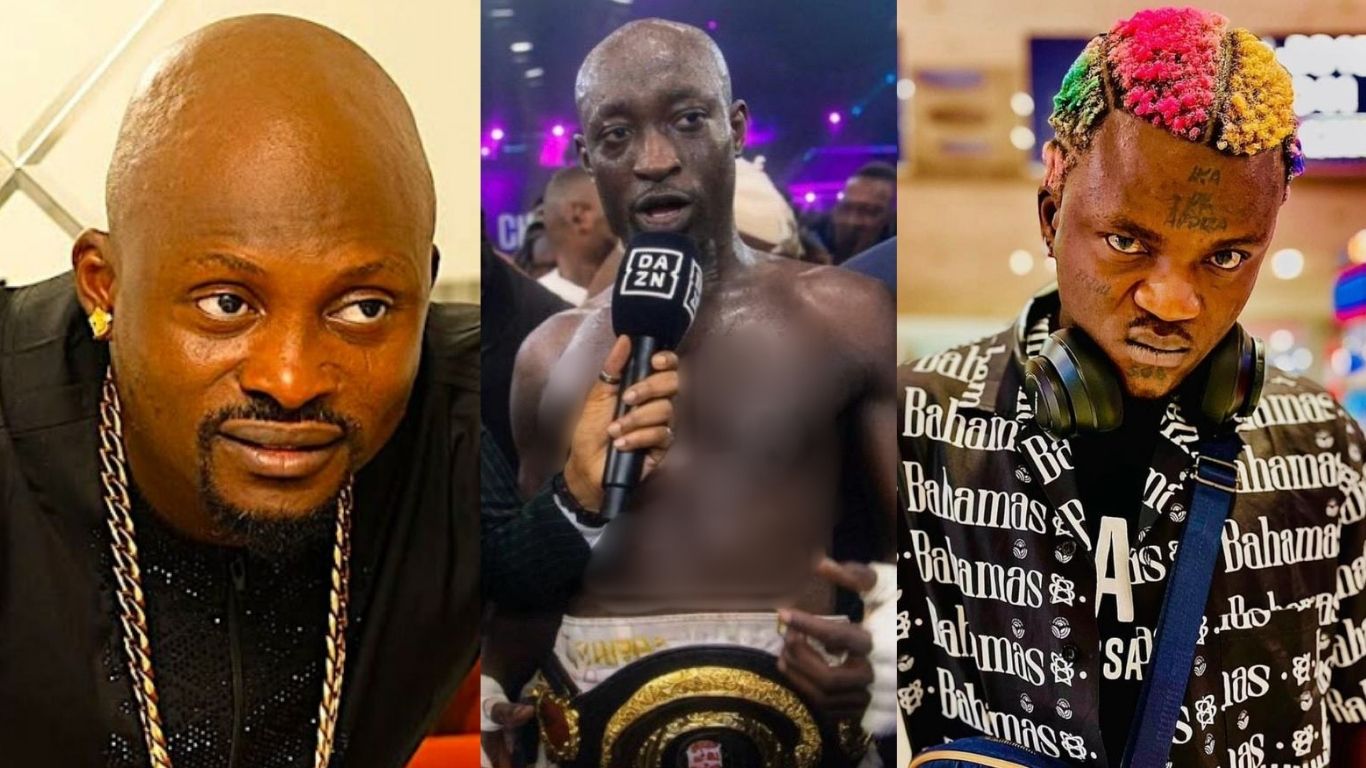
 Nollywood actor and entertainer Jigan Baba Oja has stirred fresh conversation online after claiming he pioneered Nigeria’s emerging “entertainment boxing” scene, following the recent celebrity bout between singer Portable and content creator Carter Efe.
His comments, posted on Instagram shortly after the widely circulated fight, have reopened discussions about celebrity boxing as both entertainment and business — and about how disability, opportunity, and recognition intersect in Nigeria’s fast-evolving digital entertainment space.
Claim to a growing entertainment trend
The renewed attention began after the bout involving Portable and Carter Efe drew heavy engagement online, reflecting a growing appetite for influencer-driven sporting events in Nigeria. Against that backdrop, Jigan asserted that he had earlier promoted the idea of entertainment boxing but was unable to fully commercialise it due to his physical disability.
In his post, he wrote that had circumstances been different, he could have dominated the space, adding: “If I were to have two complete legs with my boxing experience, I go kpai Portable and Carter Efe join.” He further described himself as the “originator of entertainment boxing in Nigeria,” a claim that has since triggered mixed reactions across social media platforms.
Disability, ambition and public perception
Jigan’s remarks go beyond celebrity banter. They touch on a recurring tension in Nigerian entertainment: how differently talent is received depending on physical ability and perceived marketability.
In earlier reflections, the actor has spoken about his life with a disability, revealing that he once believed a nurse was responsible for his condition before coming to terms with it later in life. He has also consistently framed his journey as one shaped by resilience rather than limitation.
While his latest comments were partly playful in tone, they also highlight a deeper frustration — the sense that structural barriers may have prevented him from fully capitalising on an idea that is now gaining traction in mainstream entertainment.
Rise of celebrity boxing culture in Nigeria
Celebrity and influencer boxing is still relatively new in Nigeria but has grown quickly through social media platforms and live-streamed events. What began as novelty matchups has increasingly become monetised entertainment, drawing sponsorships, betting interest, and large online audiences.
The Portable–Carter Efe fight is one of the latest examples of this trend, reinforcing how internet fame is now being converted into physical spectacle and commercial sport.
However, the industry remains loosely regulated, with questions about safety standards, matchmaking fairness, and long-term sustainability still unresolved.
Inclusion and global comparisons
Jigan has previously drawn comparisons between disability inclusion in Nigeria and countries like the United States, where he says persons with disabilities often receive more structured support and social accommodation.
His latest comments revive that conversation in a different form — not only about accessibility in society, but also about who gets recognised when ideas evolve into profitable industries.
What this means going forward
While no official response has been issued by Portable, Carter Efe, or event organisers, Jigan’s statement adds a cultural layer to the growing popularity of celebrity boxing in Nigeria. It raises questions about credit, timing, and who benefits as new entertainment formats emerge.
For now, the incident remains a mix of personal expression and industry commentary — but it also reflects a broader reality: Nigeria’s digital entertainment economy is expanding faster than the structures meant to define ownership, opportunity, and inclusion within it.
As celebrity boxing continues to grow, conversations like this may increasingly shape how the industry understands its origins — and who gets remembered as part of its foundation.