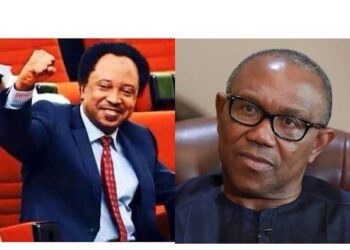







 Fresh uncertainty is clouding Nigeria’s opposition landscape as speculation mounts over the political future of Peter Obi and Rabiu Musa Kwankwaso within the African Democratic Congress, following their conspicuous absence from recent party engagements and key opposition meetings.
At the centre of the intrigue is not what either man has said — but what neither has said.
Both former presidential contenders have remained publicly silent after missing a high-profile opposition summit in Ibadan on April 25, a gathering widely seen as an important moment in efforts to forge a united front ahead of Nigeria’s next electoral cycle. Their silence continued after the Supreme Court’s April 30 ruling affirming David Mark as the recognised leader of the ADC — a judgment expected to stabilise the party’s internal leadership question.
Instead, the silence has produced its own political message: uncertainty.
Growing speculation over internal contest
Political observers say growing tension may be linked to calculations around the ADC’s presidential ticket.
There are increasing claims within opposition circles that both Obi and Kwankwaso may be weighing their options amid indications that former Vice President Atiku Abubakar is also strongly positioning for the party’s presidential nomination. If that scenario materialises, the ADC could face a bruising three-way contest involving three of the opposition’s biggest political names — a primary battle that could test party cohesion before a general election campaign even begins.
For Obi and Kwankwaso, both of whom command fiercely loyal regional and ideological bases, entering a competitive nomination race carries political risk. Losing such a contest could weaken their negotiating strength in any broader coalition talks.
Still, these remain calculations and rumours — not confirmed plans.
Neither politician has issued any statement suggesting an exit from the party.
Opposition coalition politics enters delicate phase
Supporters close to both camps have pushed back against rumours of a looming departure, insisting that Obi and Kwankwaso remain committed to a wider opposition alliance aimed at challenging the ruling establishment.
That broader coalition effort has become increasingly important as opposition leaders grapple with a familiar Nigerian political dilemma: unity in rhetoric, rivalry in ambition.
Nigeria’s political history is filled with coalition attempts that faltered under competing presidential aspirations. From the fractured opposition alignments before 2019 to shifting alliances after the 2023 elections, personal political capital has often outweighed collective strategy.
That is why the next few weeks may prove critical.
Abuja summit now in focus
Attention is now turning to the anticipated “OK Movement” unity summit scheduled to hold in Abuja, where loyalists and political stakeholders aligned with Obi and Kwankwaso are expected to gather.
The meeting is being watched closely for signals — whether of renewed commitment to the ADC, fresh coalition terms, or the early signs of political realignment.
As of the time of filing, what is known is limited: Obi and Kwankwaso have been absent from major ADC-linked moments, neither has publicly explained that absence, and the party leadership has not addressed the speculation.
What remains unconfirmed is whether those developments amount to strategic silence — or the beginning of another opposition fracture.
For ordinary Nigerians watching from outside elite political circles, the stakes go beyond party manoeuvring. A divided opposition weakens electoral competition, narrows voter choices, and could reshape the balance of power heading into the next national contest.
For now, the silence around Obi and Kwankwaso is speaking louder than any official statement.