







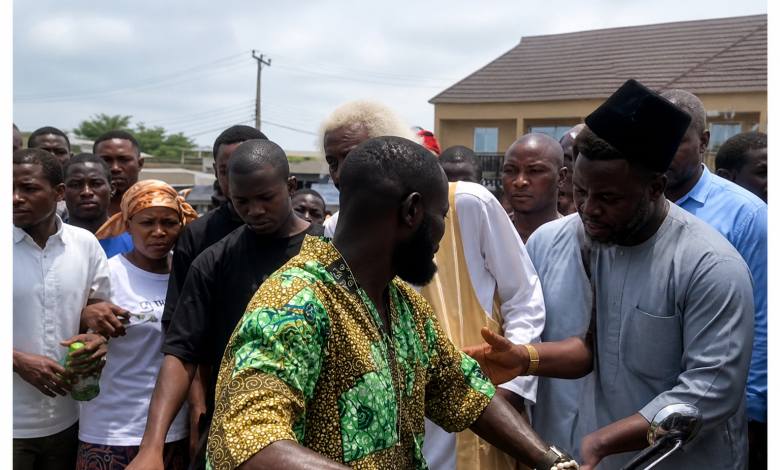
 For many Nigerians, the country’s fuel crisis is measured in long queues, shrinking household budgets, and rising transport fares. But on Thursday in Abeokuta, the reality of that economic strain was distilled into a single striking image: Nobel Laureate Wole Soyinka navigating the city on the back of a commercial motorcycle.
The sight of Soyinka — one of Nigeria’s most revered intellectual figures — riding an okada through the Ake area of Abeokuta quickly drew attention, not merely because of who he is, but because of what the moment symbolised. Witnesses said the 89-year-old playwright resorted to the motorcycle after struggling to obtain fuel for his private vehicle, a problem that has become increasingly familiar across the country.
For many residents who watched him pass, the image carried a deeper message: if a figure of Soyinka’s standing is adjusting his daily movement because of fuel scarcity and soaring pump prices, ordinary Nigerians are likely facing even harsher realities.
More Than an Unusual Commute
In another context, Soyinka riding through his hometown on an okada might have been dismissed as a colourful local moment. But Nigeria’s current economic climate has given it sharper political and social meaning.
Petrol prices, which have climbed as high as N1,500 per litre in parts of the country following subsidy removal and foreign exchange pressures, have reshaped everyday life. Public transport fares have surged. Food distribution costs have risen. Small businesses dependent on fuel-powered generators are absorbing steeper operating expenses, often passing those costs on to consumers.
The burden is being felt most acutely by low- and middle-income households, many of whom now spend a growing share of their income simply moving from one place to another.
A Symbolic Moment in a Historic City
That the scene unfolded in Ake — Soyinka’s birthplace and one of the cultural centres of Abeokuta — adds symbolic weight. Over decades, Soyinka has built a reputation as one of Nigeria’s fiercest public intellectuals, consistently speaking on governance, justice, and national welfare.
While he made no formal statement during Thursday’s outing, observers interpreted his decision to take commercial transport rather than queue endlessly at filling stations or buy fuel at inflated black-market rates as an unspoken commentary on the hardship many Nigerians now endure.
That interpretation remains public perception; Soyinka himself has not publicly framed the incident as a protest.
Why This Resonates Nationally
The fuel crisis is no longer just an economic statistic — it is altering behaviour across social classes.
Professionals are cutting back on travel. Families are consolidating trips. Commercial drivers are raising fares to survive. In cities and smaller towns alike, motorcycles, tricycles, and informal transport options are becoming fallback choices for many who once relied on private cars.
What makes Soyinka’s case notable is not that he rode an okada, but that the image has become a mirror reflecting a broader national reality: economic pressure in Nigeria is increasingly indiscriminate.
What Comes Next
For the federal government, the deeper issue is no longer simply fuel availability, but public confidence in economic management. Nigerians are watching whether policy reforms that triggered painful short-term costs will eventually deliver stability, or whether hardship will become the new normal.
Until then, Thursday’s image from Abeokuta is likely to linger — not because it was dramatic, but because it was instantly understood. In a country where fuel has become both scarce and expensive, even icons are adjusting to survival.