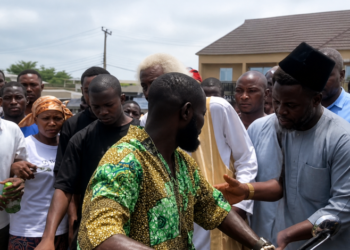










 Tension rippled through Osogbo on Wednesday after the Osun State Government confirmed that Adebayo Adeleke, popularly known as B-Red and son of Governor Ademola Adeleke, narrowly escaped what state officials described as an assassination attempt in the state capital.
The reported incident, which occurred in broad daylight near the seat of government, has heightened security concerns in Osun and injected a volatile political undertone into public discourse at a time when the state has sought to project stability.
What happened in Osogbo
According to a statement issued on April 30, 2026, by Commissioner for Information and Public Enlightenment, Kolapo Alimi, the incident occurred at about 3:30 p.m. around Oke-Fia, close to Government House in Osogbo.
Alimi alleged that a group of hoodlums attempted to intercept B-Red while he was moving through the city, triggering what officials described as a dangerous chase that caused panic among motorists, traders, and pedestrians in the area. Suspicion, according to the state government, has been directed at an individual identified as Asiri Eniba, though authorities have not publicly released details of any arrest or formal charges as of the time of reporting.
Speaking on the incident, B-Red recounted that he was driving near Alekuwodo Market when he noticed unusual activity around his vehicle.
He said several motorcycle riders wearing AMBO caps began surrounding his car at a traffic point beneath Oke-Fia Bridge. Moments later, he noticed a white Toyota Venza approaching as voices reportedly shouted, “It is him; it is him,” prompting fears that he was being deliberately targeted.
What began as suspicion, he said, quickly turned into an active pursuit through parts of the city.
Why the allegation matters
An alleged attack involving the son of a sitting governor carries implications beyond a personal security scare. It raises broader concerns about political intimidation, organized violence, and the ability of security agencies to prevent potentially destabilizing incidents in high-profile areas of the state capital.
That the episode reportedly unfolded close to Government House is especially notable. For many residents, it reinforces anxieties about whether politically connected violence — or violence perceived to have political undertones — is becoming more visible in public spaces.
For ordinary citizens, such incidents often translate into tighter security checks, increased police deployments, and heightened public fear, particularly in crowded commercial districts like Oke-Fia and Alekuwodo, where daily business depends on free movement.
A familiar national pattern
Nigeria has a long history of politically charged confrontations, especially when influential families or party figures are involved. In recent years, allegations of targeted attacks, convoy clashes, and intimidation by armed political loyalists have surfaced in several states, often deepening partisan mistrust.
What makes the Osogbo case significant is the timing and visibility of the alleged attack. If confirmed by independent investigation, it could become a flashpoint in Osun’s political climate.
However, key details remain unclear: investigators have yet to publicly establish motive, identify all those allegedly involved, or confirm whether the incident was politically orchestrated, criminal in nature, or the result of another dispute.
What comes next
Attention will now shift to law enforcement and whether there will be a transparent investigation into the allegations made by the state government and B-Red’s account.
Residents will be watching closely for official police findings, possible arrests, and whether the state provides additional evidence to support the assassination claim.
Until then, the incident remains both a security concern and a political test — one that could shape public confidence in how Osun handles high-profile threats in an already tense national environment.