










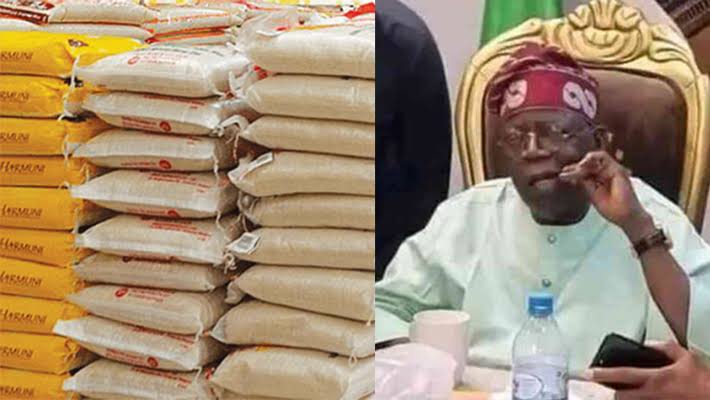
 Nigeria’s worsening cost-of-living crisis has opened a new front in the country’s political contest, with former Vice President Atiku Abubakar accusing the administration of President Bola Ahmed Tinubu of turning hunger relief into political theatre rather than confronting the roots of economic hardship.
In a strongly worded statement issued on Friday by his spokesperson, Phrank Shaibu, Atiku condemned the recent distribution of 100 trucks of rice and ₦1.2 billion in palliatives flagged off by First Lady Oluremi Tinubu, describing the programme as a carefully staged spectacle that masks deeper policy failures.
His blunt message — “Nigerians are not beggars” — strikes at a growing public frustration over inflation, food insecurity, and the shrinking purchasing power of households across the country.
Hunger, optics and political messaging
Atiku’s criticism goes beyond the rice intervention itself. His core argument is that emergency food distribution, while offering short-term relief, cannot substitute for coherent economic recovery policies.
He accused the federal government of “weaponising hunger” by using palliatives as a public relations tool while millions of Nigerians continue to grapple with spiralling food prices, transport costs, and rising living expenses triggered by sweeping economic reforms, including fuel subsidy removal and foreign exchange liberalisation.
The former vice president also argued that the public display surrounding food distribution risks reducing a serious national emergency into political symbolism.
That criticism reflects a wider debate in Nigeria: whether palliatives are a necessary social buffer during painful reforms, or whether they have become a substitute for long-term policy solutions.
Northern agriculture at the centre of the debate
Atiku placed particular emphasis on Northern Nigeria, where insecurity has badly disrupted farming communities in recent years.
Large stretches of agricultural land across parts of the North-West and North-Central have become inaccessible because of bandit attacks, kidnappings, and communal violence. Farmers displaced from their land have contributed to declining domestic food production, tightening supply and pushing prices upward nationwide.
His argument is politically significant because it reframes hunger not simply as an inflation problem, but as a security and production crisis.
If farmlands remain unsafe, economists note that food imports and periodic aid distribution may ease immediate shortages, but they will not restore Nigeria’s long-term food stability.
Presidency defends intervention
The criticism comes shortly after the First Lady defended the rice distribution initiative as part of broader efforts to cushion the impact of ongoing reforms on vulnerable Nigerians.
Supporters of the administration argue that with inflation biting hard, immediate intervention is unavoidable while structural reforms take time to produce results. They maintain that social support programmes are standard policy responses during economic transitions.
What remains unclear, however, is the scale, targeting, and long-term sustainability of such palliative programmes — issues that have historically dogged relief interventions in Nigeria, where questions over transparency and political patronage frequently arise.
Why this matters now
For ordinary Nigerians, the political clash matters because it touches the central issue shaping daily life: affordability.
Food inflation continues to outpace wage growth, households are cutting back on meals, and businesses face rising operating costs. In that environment, public arguments over rice distribution are about more than politics — they are about whether government policy is addressing symptoms or causes.
The coming months will test that question.
If inflation eases and agricultural output recovers, the administration may defend palliatives as necessary bridge measures. If hardship deepens, opposition criticism like Atiku’s could resonate more sharply with citizens who increasingly see relief packages as temporary comfort in a prolonged economic squeeze.