










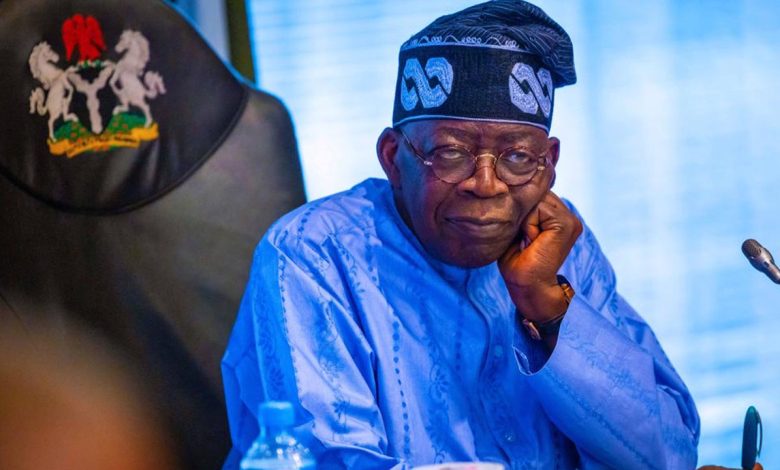
 President Bola Ahmed Tinubu has elevated Nigeria’s worsening insecurity and deepening poverty crisis to the level of a national emergency, a declaration that signals growing concern within the presidency that the twin burdens are no longer merely social problems, but direct threats to economic survival, labour productivity, and national stability.
The declaration was delivered on Thursday at the 2026 Workers’ Day celebration held at Eagle Square, where the President — represented by Secretary to the Government of the Federation, George Akume — addressed labour leaders, union members, and workers gathered in the nation’s capital.
In one of the administration’s strongest public acknowledgments yet of the scale of Nigeria’s hardship, Tinubu said insecurity and poverty have become intertwined national crises that undermine livelihoods, weaken business confidence, and make meaningful economic growth difficult.
“There cannot be decent work where workers fear for their lives, where wages cannot feed a family, or where insecurity disrupts farms, factories, markets, and other economic activities,” the President said in his statement.
A shift in language — and policy expectations
By formally describing poverty and insecurity as a “national emergency,” the Tinubu administration has moved the conversation beyond campaign rhetoric into the realm of urgent state action. In policy terms, such language raises public expectations that government intervention will become more coordinated, measurable, and aggressive.
For ordinary Nigerians, the significance is immediate.
Across farming communities, attacks by armed groups continue to limit food production, pushing up prices in urban markets. In cities, inflation has eroded purchasing power, leaving many workers struggling to meet basic household needs despite being employed. Small businesses — often the backbone of local economies — are also contending with high operating costs, weak consumer spending, and security risks.
The result is a cycle in which insecurity fuels poverty, and poverty in turn creates fertile ground for criminal recruitment and social instability.
Community Protection Guards at the centre of response
As part of its response, the federal government highlighted its Community Protection Guards Initiative, under which 45,000 young Nigerians have reportedly been recruited to help secure vulnerable local communities.
The initiative appears aimed at strengthening grassroots security presence, particularly in rural areas where overstretched conventional security agencies have struggled to maintain consistent coverage.
However, key operational details remain unclear — including the guards’ training standards, command structure, rules of engagement, and how they will coordinate with the military, police, and intelligence services. Those unanswered questions may determine whether the programme becomes a meaningful security buffer or another intervention weakened by implementation gaps.
Why this matters now
Tinubu’s remarks come at a politically sensitive moment.
Nigeria’s labour movement has intensified pressure on government over the rising cost of living, wage concerns, and deteriorating living standards. At the same time, insecurity in farming belts and transport corridors continues to affect food supply chains, contributing to stubborn inflation that directly impacts workers’ welfare.
Historically, Nigerian governments have often treated poverty alleviation and security as separate policy tracks. Tinubu’s framing suggests a growing recognition that both crises are economically linked — and that solving one without addressing the other may prove impossible.
What to watch next
The declaration now puts pressure on the federal government to match rhetoric with visible action.
Citizens and organised labour will be watching for concrete next steps: expanded security coordination, stronger support for agriculture and small businesses, targeted anti-poverty programmes, and policies that improve real wages amid inflationary pressure.
For many Nigerians, the President’s diagnosis reflects daily reality. The bigger question is whether declaring an emergency will translate into urgency in governance — or remain another forceful statement in a country increasingly impatient for results.