









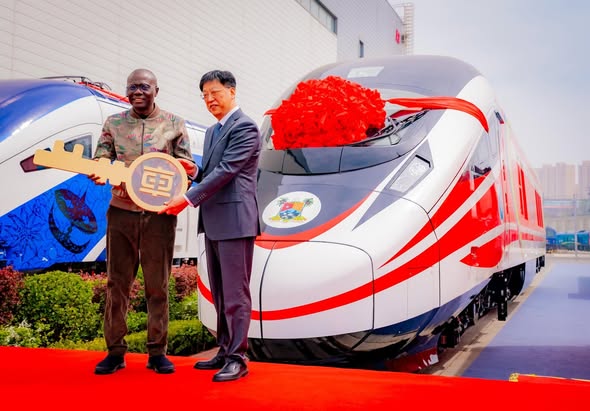
 Lagos is quietly scaling up its urban rail capacity in what officials say is a deliberate push to ease the daily strain on commuters, with the arrival of a new set of 24-car trains for the Red Line corridor.
Governor Babajide Sanwo-Olu disclosed the development on Thursday, stating that the additional rolling stock has been received to strengthen operations on the Lagos Red Line. According to him, the upgrade is expected to increase passenger capacity and reduce waiting times across one of Africa’s fastest-growing cities.
“This will improve capacity, reduce wait times and make daily commuting easier for Lagosians,” the governor said in a public statement.
A system under pressure
Lagos, Nigeria’s commercial capital, has long struggled with chronic traffic congestion, with millions of residents relying on overcrowded roads and informal transport systems. The Red Line — designed to connect key districts from Agbado to Marina — is central to the state’s broader ambition to shift commuters from road to rail.
While the state government has invested heavily in rail infrastructure in recent years, demand has consistently outpaced supply. Peak-hour congestion, long queues, and inconsistent service have remained persistent complaints among commuters.
The introduction of 24-car trains suggests a move toward higher-capacity operations, potentially allowing more passengers per trip and fewer delays between services.
What changes for commuters
If deployed efficiently, the additional trains could have immediate, practical effects: shorter waiting times at stations, less overcrowding inside coaches, and more predictable travel schedules.
For many Lagosians, this goes beyond convenience. Time lost in traffic has direct economic consequences — from reduced productivity to increased transport costs. A more reliable rail system could ease pressure on household budgets and improve access to jobs across different parts of the city.
However, the extent of the impact will depend on operational factors not yet detailed by the government, including how frequently the trains will run, maintenance capacity, and integration with other transport modes such as buses.
Background: Lagos’ rail ambitions
The Red Line project is part of a wider rail development plan that includes the Blue Line and other proposed corridors aimed at transforming urban mobility. The state has positioned rail transport as a long-term solution to its infrastructure deficit, especially as the population continues to expand rapidly.
Past phases of rail rollout have been met with cautious optimism, but also scrutiny over timelines, costs, and service delivery. Expanding the fleet is a necessary step, but not sufficient on its own to resolve systemic transport challenges.
What is known — and what is not
Confirmed details from the governor’s statement indicate that the trains have been received and are intended to boost capacity on the Red Line. However, it remains unclear when the new coaches will be fully operational, how they will be distributed across routes, or whether additional staffing and technical upgrades will accompany their deployment.
There has also been no official breakdown of the procurement cost or funding structure behind the acquisition.
What to watch next
Attention will now shift to implementation. Commuters and transport analysts will be watching for tangible improvements in travel time and service reliability in the coming weeks.
Beyond the immediate rollout, the development raises a broader question: whether Lagos can sustain the operational discipline and investment needed to make rail a dependable alternative to road transport.
For now, the arrival of new trains signals intent — but for millions navigating the city each day, the real test will be felt on crowded platforms and inside moving carriages.