






 A fresh ranking of political support groups backing President Bola Ahmed Tinubu has placed the One North Movement at the forefront of pro-Tinubu mobilisation, ahead of the better-known City Boy Movement — a development that highlights shifting dynamics within the President’s expanding grassroots support structure as attention quietly begins to turn toward 2027.
The online ranking, conducted nationwide, assessed pro-Tinubu groups on grassroots reach, mobilisation strength, and perceived impact in promoting the administration’s agenda. According to the poll results, One North Movement emerged in the top position, outperforming several established political advocacy platforms, including the City Boy Movement, a network publicly associated with Seyi Tinubu and prominent influencers such as Paschal Okechukwu and Obi Iyiegbu.
Northern grassroots influence comes into focus
The outcome points to a deeper political reality: in Nigeria’s electoral arithmetic, northern mobilisation remains critical. With the region accounting for a significant share of registered voters, any support structure that gains traction there is likely to attract national political attention.
Observers say the emergence of One North Movement reflects the growing effectiveness of decentralised advocacy platforms that combine digital outreach with local engagement. Unlike celebrity-driven campaigns that often dominate online visibility, these newer political groups are increasingly investing in welfare interventions, community outreach, and targeted grassroots messaging — strategies that tend to resonate more strongly in underserved communities.
That shift matters because it signals a broader evolution in Nigerian political campaigning, where influence is no longer measured solely by high-profile endorsements, but by organisational depth and local penetration.
Group leaders frame ranking as endorsement
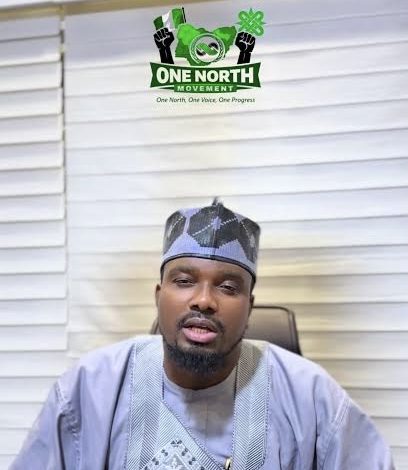
Muhammad Ali, popularly known as Abba G and leader of the One North Movement, described the ranking as a reflection of public confidence in the group’s work.
“Our goal is to ensure that the benefits of President Tinubu’s leadership are felt across every part of Nigeria,” he said, adding that the organisation remains committed to supporting communities while advocating policy continuity.
Deputy leader Alhaji Sani Ahmad Zangina also welcomed the recognition, saying it would strengthen the movement’s resolve to expand nationwide mobilisation ahead of future political contests, particularly President Tinubu’s expected re-election campaign.
Early positioning for 2027
Although the next presidential election remains some distance away, political alignment around 2027 is already quietly taking shape. Support groups have historically played an outsized role in shaping public sentiment, coordinating campaign messaging, and mobilising turnout during elections.
What remains unclear, however, is the methodology behind the online ranking — including sample size, participant demographics, and the criteria used in measuring “impact.” Without those details, the poll is better understood as a snapshot of momentum within pro-Tinubu circles rather than a definitive measure of nationwide political support.
Still, the symbolism is notable.
For the City Boy Movement, which has enjoyed significant media visibility, being overtaken in such a ranking suggests that political influence within the President’s support ecosystem may be becoming more dispersed. For One North Movement, it marks a rise from regional advocacy platform to a more nationally recognised political force.
As Nigeria’s political class begins its long march toward 2027, the contest for influence within the President’s support base may prove nearly as significant as the election campaign itself.