







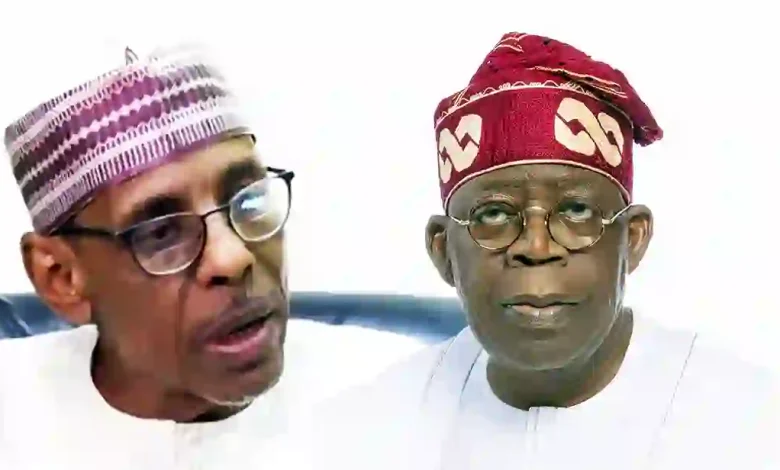
 A sharp exchange over the state of Nigeria’s economy has exposed widening political and public discontent, after Hakeem Baba-Ahmed criticised President Bola Tinubu for what he described as a disconnect from the lived realities of ordinary Nigerians.
Speaking on Arise Television’s Morning Show on Monday, Baba-Ahmed — a former presidential aide and current National Chairman of the Peoples Redemption Party (PRP) — said it was unrealistic for the administration to expect public praise amid worsening economic hardship and insecurity.
His comments were in response to Tinubu’s recent remark that critics of his government’s performance simply refuse to see progress, joking that they may need “jigi-bola” (eyeglasses) to recognise it.
“Applause is not realistic” amid hardship
Baba-Ahmed dismissed the president’s position as out of touch, arguing that widespread poverty and declining living standards have overshadowed any policy gains the administration claims.
“There is no way you can live in this country, see the level of poverty and unaccountability, and still expect Nigerians to applaud your performance,” he said during the broadcast.
He added that, in his view, the government’s economic reforms have yet to translate into tangible relief for citizens, instead deepening hardship. According to him, many Nigerians now feel “more insecure, more hungry, and more desperate” than before.
While these claims reflect opposition criticism, the federal government has consistently maintained that its reforms are necessary for long-term stability and growth, even if they bring short-term pain.
The broader policy context
Since assuming office in 2023, Tinubu’s administration has implemented sweeping economic changes, including fuel subsidy removal and foreign exchange reforms. These policies have been praised by international financial institutions but have also contributed to rising inflation and cost-of-living pressures at home.
For millions of Nigerians, the immediate impact has been stark: higher transport costs, increased food prices, and shrinking purchasing power. Labour unions and civil society groups have repeatedly called for stronger social protection measures to cushion these effects.
Security concerns, particularly in rural and northern regions, have compounded the sense of vulnerability, making economic recovery feel distant for many households.
Politics ahead of 2027
Baba-Ahmed also framed his criticism within the context of Nigeria’s next general election cycle, arguing that public dissatisfaction could shape the political landscape if electoral conditions are transparent.
He stated that if a free and fair election were held in 2027, the president would struggle to retain office — a claim that reflects opposition sentiment but remains speculative at this stage.
What is clear — and what is not
It is established that Baba-Ahmed made these remarks during a televised interview and directly criticised the president’s comments and policies. However, there is no new official data presented in his claims to independently verify the extent of worsening conditions beyond existing economic indicators.
The presidency has not yet issued a direct response to his latest comments.
Why this matters now
The exchange highlights a growing tension between government messaging and public perception. While the administration continues to emphasise reform-driven progress, opposition figures are increasingly framing the narrative around immediate hardship and governance gaps.
For ordinary Nigerians, the debate is not abstract. It speaks directly to daily realities — food prices, job security, and personal safety — and raises questions about how long citizens are expected to endure economic strain before seeing measurable improvement.
What to watch next
Attention will likely shift to how the federal government responds — whether through policy adjustments, expanded welfare programmes, or a more assertive defence of its reforms.
As economic pressures persist, political rhetoric is expected to intensify, setting the stage for a prolonged contest over both performance and perception ahead of 2027.