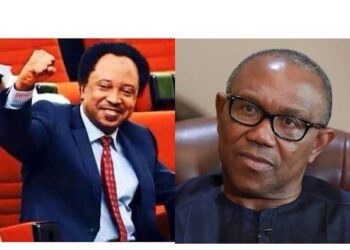










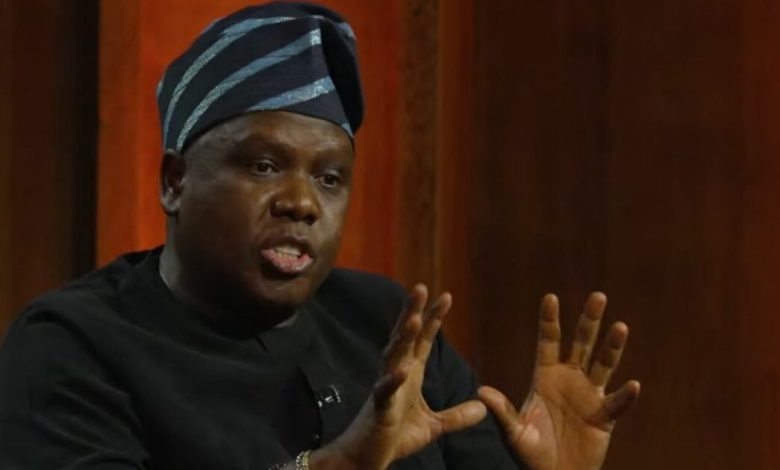
 Nigeria’s sharply polarised political climate has again come into focus after Daniel Bwala publicly criticised supporters of Peter Obi, accusing them of approaching national issues with what he described as a persistently negative mindset.
In remarks posted Thursday on his official X account, Bwala framed political perception as a matter of outlook, arguing that governance challenges can either be seen as obstacles or as part of a broader process of national progress. His comments, however, quickly moved beyond political philosophy into a pointed attack on Obi’s supporters — popularly known as Obidients — further inflaming the rhetoric that has defined much of Nigeria’s post-2023 election discourse.
Politics of perception
Bwala’s remarks were made in reaction to a cartoon illustration showing him holding a glass of water while explaining the importance of context during a recent interview. Using the “half full, half empty” analogy, he argued that intellectual honesty requires assessing political and governance issues within their broader context rather than through isolated frustrations.
“I love this picture. Whoever did it, tried. Intellectuals know context matters when discussing issues of politics and governance. It is either you are looking at life as half full or half empty,” he wrote.
He added that those he described as progressives understand that difficulties are often part of a wider developmental process, saying, “No progress without process.”
But the message took a sharper political turn when he singled out Obi and his supporters, writing: “It is only Peter Obi and his Trojans that see everything as half empty; that is why they are disillusioned, disgruntled and confused.”
More than a political jab
Beyond its provocative language, Bwala’s statement reflects a deeper contest over how Nigerians should interpret current national realities — from economic reforms and inflationary pressures to insecurity and public dissatisfaction.
For supporters of President Bola Ahmed Tinubu, criticism of the administration is often framed as impatience with reforms that require time to yield results. For opposition supporters, particularly Obi’s politically active base, criticism is seen as civic vigilance in the face of worsening living conditions.
That distinction matters because it shapes public debate. What one side calls constructive scrutiny, the other increasingly labels pessimism or political hostility.
The enduring Obidient factor
The Obidient movement emerged as one of the most significant political developments in modern Nigerian electoral history during the 2023 presidential race, mobilising large numbers of young voters, professionals, and first-time political participants. Although Obi did not win the presidency, his support base has remained vocal and influential in digital political spaces, often setting the tone for national conversations online.
That continued visibility has made the movement both politically relevant and politically contested.
Repeated public attacks on the group by administration allies suggest the Obidient bloc remains a factor in Nigeria’s evolving opposition landscape — especially as conversations quietly begin around coalition-building and political realignment ahead of future elections.
What this means going forward
While Bwala’s comments may energise partisan supporters on both sides, they also underscore a broader challenge in Nigerian politics: the widening gap between political messaging and national consensus.
For ordinary Nigerians dealing with rising costs, unemployment, and security concerns, ideological battles over whether the glass is “half full” or “half empty” may feel detached from daily realities. What many are watching instead is whether governance outcomes improve in measurable ways.
The sharper question now is not which political camp owns optimism or pessimism — but whether Nigeria’s leaders can bridge division enough to restore public confidence in democratic leadership.