










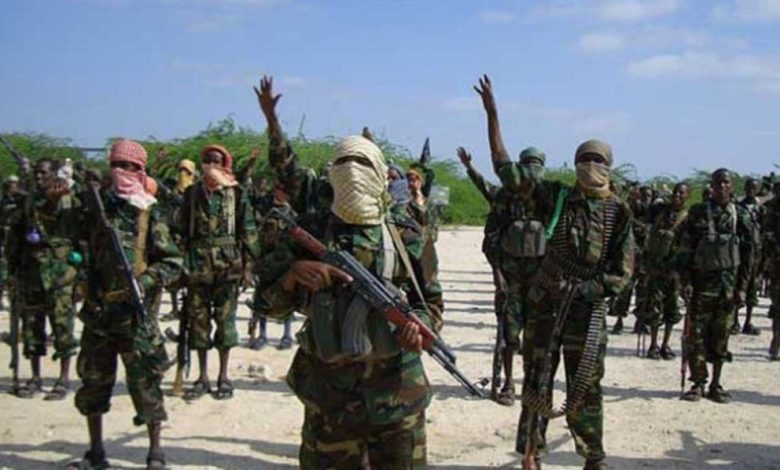
 A late-night assault on Benisheikh in Borno State has renewed concerns about the resilience of military positions and the evolving tactics of insurgent groups in Nigeria’s North-East, particularly along the strategic Maiduguri–Damaturu corridor.
Residents and local sources reported that suspected Boko Haram/ISWAP fighters launched the हमला around 11 p.m. on Tuesday, targeting the town, which serves as the administrative headquarters of Kaga Local Government Area. The attackers were said to be moving in the direction of a key military installation — the 29 Task Force Brigade under Operation Hadin Kai.
Targeting a previously hit military formation
The significance of the location is difficult to ignore. The same brigade was the site of a deadly attack on April 9 that resulted in the killing of Brigadier-General O. O. Braimah and several soldiers. Tuesday night’s development suggests either a renewed attempt to test the military’s defensive posture or a calculated effort to exploit perceived weaknesses in the aftermath of that earlier strike.
While the Nigerian military has yet to issue a detailed statement on the latest incident, aerial activity was evident. Fighter jets and military helicopters were observed over Maiduguri, approximately 75 kilometres from Benisheikh, indicating that a response operation may have been underway.
What is confirmed — and what remains unclear
As of now, there is no official confirmation of casualties or the extent of damage from the attack. The number of insurgents involved, the duration of the firefight, and whether the military successfully repelled the હુમला remain unclear.
Local accounts, while credible, are still fragmentary — a common challenge in conflict reporting in the North-East, where communication gaps and security restrictions often delay full disclosure.
A corridor under pressure
The Maiduguri–Damaturu Road has long been a flashpoint in the insurgency, serving both as a vital supply route and a recurring target for ambushes and raids. Benisheikh, due to its proximity to Maiduguri and its hosting of military assets, occupies a sensitive position in the region’s security grid.
Over the years, Boko Haram and its offshoot, ISWAP, have demonstrated a pattern of retreating under military pressure only to regroup and launch high-impact attacks on isolated or previously weakened targets. Analysts say such रणनीति allows them to maintain psychological pressure even when territorial control is limited.
Implications for civilians and military operations
For residents in and around Benisheikh, the immediate impact is heightened fear and uncertainty. Night-time attacks, in particular, disrupt civilian life, restrict movement, and further strain already fragile local economies. Communities along the highway often depend on military presence for protection, meaning any perceived breach carries outsized consequences.
For the military, repeated attacks on the same formation could prompt a reassessment of deployment strategies, intelligence gathering, and base fortification in high-risk zones.
What happens next
Attention will likely focus on whether Operation Hadin Kai can consolidate its позиции in the area and prevent a cycle of repeated strikes. Reinforcements, aerial surveillance, and possible clearance operations in surrounding المناطق may follow.
At the policy level, the incident adds urgency to ongoing debates about force capacity, inter-agency coordination, and the long-term sustainability of Nigeria’s counterinsurgency approach.
For now, much depends on official updates expected in the coming days. Until then, Benisheikh stands as a reminder that, despite years of military campaigns, the insurgency in Borno remains adaptive — and far from resolved.