









 A case that has gripped public attention
The death of 28-year-old musician Mene Ogidi, popularly known as Oghenemine Ogidi or OG Millan, continues to draw public scrutiny days after he was killed in Effurun, Delta State, in circumstances that remain under investigation.
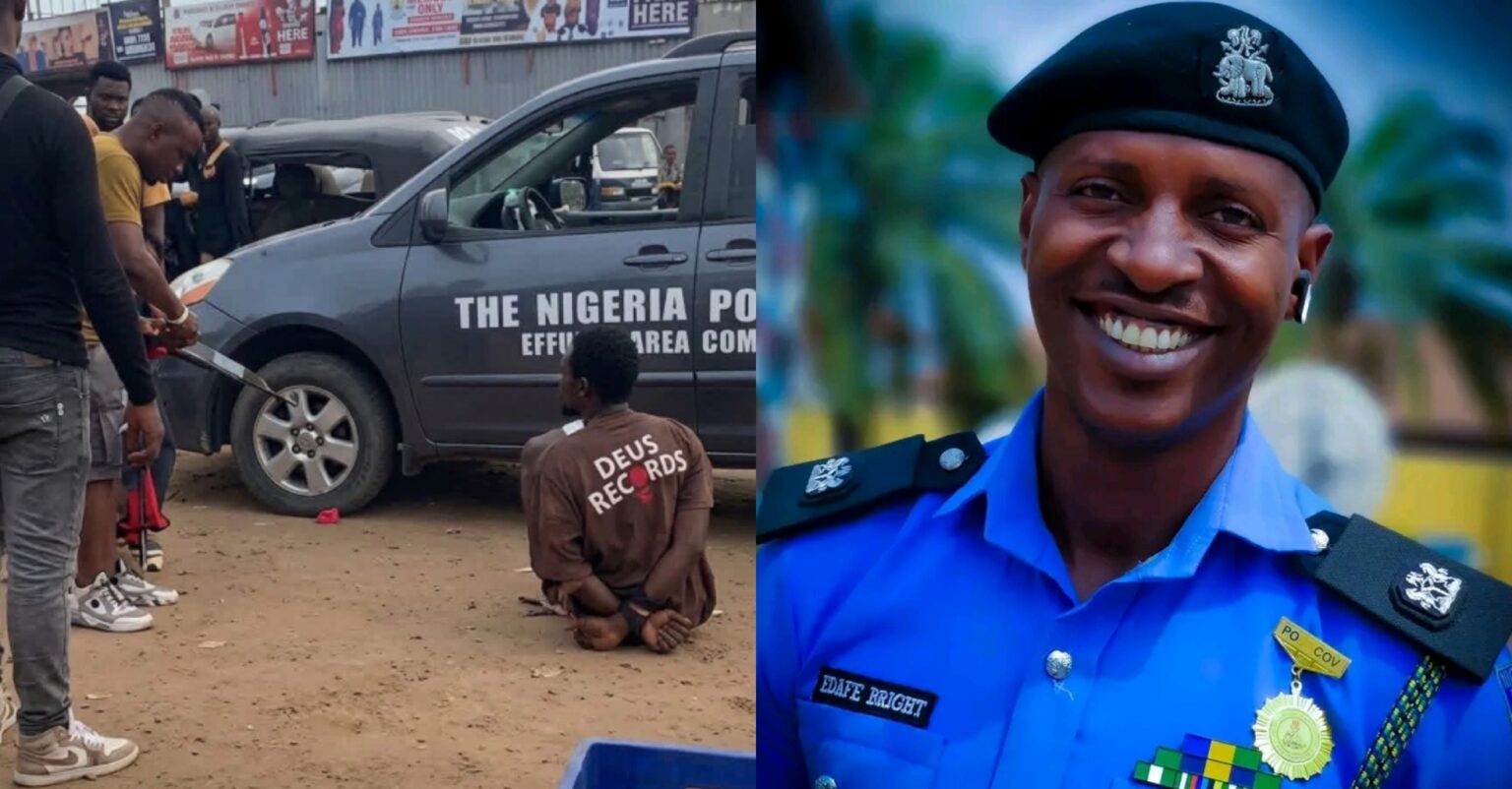
Ogidi was reportedly apprehended on April 26, 2026, by transport union members at the Benin Motor Park along the Warri–Sapele Expressway while attempting to collect a waybill parcel. He was later found dead, a development that quickly spread across social media and triggered outrage, especially among young Nigerians who view such incidents through the lens of rising mob justice concerns.
The incident has once again placed a spotlight on the fragile boundaries between informal enforcement by transport unions and formal policing in parts of southern Nigeria, where disputes at motor parks can quickly escalate into violence.
Police say autopsy is now mandatory
The Delta State Police Command, through its Public Relations Officer, SP Bright Edafe, confirmed that the deceased’s body remains at the mortuary as investigations continue.
Edafe stated that the case is being treated as a suspected murder and that an autopsy will be conducted to determine the exact cause of death.
“The case is a suspected murder, so autopsy is compulsory and the family also agreed to this,” he said in a post on X (formerly Twitter).
The police position suggests that while initial accounts point to a confrontation at the motor park, critical forensic details are still needed to establish how the musician died and whether external violence directly caused his death.
What is known — and what is still unclear
So far, authorities have not publicly confirmed who directly inflicted the fatal injuries on Ogidi, nor have they disclosed whether any arrests have been made in connection with the killing.
What is established is that he was taken into custody by transport union members before his death, and that the case is now officially under murder investigation. However, the sequence of events between his apprehension and eventual death remains contested and under review.
The insistence on an autopsy highlights the police’s effort to rely on medical and forensic evidence rather than witness accounts alone, which are often conflicting in similar cases involving crowd violence.
Background: a recurring concern around transport hubs
Incidents involving transport union operatives at motor parks are not new in Nigeria. Over the years, disputes over waybills, loading rights, and passenger control have occasionally escalated into violent confrontations.
In many cases, the absence of immediate law enforcement presence at these hubs creates a vacuum that informal groups sometimes fill — a dynamic that has repeatedly raised concerns among rights groups and commuters.
Delta State, in particular, has witnessed sporadic cases of violence linked to motor parks and commercial transport disputes, though outcomes and accountability measures have varied widely.
Public reaction and wider political undertones
The case has also attracted attention from public figures, including Nollywood actress Yvonne Jegede, who used her social media platform to criticise the Nigerian Police Force and reference past incidents linked to the 2020 #EndSARS protests. She described the situation as unacceptable, linking it to broader concerns about accountability and policing in Nigeria.
Her comments reflect a wider pattern in which high-profile deaths quickly evolve into national debates about security forces, civic trust, and the use of force in public spaces.
Why this matters now
Beyond the circumstances of Ogidi’s death, the case raises broader questions about public safety at transport hubs, the role of non-state actors in enforcing order, and the reliability of investigative processes in emotionally charged cases.
For many Nigerians, especially young people active on social media, the handling of this investigation will be closely watched as a test of whether justice in such incidents can be both transparent and timely.
What happens next
The immediate next step is the autopsy, which authorities say the family has agreed to. Its findings are expected to be central to determining the cause of death and whether criminal charges will be expanded or refined.
Until then, the case remains officially open, with the police maintaining that it is being treated as a suspected murder.
For residents in Delta State and beyond, the unfolding investigation will likely shape renewed conversations about accountability at motor parks and the urgent need for clearer lines between informal enforcement and lawful policing.