









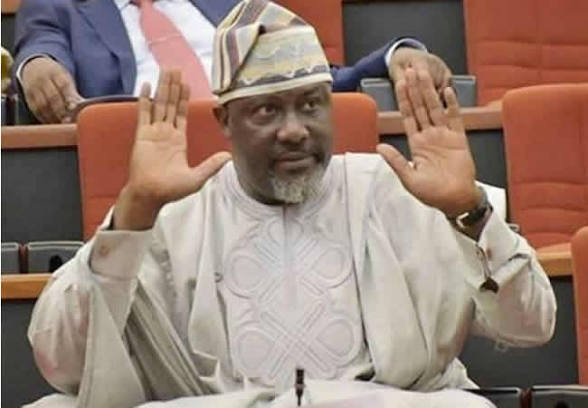
 Nigeria’s deepening economic strain has taken centre stage in the political arena, with former senator Dino Melaye launching a sharp critique of President Bola Tinubu and his administration, describing current living conditions as unlike anything Nigerians have previously experienced.
Speaking at the 2026 National Convention of the African Democratic Congress (ADC) in Abuja on Tuesday, Melaye argued that recent policy decisions — particularly those taken early in the administration — have worsened poverty and triggered widespread hardship across the country.
Criticism of early policy decisions
Melaye focused much of his remarks on the government’s economic direction, especially the abrupt removal of fuel subsidy announced on May 29, 2023, during President Tinubu’s inauguration. According to him, the decision was made without sufficient consultation or understanding of its immediate consequences.
He linked the subsidy removal to a sharp rise in the cost of living, noting that prices of goods and services escalated rapidly in its aftermath. While economists have long argued that subsidy removal was necessary to stabilise public finances, critics like Melaye insist that the lack of cushioning measures has pushed millions into deeper financial distress.
“What we are seeing, we have never seen its type before,” he said, framing the current situation as unprecedented in Nigeria’s recent history.
Political messaging ahead of realignment
Beyond policy criticism, Melaye’s speech carried clear political undertones. He urged Nigerians to place their trust in the ADC, positioning the party as a credible alternative capable of addressing governance challenges.
In a rhetorical flourish, he referenced prominent political figures — including Peter Obi, Rabiu Kwankwaso, and Rotimi Amaechi — suggesting that capable leadership already exists within Nigeria’s political class, in contrast to what he portrayed as instability in the current administration.
His remarks, delivered in a mix of English and colloquial expressions, drew reactions from party supporters at the convention, underscoring the ADC’s attempt to consolidate opposition voices ahead of future electoral contests.
Context: reforms and rising pressure
Since assuming office in 2023, the Tinubu administration has pursued a series of economic reforms aimed at restructuring Nigeria’s fiscal framework. These include the removal of fuel subsidy and exchange rate adjustments — policies widely supported by international financial institutions but controversial domestically.
While the government maintains that these reforms are necessary to prevent economic collapse and attract investment, their short-term effects have been severe. Inflation has remained high, purchasing power has weakened, and many households are struggling to meet basic needs.
This tension between long-term reform goals and immediate social impact has become a defining feature of Nigeria’s current political discourse.
What this means for Nigerians
For ordinary citizens, the debate is less about policy theory and more about daily survival. Transport costs have surged, food prices remain volatile, and wages have not kept pace with inflation. The result is a widening gap between economic policy intentions and lived realities.
Melaye’s comments reflect a growing sentiment among segments of the population who feel excluded from the benefits of reform. However, they also highlight the challenge for opposition figures: moving beyond criticism to present clear, actionable alternatives.
What is known — and what is not
Melaye’s claims about worsening hardship align with widely reported economic trends, including rising inflation and cost-of-living pressures. However, his assertion that the situation is entirely unprecedented is subjective and not independently verified.
The federal government has yet to respond directly to his remarks at the ADC convention.
What to watch next
As economic pressures persist, political rhetoric around hardship is likely to intensify. The emergence of platforms like the ADC as rallying points for opposition figures could reshape alliances ahead of future elections.
For the Tinubu administration, the immediate challenge remains balancing reform with relief — ensuring that policies designed to stabilise the economy do not further erode public confidence.
How both sides navigate this tension will shape not only political fortunes but also the everyday realities of millions of Nigerians already grappling with the cost of living crisis.