






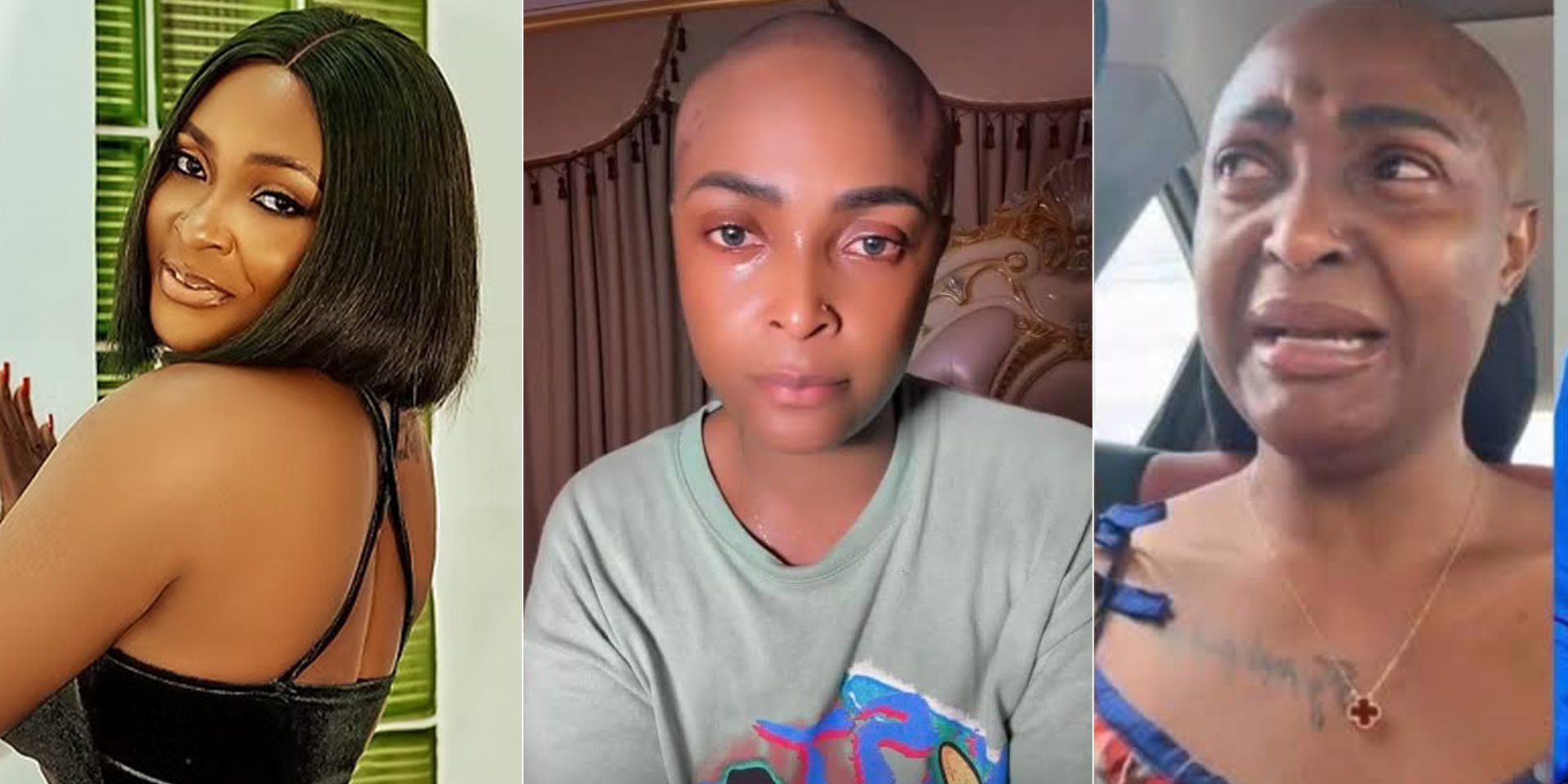
Controversial relationship commentator Blessing CEO has moved to quell mounting speculation about her health, insisting that reports she is battling stage 4 cancer are inaccurate and stem from a miscommunication during an ongoing diagnostic process.
Speaking in an interview on Young and Healthy Bros, an online show hosted by Egungun, Blessing said she only recently received biopsy results confirming the presence of cancer, but stressed that doctors have yet to determine the stage of the disease.
“I don’t have stage 4 cancer. That was a miscommunication,” she said. “I just received my biopsy results. Initially, the lump was thought to be non-cancerous, but later tests revealed it was cancerous. I haven’t started chemotherapy yet, and I’m still awaiting further tests to determine the exact stage.”
Fundraising controversy
The clarification comes amid scrutiny over fundraising efforts that circulated on social media, with some users alleging that exaggerated claims about her condition were used to solicit public donations.
Addressing the issue directly, Blessing said the total amount raised so far is far lower than widely reported. “The money raised is not hundreds of millions as some people think. It’s just 13 million naira,” she noted.
She also pushed back against calls for her to publicly release her medical records, describing such demands as intrusive. “I will not post my results online because it’s personal, and I don’t owe anyone an apology,” she said, adding that she is simply relaying information provided by her doctors as she receives it.
Public trust and digital scrutiny
The episode underscores a growing tension in Nigeria’s influencer-driven media space, where personal disclosures—especially around health and finances—are often subjected to intense public verification. In recent years, high-profile fundraising campaigns tied to medical emergencies have sparked debates about transparency, accountability, and the role of social media in amplifying both empathy and suspicion.
For public figures like Blessing CEO, whose brand has been built on outspoken commentary and viral visibility, the line between private health matters and public accountability appears increasingly blurred. The backlash she faced reflects a wider scepticism among Nigerians who have become wary of online appeals for financial support, particularly in the absence of independently verified information.
What is known—and what is not
At this stage, several key facts remain clear: Blessing has confirmed that a biopsy detected cancerous cells, but the stage of the illness has not yet been established, and no chemotherapy has begun. Claims that she is battling stage 4 cancer have been explicitly denied by her.
What remains uncertain is the precise diagnosis, treatment plan, and timeline for further medical evaluation. Without these details, any assessment of her condition remains incomplete.
Implications for followers and the wider public
For her followers, the situation raises immediate questions about how to respond to ongoing appeals for support—financial or otherwise—while balancing empathy with caution. In a country where access to affordable healthcare remains uneven, public fundraising for treatment is not uncommon, but it often exists in a grey area with limited oversight.
For now, Blessing CEO says her focus is on confirming her diagnosis and deciding on next steps in consultation with medical professionals. “I’m not a doctor; I’m only sharing the updates I receive from them,” she said.
As the story develops, attention will likely shift to the outcome of her pending tests and whether clearer medical information will ease public scepticism—or deepen calls for transparency in influencer-led fundraising campaigns.