









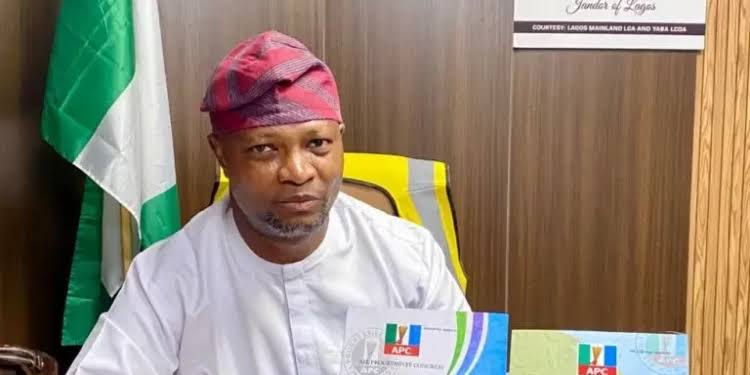
 The battle for who succeeds Babajide Sanwo-Olu in 2027 has taken an early and telling turn, with politician Abdul-Azeez Adediran abruptly withdrawing from the All Progressives Congress governorship race — a move that signals how firmly Lagos’ established political machinery may already be shaping the contest years before voters head to the polls.
Jandor confirmed he has stepped down from seeking the APC ticket, barely days after openly declaring interest in contesting. His withdrawal comes on the heels of reports that Lagos Deputy Governor Obafemi Hamzat was presented to President Bola Tinubu as the preferred consensus candidate of the influential Governor’s Advisory Council (GAC), the political bloc widely regarded as the state’s most powerful kingmaking structure.
The timing has inevitably fuelled questions about whether Lagos is heading toward a managed succession rather than a competitive internal contest.
Early signal of APC’s succession politics
Though 2027 remains politically distant, succession calculations in Lagos often begin years ahead of formal campaigns. The state’s governorship race has historically been shaped less by open primary battles and more by elite consensus, internal negotiations and the blessing of dominant party stakeholders.
That reality appears to be resurfacing.
Jandor’s brief entry into the APC governorship conversation had generated interest because he represented a rare wildcard — a politician with name recognition, campaign experience and an independent political base developed outside the APC mainstream.
His sudden withdrawal suggests that the space for an outsider challenge within the ruling party may be narrower than initially assumed.
From PDP challenger to APC entrant
Jandor’s political journey has been unusually fluid. In the 2023 Lagos governorship election, he contested under the banner of the Peoples Democratic Party, positioning himself as a reform-minded alternative to the APC’s longstanding dominance in the state.
Although he did not win, his campaign gave him statewide visibility and established him as a recognizable political actor in Lagos’ crowded landscape.
His recent defection to the APC was therefore interpreted by many analysts as a strategic recalibration — an attempt to reposition himself within the centre of power rather than challenge it from outside. His announcement last week that he intended to seek the party’s governorship ticket raised expectations that Lagos might witness a rare competitive APC primary.
That prospect now appears to have faded.
What is known — and what is not
What is confirmed is that Jandor has withdrawn from the APC governorship contest. It is also widely reported that Hamzat has emerged as the preferred choice of the Governor’s Advisory Council and has been presented to President Tinubu.
What remains unclear is whether Jandor’s withdrawal followed direct political negotiations, internal party pressure, or personal strategic calculation. He has yet to publicly provide detailed reasons for stepping aside.
It is equally uncertain what his next move will be — whether he will align with the Hamzat camp, seek another political office, or quietly rebuild influence within the APC ahead of future contests.
Why this matters
For Lagosians, this development is more than elite political theatre. Lagos remains Nigeria’s commercial nerve centre, and decisions about its next governor carry consequences for infrastructure delivery, housing, taxation, transport policy and urban security.
The early narrowing of the field may reinforce APC stability, but it also revives debate over how democratic candidate selection truly is within dominant political parties.
The next major signpost will be whether Hamzat’s emergence consolidates broad support across APC factions or triggers quiet resistance from other ambitious blocs within the party.
For now, one message is unmistakable: the race for Lagos 2027 has already begun — and power brokers appear determined to set its direction early.