








 The reopening of the Peoples Democratic Party’s (PDP) national headquarters in Abuja has set the stage for a decisive internal reckoning, as the party convenes its first National Executive Committee (NEC) meeting since months of paralysis triggered by a bitter leadership crisis.
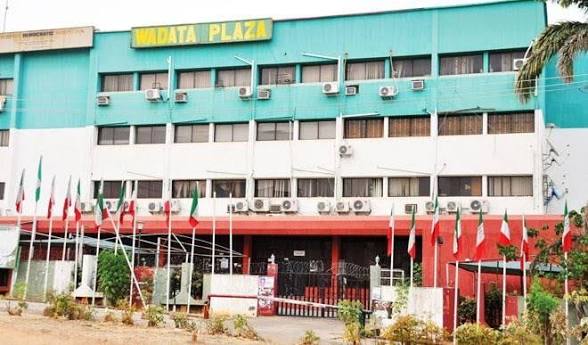
The meeting, scheduled to hold at Wadata Plaza, comes shortly after security operatives unsealed the building, which had remained locked since November following a violent confrontation between rival factions. Party officials say the gathering is intended to restore order, but its composition and timing suggest a deeper objective: consolidating control after a court-backed shift in leadership.
From physical closure to political realignment
The sealing of the secretariat last year was the most visible symbol of the PDP’s internal breakdown. Two factions — one aligned with a National Working Committee led by Tanimu Turaki, the other with a caretaker structure under Abdulrahman Mohammed — had clashed over legitimacy, culminating in chaos at the party’s national base.
That impasse was effectively broken by a ruling of the Court of Appeal, which nullified the Ibadan convention that produced the Turaki-led leadership. The judgment altered the party’s internal power dynamics, emboldening the Mohammed-led bloc.
With legal backing and support from influential figures, the Mohammed faction moved swiftly to organise a fresh convention in Abuja, further entrenching its position within the party hierarchy.
Key players signal where power lies
Today’s NEC meeting is expected to reflect that new balance of power. Sources within the party indicate that attendance will be dominated by loyalists of the Mohammed-led structure.
Among those expected are Nyesom Wike, Minister of the Federal Capital Territory, alongside Bukola Saraki and Okezie Ikpeazu. Their presence is being interpreted by insiders as a signal of consolidation rather than mere reconciliation.
While party officials frame the meeting as a step toward unity, the expected lineup suggests that the immediate priority may be to stabilise authority before pursuing broader peace efforts.
What is on the table
Discussions at the NEC are expected to centre on reconciliation, restructuring, and preparations for upcoming political contests. There are also indications that committees may be established to address grievances and re-engage aggrieved members.
However, it remains unclear how inclusive any reconciliation process will be, particularly for figures aligned with the displaced faction. No official agenda has been publicly released, and the extent of dissent within the party is still difficult to gauge.
Why this matters beyond the PDP
The PDP’s internal stability has national implications. As Nigeria’s main opposition party, its ability to present a coherent platform directly affects the balance of political competition.
Prolonged disarray has weakened its capacity to hold the ruling government accountable and organise effectively ahead of future elections. For ordinary party supporters and voters, the crisis has translated into uncertainty about representation and direction.
The reopening of the secretariat and the resumption of NEC meetings may signal a turning point — but only if the party can move beyond factional victories to genuine institutional rebuilding.
What to watch next
Attention will shift to the outcomes of the NEC meeting: whether it produces concrete steps toward reconciliation or simply formalises the dominance of one faction.
Key indicators will include any announced committees, timelines for broader stakeholder engagement, and reactions from excluded party figures. The durability of the current leadership arrangement will also depend on whether it can withstand further legal or political challenges.
For now, the PDP appears to be moving from open conflict to controlled consolidation — a transition that may stabilise the party in the short term, but leaves open questions about long-term unity.