










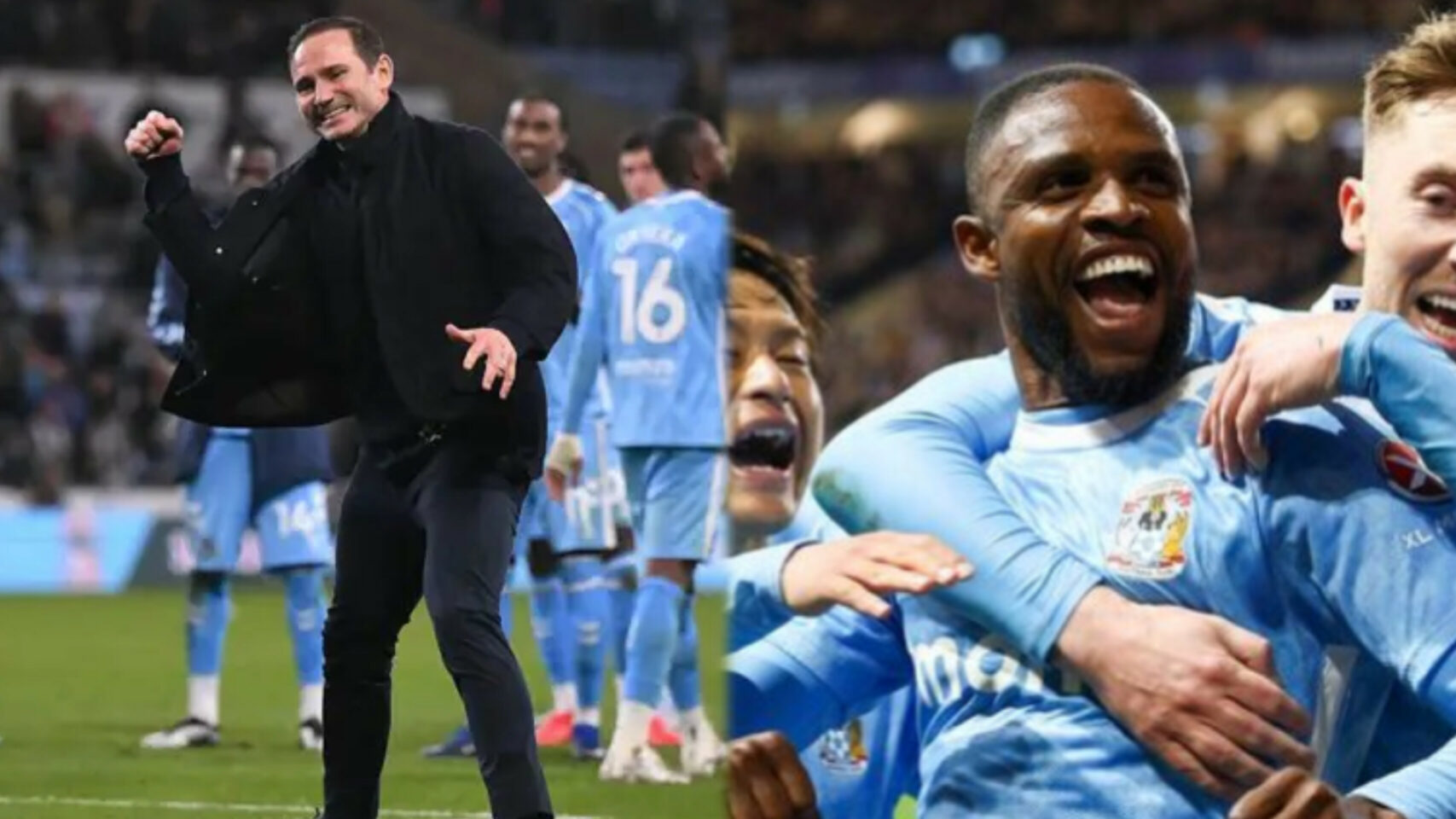
 Frank Lampard has guided Coventry City back to the Premier League, sealing promotion with a 1–1 draw against Blackburn Rovers and completing one of the Championship’s most notable turnarounds this season. The result, achieved with three games to spare, confirms the club’s first return to England’s top flight in 25 years — and marks a significant rehabilitation of Lampard’s managerial standing.
A promotion that changes the story
When Frank Lampard took over Coventry City in November 2024, both manager and club were in uncertain positions. Coventry sat 17th in the table, struggling for consistency, while Lampard’s recent spells at Everton and Chelsea had raised questions about his long-term credentials as a top-level coach.
His early message — that the squad was stronger than results indicated — set the tone for what followed. Rather than overhaul the team, Lampard focused on restoring confidence and structure. The outcome has been a steady climb up the table, culminating in a promotion push that has now turned into a title challenge.
Stability over overhaul
Unlike many promotion campaigns built on sweeping changes, Coventry’s success has relied heavily on continuity. The core of the squad remained intact, with Lampard prioritising internal development over wholesale recruitment.
That approach appears to have paid off. Players who had underperformed earlier in the season found renewed form, while younger talents were given defined roles within a clearer tactical system.
Forward Jack Rudoni is among those whose performances have improved under Lampard’s management. Speaking after the promotion was secured, he highlighted the manager’s personal approach, describing him as accessible and supportive beyond football matters — a factor that has helped build trust within the squad.
Targeted additions and Nigerian link
While stability was central, recruitment was not ignored. Coventry made selective additions, including Nigerian international Frank Onyeka, whose arrival added balance and experience in midfield.
For Nigerian observers, Onyeka’s involvement offers a direct connection to the club’s resurgence and raises interest in how he might feature in the Premier League next season. His presence also reflects a broader trend of Nigerian players playing key roles in promotion-chasing English clubs.
Context: a long road back
Coventry City’s return to the Premier League ends a 25-year absence marked by financial instability, relegations, and periods outside their home ground. Once a mainstay in England’s top division, the club has spent much of the past two decades rebuilding its identity.
Lampard’s achievement, therefore, is not just about a single season’s success but about restoring a club that had fallen far from its previous standing. It also comes at a time when the Championship is widely regarded as one of the most competitive leagues in Europe, making promotion increasingly difficult to secure.
What comes next
Promotion, however, is only the first step. The immediate challenge for Coventry will be survival in a Premier League environment defined by financial disparity and tactical intensity. Clubs promoted in recent seasons have often struggled to stay up, particularly when they lack depth or top-flight experience.
Lampard now faces a different test — proving that his methods can succeed against stronger opposition and under greater scrutiny. Recruitment decisions in the upcoming transfer window will be critical, as will the club’s ability to retain key players.
For Coventry supporters, the return to the Premier League represents a long-awaited milestone. For Lampard, it is an opportunity to reshape a narrative that, until recently, had been defined by inconsistency.
Whether this revival translates into sustained success will become clear next season. For now, both club and manager have achieved something that, just months ago, appeared unlikely.