









 A video from the wedding ceremony of Nollywood actress Sola Sobowale’s daughter has stirred widespread conversation online after it appeared to capture an emotionally charged moment between the actress and her ex-husband during the celebration.
Glamour overshadowed by a fleeting moment
The wedding, attended by close family members, friends, and entertainment industry figures, was widely described by guests as a vibrant and high-profile ceremony. However, attention shifted online after a short clip from the traditional dance segment began circulating on social media.
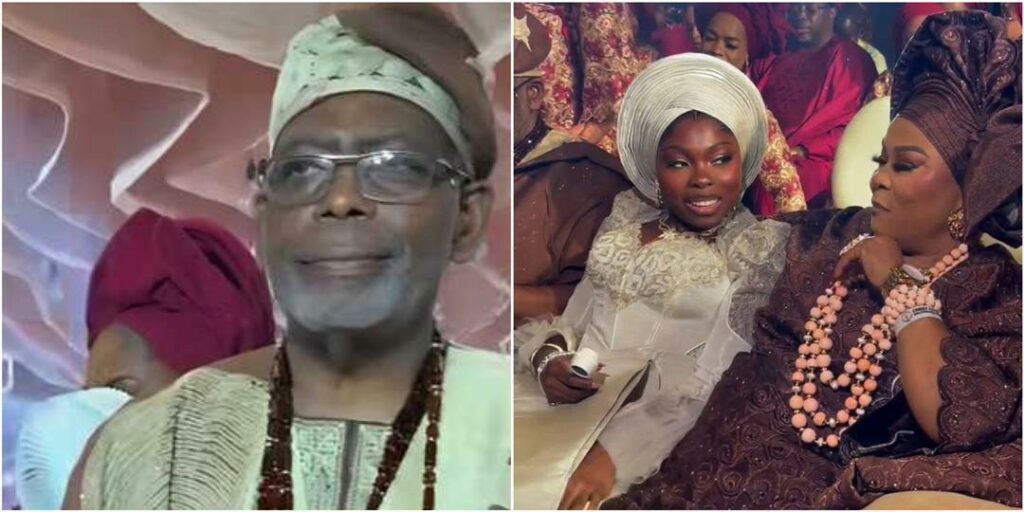
In the video, the bride’s father was invited to the dance floor as part of the customary proceedings. While he participated in the moment, Sola Sobowale was seen seated nearby, smiling but not engaging with him.
At one point, a friend seated beside the actress was observed gently tapping her and gesturing for her to join the dance floor. Despite the encouragement, she remained in her seat, a moment that has since become the focal point of online debate.
Subtle reactions, loud interpretations
Other guests at the event were also seen reacting in varying ways. One woman nearby appeared to watch the bride’s father closely as he danced, while another guest seated near Sobowale seemed to gesture that the moment should be allowed to pass without tension.
Though the clip is brief, its circulation has fueled contrasting interpretations, with some viewers reading emotional distance into the exchange, while others argue that the actress simply chose to remain composed during a formal family celebration.
What is known — and what is not
What is confirmed is that the event was the wedding ceremony of the actress’s daughter and that both parents were present. The viral clip shows a moment during the traditional dance segment involving the bride’s father and Sobowale seated nearby.
However, there is no verified public statement from either Sola Sobowale or her ex-husband regarding the interaction, and no evidence confirming any recent dispute between them. Much of the online commentary remains speculative, based solely on body language observed in the video.
Why the moment resonated online
The reaction to the clip reflects a familiar dynamic in Nigeria’s celebrity culture, where private family moments quickly become public discourse once shared online. In a social media environment that often reads meaning into silence and body language, even neutral gestures can be reframed as emotional statements.
For many viewers, the clip also touches on broader cultural expectations around reconciliation and public display of harmony during family ceremonies, especially weddings, where unity is often expected regardless of past relationships.
Beyond the viral debate
While the video continues to generate engagement online, it also raises a recurring issue in the digital age: how quickly context can be lost when personal family moments are consumed as public entertainment.
For now, neither party has addressed the circulating interpretations, and it remains unclear whether the moment reflected personal tension or simply a private boundary maintained during a public event.
What is certain is that the wedding — intended as a celebration of union — has, at least online, become a reminder of how celebrity lives are constantly negotiated between personal history and public perception.
A video from the wedding ceremony of Nollywood actress Sola Sobowale’s daughter has stirred widespread conversation online after it appeared to capture an emotionally charged moment between the actress and her ex-husband during the celebration.
Glamour overshadowed by a fleeting moment
The wedding, attended by close family members, friends, and entertainment industry figures, was widely described by guests as a vibrant and high-profile ceremony. However, attention shifted online after a short clip from the traditional dance segment began circulating on social media.
In the video, the bride’s father was invited to the dance floor as part of the customary proceedings. While he participated in the moment, Sola Sobowale was seen seated nearby, smiling but not engaging with him.
At one point, a friend seated beside the actress was observed gently tapping her and gesturing for her to join the dance floor. Despite the encouragement, she remained in her seat, a moment that has since become the focal point of online debate.
Subtle reactions, loud interpretations
Other guests at the event were also seen reacting in varying ways. One woman nearby appeared to watch the bride’s father closely as he danced, while another guest seated near Sobowale seemed to gesture that the moment should be allowed to pass without tension.
Though the clip is brief, its circulation has fueled contrasting interpretations, with some viewers reading emotional distance into the exchange, while others argue that the actress simply chose to remain composed during a formal family celebration.
What is known — and what is not
What is confirmed is that the event was the wedding ceremony of the actress’s daughter and that both parents were present. The viral clip shows a moment during the traditional dance segment involving the bride’s father and Sobowale seated nearby.
However, there is no verified public statement from either Sola Sobowale or her ex-husband regarding the interaction, and no evidence confirming any recent dispute between them. Much of the online commentary remains speculative, based solely on body language observed in the video.
Why the moment resonated online
The reaction to the clip reflects a familiar dynamic in Nigeria’s celebrity culture, where private family moments quickly become public discourse once shared online. In a social media environment that often reads meaning into silence and body language, even neutral gestures can be reframed as emotional statements.
For many viewers, the clip also touches on broader cultural expectations around reconciliation and public display of harmony during family ceremonies, especially weddings, where unity is often expected regardless of past relationships.
Beyond the viral debate
While the video continues to generate engagement online, it also raises a recurring issue in the digital age: how quickly context can be lost when personal family moments are consumed as public entertainment.
For now, neither party has addressed the circulating interpretations, and it remains unclear whether the moment reflected personal tension or simply a private boundary maintained during a public event.
What is certain is that the wedding — intended as a celebration of union — has, at least online, become a reminder of how celebrity lives are constantly negotiated between personal history and public perception.