










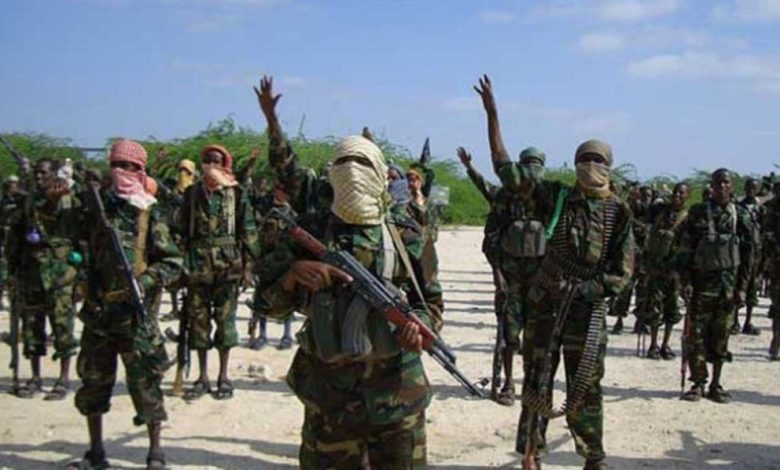
 A midday assault on Mussa community in Askira/Uba Local Government Area of Borno State has left four soldiers and a civilian dead, in what local officials and military sources describe as a coordinated attempt by suspected insurgents to breach the town’s defences.
The attack, which occurred around 12 p.m. on Wednesday, marks a notable shift in timing and execution, raising new concerns about the evolving tactics of armed groups operating in Nigeria’s North-East.
What happened in Mussa
Confirming the incident on Thursday, the chairman of Askira/Uba LGA, Mada Saidu, said one civilian — a woman — was killed alongside four soldiers during the нападение.
“There was an attack at Mussa ward yesterday afternoon. They killed one civilian, a lady, and four soldiers,” Saidu said.
Military sources, speaking on condition of anonymity because they were not authorised to brief the media, identified the fallen troops as members of the 115 Task Force Battalion deployed to the area.
According to one source, the soldiers were killed while attempting to prevent the attackers from entering the community.
“Four of our troops belonging to the 115 Task Force Battalion were killed while ensuring that the terrorists did not gain entrance into the town,” the source said.
Although the number of attackers was described as small, the assault was reportedly well-coordinated and aimed at testing or breaching the town’s defensive perimeter.
A shift in insurgent strategy?
Residents reported hearing sustained gunfire for about 30 minutes, triggering panic and forcing many to flee their homes in broad daylight — an unusual feature in a conflict often characterised by night-time raids.
“We were hearing serious gunshots, and many people began to flee their homes at exactly 12pm,” one resident said.
Another resident suggested the attackers may have intended to overrun the community but were ultimately repelled by the military presence.
The decision to strike in the afternoon, when civilian activity is at its peak, may indicate a tactical adjustment by insurgent groups seeking to maximise disruption, test response times, or exploit perceived vulnerabilities in daytime security coverage. While this interpretation is based on patterns observed in recent incidents, officials have not publicly confirmed any strategic shift.
Context: a protracted conflict
Borno State has remained the epicentre of the insurgency linked to Boko Haram and its splinter factions for over a decade. Despite repeated military offensives and claims of territorial gains, attacks on both military formations and civilian communities persist, particularly in rural and semi-urban areas.
In recent months, there has been a noticeable pattern of smaller, targeted assaults on military positions, suggesting that insurgents may be prioritising attrition over territorial control — weakening security forces through repeated, calculated strikes.
Impact on civilians
For residents of communities like Mussa, the последствия are immediate. Daytime attacks erode any remaining sense of safety, disrupt economic activity, and deepen displacement risks in a region already grappling with humanitarian strain.
The killing of a civilian in this instance — a woman, according to local authorities — highlights the continued vulnerability of non-combatants, even in areas with an active military presence.
Frequent attacks also strain trust between communities and security agencies, particularly when incidents occur despite nearby troop deployments.
What is known — and what is not
Authorities have confirmed the number of casualties and the location of the attack. However, key details remain unclear, including the exact identity and affiliation of the attackers, whether reinforcements were deployed during the হামলা, and if any insurgents were killed or captured.
The military has yet to issue an official public statement on the incident as of the time of reporting.
What comes next
The attack is likely to prompt a reassessment of troop deployment and surveillance patterns in vulnerable communities across southern Borno. Security analysts say the focus may shift toward improving rapid-response capabilities and intelligence gathering, particularly for daytime threats.
For now, residents in Askira/Uba and surrounding areas remain on edge, watching closely for signs of either renewed military pressure on insurgents — or further attempts to test the limits of local defences.