









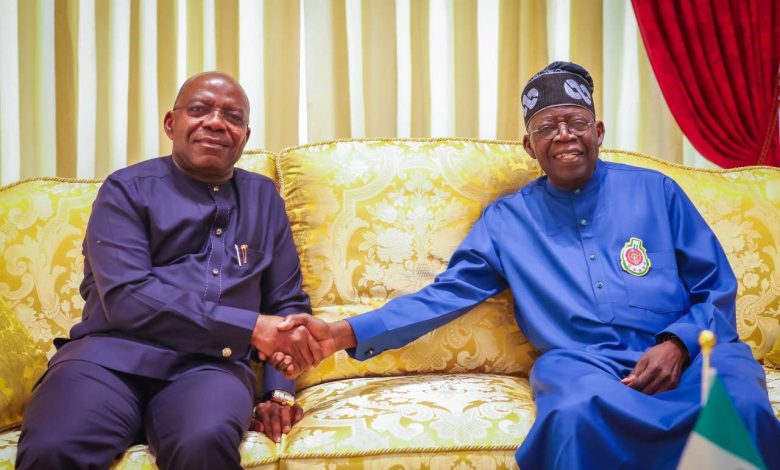
 A fresh layer of uncertainty has been added to Nigeria’s opposition politics after a senior figure in the Labour Party publicly suggested that parts of its leadership may align with the ruling party ahead of the 2027 presidential election — a claim that, if substantiated, would mark a significant departure from the party’s recent political posture.
Abayomi Arabambi, the South-West National Vice Chairman of the Labour Party, said during an interview on News Central on Thursday that key figures within the party, including Alex Otti, have “agreed in principle” to support the re-election bid of Bola Ahmed Tinubu.
According to Arabambi, the position is rooted in an informal understanding about regional power rotation. “This presidency belongs to the South-West, not to the South,” he said, arguing that backing Tinubu would allow the zone complete what he described as its eight-year turn.
A claim without broad confirmation
As of press time, there has been no public confirmation from Governor Otti or the Labour Party’s national leadership formally endorsing the position outlined by Arabambi. His remarks appear to reflect the stance of a faction within the party rather than a settled, collective decision.
That distinction is critical. The Labour Party has been grappling with internal divisions since the 2023 elections, with competing leadership claims and legal disputes weakening its cohesion. In that context, Arabambi’s comments may signal ongoing negotiations or positioning within the party rather than a definitive policy shift.
Obi’s future and deepening party fractures
Arabambi also dismissed suggestions that Peter Obi could return to the party, amid reports that former Finance Minister Nenadi Usman is pushing for his reinstatement.
He described such efforts as unrealistic, citing what he called an internal agreement to move away from Obi’s political direction following the party’s prolonged crisis. He further alleged that Usman’s intervention is driven by concerns that Obi may struggle to secure a presidential ticket under a broader opposition coalition platform.
These claims, however, remain contested and unverified by the individuals named.
Why this matters now
The Labour Party emerged from the 2023 general elections as a disruptive force, particularly among urban and younger voters seeking an alternative to Nigeria’s two dominant parties. Any indication that elements within its leadership might support the incumbent president risks undermining that political identity and could fragment its support base ahead of the next election cycle.
For voters, especially those who backed the party as a vehicle for change, the prospect of such an alignment raises questions about ideological consistency and the durability of opposition coalitions in Nigeria’s fluid political landscape.
Background: zoning and shifting alliances
Nigeria’s informal zoning arrangement — rotating the presidency between regions — has long shaped elite political bargaining. While not codified in law, it remains influential in party calculations and coalition-building.
President Tinubu’s emergence in 2023 was partly justified within this framework as a South-West turn following eight years of northern leadership under former President Muhammadu Buhari. Arabambi’s argument extends that logic, suggesting continuity rather than contestation in 2027.
However, opposition parties have historically challenged incumbents regardless of zoning considerations, making any early endorsement by rival party figures unusual and politically consequential.
What happens next
Attention will likely turn to official reactions from Governor Otti, the Labour Party’s national executive, and other key stakeholders. Clear positions — whether to affirm or repudiate Arabambi’s claims — will determine whether this is an isolated remark or the beginning of a broader realignment.
In the coming months, party congresses, court rulings on leadership disputes, and coalition talks ahead of 2027 will shape the direction of the Labour Party. For now, Arabambi’s comments have exposed fault lines that may deepen unless decisively addressed.