










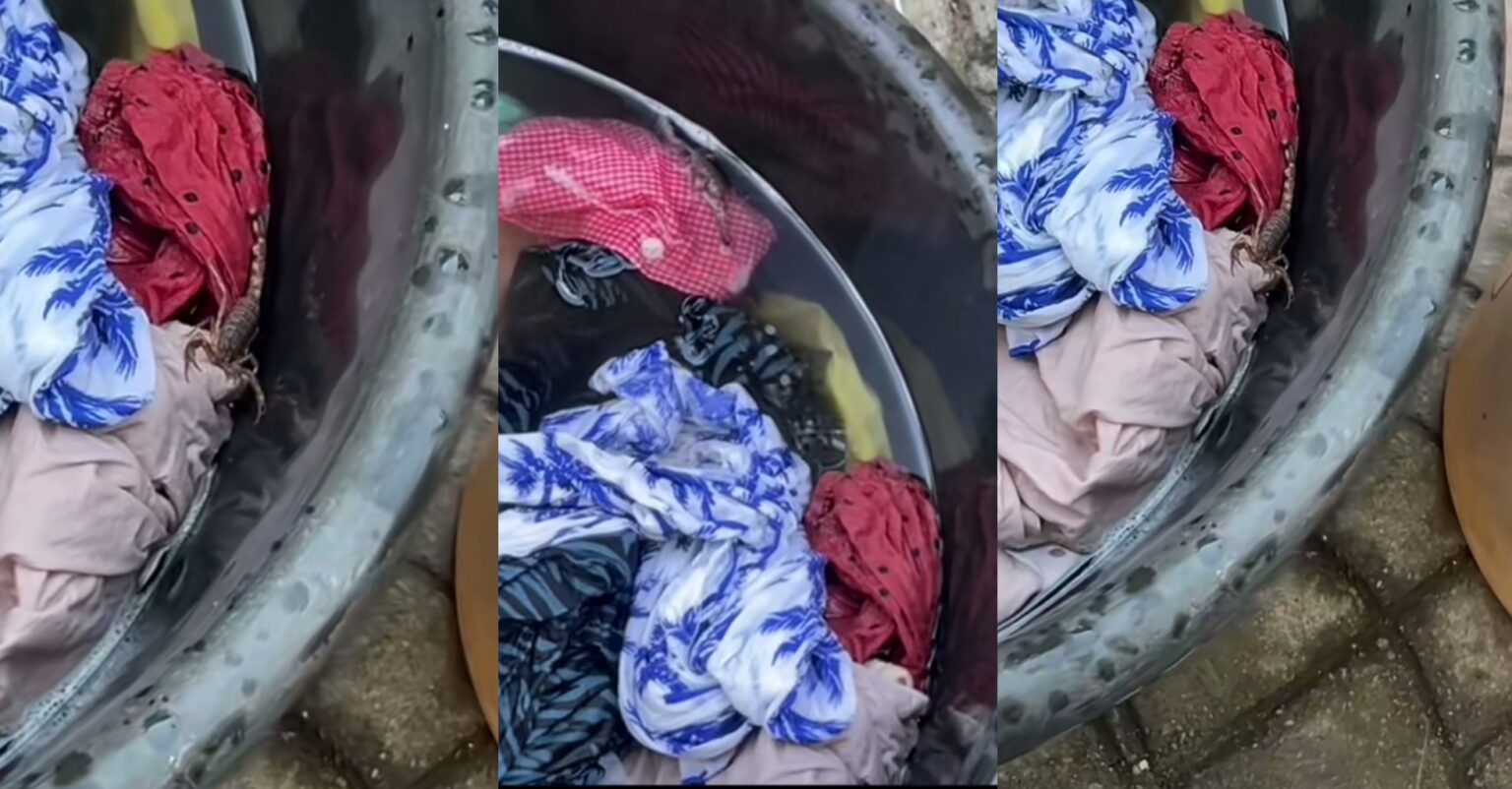
A Nigerian thrift vendor has sparked widespread online conversation after describing a near-miss encounter with a live scorpion while washing a bale of second-hand clothing—an experience that, beyond its shock value, is prompting renewed attention to the hidden risks in Nigeria’s booming “okrika” trade.
The woman, identified on TikTok as @Thriftbalesinibadan, said she had just taken delivery of cotton blouses and denim dresses when the incident occurred. According to her account, she began rinsing the clothes—something she does not typically do with new arrivals—before noticing what she described as an unusually large scorpion in the water.
“I’ve never seen a scorpion that big in my entire life. I’ve rinsed two clothes out of that water before I noticed it,” she said in the video, which has since circulated widely across social media platforms.
While the vendor did not report being stung, she suggested the experience could have ended differently, noting how close she came to direct contact with the insect.
A Routine Practice With Overlooked Risks
Second-hand clothing, commonly known as okrika in Nigeria, remains a staple of urban and peri-urban economies. Imported largely from Europe and North America, these goods pass through multiple handling points—from shipping containers to open markets—before reaching retailers and end-users.
For many traders, especially small-scale vendors operating in cities like Ibadan, Lagos, and Benin City, speed is part of the business model. New arrivals are often sorted and displayed quickly to attract buyers, sometimes without thorough washing or inspection.
The TikToker’s account highlights a rarely discussed dimension of the trade: the possibility of foreign objects, insects, or contaminants embedded within tightly packed bales. While such incidents are not widely documented in official reports, traders informally acknowledge encountering unexpected items ranging from sharp objects to decaying materials.
Public Reaction: Fear, Faith, and Familiarity
Online reactions to the video reflect both alarm and resignation. Some viewers framed the incident as a narrowly avoided tragedy.
“Thank God for life, may the Lord keep protecting us,” one user wrote, echoing a sentiment common in the comment thread.
Others questioned standard practices within the trade itself. “So una dey wash okrika clothes?” another user asked, hinting at the variation in how vendors handle inventory before resale.
A number of responses also underscored the psychological impact of the story, with some users describing feelings of anxiety or vowing to discard any suspect items outright.
What Is Known—and What Is Not
There is no independent verification of the specific incident beyond the TikTok video, and the exact origin of the scorpion remains unclear. It is also not confirmed whether the insect entered the bale during shipping, storage, or local handling.
However, the broader conditions of the second-hand clothing supply chain—long-distance transport, compressed packaging, and inconsistent storage environments—make such occurrences plausible, if uncommon.
Implications for Traders and Consumers
For traders, the episode serves as a reminder of the occupational hazards that often go unaddressed in informal markets. Routine practices such as sorting, rinsing, and ironing are typically done without protective gear, exposing workers to potential injuries or contamination.
For consumers, the incident reinforces longstanding public health advice: second-hand clothing should be thoroughly washed before use. While most attention has focused on hygiene and skin-related concerns, this case introduces a more immediate physical risk.
What Comes Next
There has been no official response from market authorities or public health agencies regarding the viral video. However, as social media continues to amplify everyday experiences within Nigeria’s informal economy, incidents like this may gradually influence behavior—if not policy.
In the absence of regulation, change is likely to be driven by awareness. For now, traders may become more cautious in handling new bales, and buyers more insistent on cleaning garments before wear.
What remains to be seen is whether this moment translates into broader safety practices—or fades, like many viral stories, into the fast-moving cycle of online attention.