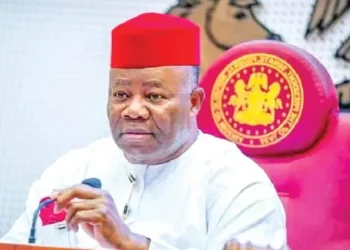










 Nigeria’s internal challenges are no longer just a domestic concern but a regional one, Ghana’s former president, John Mahama, has said, underscoring how the country’s trajectory directly shapes the fortunes of its neighbours.
Speaking on regional security and economic dynamics, Mahama said Nigeria’s scale — both in population and influence — makes its stability central to West Africa’s collective wellbeing. His remarks reflect a growing recognition among regional leaders that developments within Nigeria, whether economic or security-related, rarely stop at its borders.
“If Nigeria does well, Ghana does well”
Mahama framed Nigeria as a “key security interest” to Ghana, explaining that prosperity in Africa’s largest country tends to generate positive spillover effects across the subregion. Conversely, instability carries risks that smaller economies may struggle to absorb.
“When you have cousins about 250 million of them, you would want them to do well,” he said, warning that prolonged instability could trigger migration pressures on neighbouring states. “So every day when I wake up I pray… let Nigeria get their act together.”
His comments, though informal in tone, point to a serious policy concern: the potential for economic strain and population movement if Nigeria’s internal challenges deepen.
Why Nigeria’s trajectory matters beyond its borders
Nigeria’s role in West Africa extends beyond geography. As the region’s largest economy and most populous country, it serves as a hub for trade, labour, and security cooperation. Its performance influences everything from cross-border commerce to currency stability and regional integration efforts under blocs like ECOWAS.
Historically, periods of economic downturn or insecurity in Nigeria have coincided with increased informal migration into neighbouring countries, including Ghana, Benin, and Niger. While such movement is often driven by economic opportunity, sudden surges can strain public services and labour markets in smaller states.
Mahama’s remarks also come amid persistent concerns about insecurity in parts of Nigeria, alongside broader economic pressures that have affected living standards. These combined factors, analysts say, heighten the risk of outward migration, both within and beyond the region.
What is known — and what remains unclear
Mahama did not cite specific data or immediate triggers for his concerns, and there is no official indication of a current large-scale migration wave from Nigeria into Ghana. His comments are best understood as a cautionary assessment rather than a response to a single unfolding crisis.
What is clear, however, is that regional leaders are increasingly attentive to Nigeria’s internal dynamics and their potential cross-border implications.
Implications for citizens and policymakers
For ordinary citizens across West Africa, the stakes are tangible. Economic instability in Nigeria can disrupt trade flows, affect prices of goods, and influence job opportunities in neighbouring countries. For governments, it raises the urgency of coordinated regional planning — particularly in managing migration, security cooperation, and economic resilience.
Mahama’s intervention also subtly reinforces expectations on Nigerian leadership to stabilise key sectors, not just for domestic recovery but for regional balance.
What to watch next
Attention will likely turn to how regional bodies and national governments respond to these concerns. Increased dialogue within ECOWAS on migration management and economic coordination could follow, especially if Nigeria’s challenges persist.
For now, Mahama’s remarks serve as a reminder that Nigeria’s path forward carries consequences far beyond its borders — a reality that is shaping how its neighbours plan for the future.