









 A widening leadership rift within the African Democratic Congress has taken a dramatic turn in Adamawa State, where a faction of the party has announced the suspension of some of its most prominent figures, including former Vice President Atiku Abubakar. The move, made public on Monday, signals a deepening crisis that now cuts across both state and national structures of the party.
Suspension announced amid factional dispute
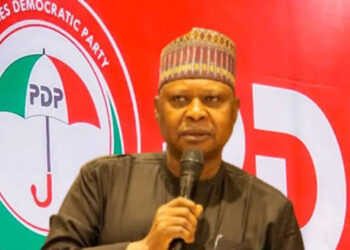
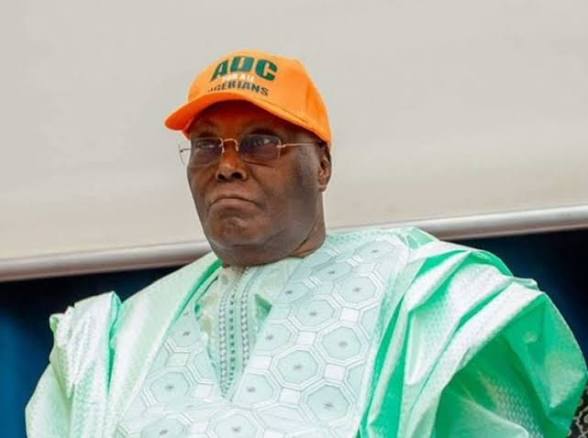
At a press briefing in Adamawa, factional chairman Raji Zumo declared the immediate suspension of Atiku, former Secretary to the Government of the Federation Babachir Lawal, and the party’s transition committee chairman, Sadiq Ibrahim.
Zumo accused the trio of undermining party authority and fuelling internal divisions. He said their actions included creating parallel structures and disregarding what he described as a subsisting court order — allegations that, if substantiated, suggest a struggle for control rather than routine disciplinary action.
“No individual, regardless of status or influence, is above the party’s constitution,” Zumo said, framing the decision as a step to “restore order” and reinforce internal discipline.
A party already under strain
The suspensions come at a time when the ADC is grappling with a broader leadership tussle at the national level. A rival bloc has challenged the party’s hierarchy, with Nafiu Bala Gombe laying claim to the position of national chairman, further fragmenting authority within the party.
The dispute has also drawn in figures like former Senate President David Mark, whose role in the party’s national leadership arrangement remains contested. While one faction questions his influence, another continues to project stability and readiness ahead of a planned national convention.
Compounding the crisis, the Independent National Electoral Commission (INEC) had earlier intervened by withdrawing recognition from one faction — a move that has heightened uncertainty over which leadership structure holds legal standing.
Why this matters now
Atiku Abubakar is not just any party member; he remains one of Nigeria’s most recognisable opposition figures, with a long-standing influence in northern politics and national electoral contests. His suspension — even at a factional level — raises questions about the ADC’s cohesion and its capacity to position itself as a credible alternative ahead of future elections.
For ordinary party members and supporters in Adamawa, the crisis risks translating into confusion over legitimate leadership, weakening grassroots mobilisation at a time when political parties are expected to be consolidating structures.
More broadly, the episode reflects a recurring challenge in Nigeria’s party system: weak internal governance and the proliferation of factions often driven by elite rivalries rather than ideological differences.
What is known — and what is unclear
What is confirmed is that a faction of the ADC in Adamawa has publicly announced the suspension and outlined reasons tied to alleged anti-party activities. However, it remains unclear whether this faction holds formal recognition from the party’s national leadership or from INEC.
There has also been no immediate public response from Atiku Abubakar or Babachir Lawal at the time of reporting, leaving open questions about whether the suspension will be contested.
What to watch next
The immediate focus will be on reactions from the suspended figures and their supporters, which could escalate the dispute into a full-blown legal or political confrontation. The planned national convention may also prove decisive, potentially clarifying — or further complicating — the party’s leadership structure.
For the ADC, the stakes go beyond internal discipline. The party’s ability to manage this crisis will determine whether it can remain a viable platform in Nigeria’s increasingly competitive opposition landscape or slide deeper into fragmentation.