








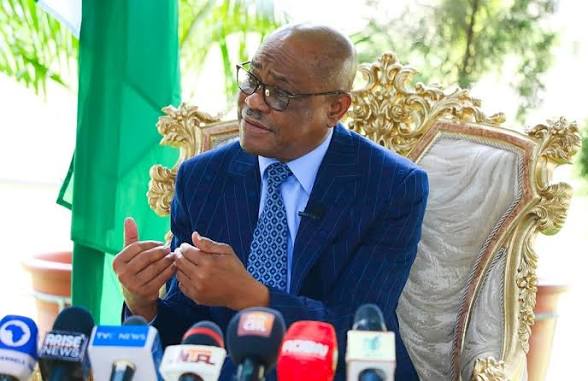
 The Minister of the Federal Capital Territory (FCT), Nyesom Wike, has offered a rare glimpse into how he keeps tabs on public sentiment, saying he personally monitors television broadcasts to follow what he described as comments from his “enemies.”
Speaking to journalists in Abuja, Wike said he does not depend on aides or political associates for briefings on media coverage. Instead, he relies on direct consumption of news content, insisting this helps him avoid filtered or distorted accounts of what is being said about his leadership.
“I watch news all the time… I don’t wait for anyone to come and tell me what my enemies are saying about me, I hear it by myself,” the minister said, listing stations such as Africa Independent Television, TVC News and Channels Television among his regular sources.
He added that his routine often extends late into the night, sometimes revisiting broadcasts around midnight to ensure he is fully updated before ending the day.
A Window Into Wike’s Governing Style
Wike’s comments reinforce a governing approach that has come to define his tenure—centralised, detail-oriented, and personally driven. Since assuming office as FCT minister in 2023, the former Rivers State governor has cultivated an image of a hands-on administrator, frequently appearing at project sites and engaging directly with policy execution.
His decision to bypass intermediaries in tracking public opinion may reflect a broader distrust of bureaucratic filtering within government circles, where information is often shaped before reaching top officials. In Nigeria’s highly polarised political environment, such direct engagement with media narratives can also serve as a tool for political survival and message control.
Media Monitoring and Political Messaging
In practical terms, Wike’s approach highlights the continued influence of traditional broadcast media in shaping elite opinion, even as social media increasingly dominates public discourse. By focusing on established television outlets, the minister appears to prioritise platforms that aggregate political commentary and opposition voices in structured formats.
However, his framing of critics as “enemies” may raise concerns among observers about how dissent is perceived within the FCT administration. Analysts say such language, while not uncommon in Nigerian politics, can signal a combative posture that risks blurring the line between constructive criticism and political opposition.
Why This Matters Now
The remarks come at a time when the FCT is undergoing significant policy and infrastructural changes under Wike’s leadership, including enforcement drives, urban renewal projects, and land administration reforms. For residents of Abuja, how the minister interprets and responds to criticism has direct implications for governance, transparency, and accountability.
A system where feedback is closely monitored—but potentially viewed through an adversarial lens—could shape how policies are adjusted or defended. For ordinary citizens, this raises questions about whether public concerns will be incorporated into decision-making or dismissed as opposition noise.
What Is Known—and What Isn’t
Wike’s comments clearly establish that he personally consumes televised news to track commentary about his administration. What remains unclear is how this information feeds into policy decisions, or whether there are formal mechanisms within the FCT administration to systematically analyse public feedback beyond media monitoring.
It is also not confirmed whether the minister engages with newer digital platforms, where a significant portion of Abuja’s younger population expresses political views.
What to Watch
Going forward, attention will likely focus on whether this direct monitoring translates into policy responsiveness or tighter control of public messaging. As Abuja residents continue to navigate reforms affecting housing, infrastructure, and urban regulation, the balance between criticism and governance will remain a key test of Wike’s leadership style.