










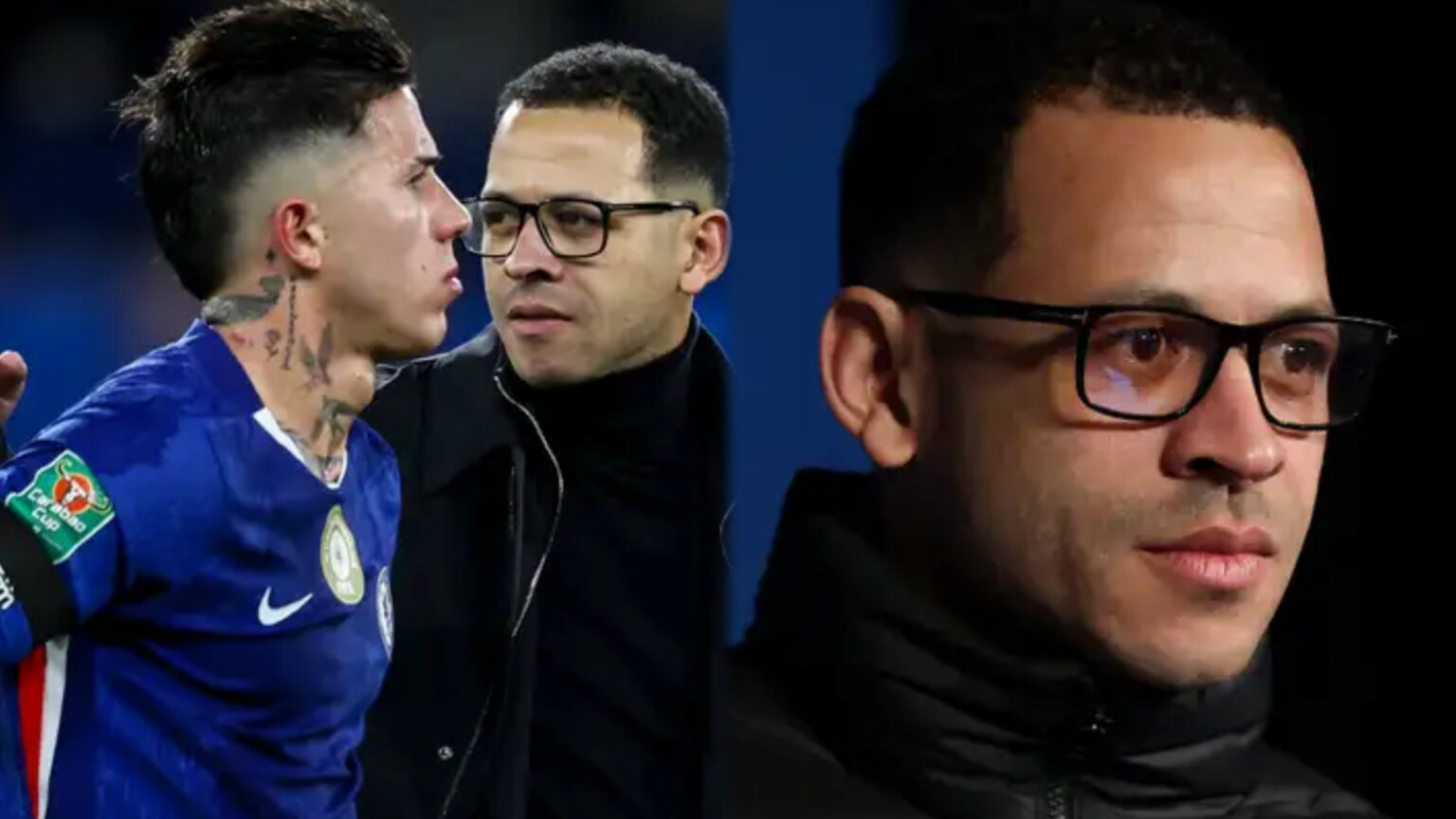
Chelsea’s season has reached an uneasy juncture—one where results, perception, and internal messaging are pulling in different directions. Manager Liam Rosenior insists there is no crisis at Stamford Bridge, but recent performances have made that stance increasingly difficult to defend in public.
The club’s exit from the UEFA Champions League at the hands of Paris Saint-Germain, followed by a heavy 3–0 league defeat to Everton, has sharpened scrutiny. Four consecutive losses and a defensive record that includes just one clean sheet in 15 matches point to deeper structural issues—particularly at the back—than Rosenior appears willing to concede.
Rosenior pushes back
Speaking ahead of a crucial FA Cup quarter-final against Port Vale, Rosenior framed the criticism as external “noise,” detached from what he describes as steady internal progress.
He pointed to Chelsea’s league standing—fourth since his arrival—as evidence that the broader trajectory remains positive. His comments suggest a manager attempting to steady both dressing room morale and his own authority, at a time when fan sentiment is visibly shifting.
Yet the tension between results and rhetoric is hard to ignore. While Rosenior argues for patience, supporters and analysts are increasingly focused on performances that have lacked cohesion, particularly in defensive transitions.
A familiar Chelsea cycle?
Chelsea’s current predicament echoes a pattern that has defined the club’s modern era: high expectations, short tolerance for underperformance, and swift escalation of pressure. Even in seasons where league positions appear respectable, inconsistency has often triggered internal and external unrest.
This context matters. Unlike some rivals—such as Liverpool or Manchester United—who have publicly embraced longer-term rebuilds in recent years, Chelsea’s ownership and fan base have historically demanded quicker returns on investment, both tactically and financially.
That expectation gap may explain why Rosenior’s emphasis on long-term metrics has not fully resonated.
Squad issues and defensive fragility
On the pitch, the concerns are tangible. Defensive instability has become a recurring theme, with lapses in organisation and individual errors undermining otherwise competitive spells. The recent absence of key midfielder Enzo Fernández due to suspension has also disrupted balance, exposing a lack of depth in crucial areas.
Critics argue that Chelsea’s league position flatters to deceive, especially given that several competitors—Liverpool, Manchester United, and Aston Villa—have faced their own inconsistencies. In that sense, Chelsea’s standing may reflect a wider dip in league quality rather than clear progress.
Why this matters now
For ordinary supporters, the immediate concern is not abstract progress but tangible outcomes: results, performances, and signs of identity on the pitch. A prolonged slump risks more than just points dropped—it can erode confidence, reduce matchday support, and increase pressure on club leadership to act decisively.
For the club’s hierarchy, the stakes are equally high. Another managerial upheaval would carry financial and sporting consequences, potentially disrupting recruitment plans and long-term strategy.
What to watch next
The FA Cup clash with Port Vale now takes on outsized importance. It is not just a pathway to silverware but a test of authority—both for Rosenior and his players.
A convincing win could stabilise the narrative, at least temporarily. Anything less—particularly another disjointed performance—will intensify questions about whether Chelsea’s issues are merely a rough patch or symptoms of a deeper imbalance.
For now, Rosenior is asking for calm. Whether Chelsea’s results allow that calm to hold is another matter entirely.