








 Katsina State Governor, Malam Dikko Radda, on Monday convened an emergency Security Council meeting in response to a fresh bandit attack that has again exposed the fragility of security in parts of the state. The closed-door session, holding at the Government House in Katsina, brings together a broad coalition of security chiefs, local government leaders, and community stakeholders in what officials describe as an urgent review of the state’s security posture.
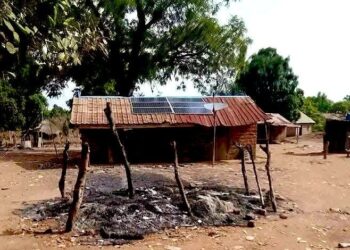
The meeting follows Sunday’s attack on Sayaya village in Matazu Local Government Area, where gunmen killed three people, including a police officer, and carried out coordinated assaults on public infrastructure. Residents reported that the attackers stormed the local police station, damaged a Primary Health Care Centre, and looted shops—an approach that suggests not just opportunistic violence but a deliberate attempt to weaken state presence in the community.
Broad Security Presence Signals Urgency
In attendance at the meeting are representatives of the Nigerian Army, Defence Headquarters, and the Department of State Services, alongside senior officers from the Nigeria Police Force and other paramilitary agencies, including the Nigeria Security and Civil Defence Corps and the Nigeria Immigration Service. Also present are traditional rulers and religious leaders—an indication that the government is seeking both operational and community-based responses.
While no official statement has yet been issued from the meeting, the composition of attendees points to a coordinated, multi-agency strategy that could include immediate deployments, intelligence-sharing adjustments, and possible restrictions or directives for vulnerable localities.
Governor’s Visit Underscores Political Pressure
Governor Radda had earlier visited Sayaya village, inspecting damaged facilities and meeting residents. According to officials present, he expressed condolences to families of the victims and to the police command over the loss of an officer. Such visits have become a recurring feature of state responses to rural attacks, but they also underline the political pressure on governors in the North-West to demonstrate visible leadership amid persistent insecurity.
A Pattern of Rural Vulnerability
Katsina, like neighbouring states in Nigeria’s North-West, has grappled with years of banditry, marked by village raids, kidnappings, and attacks on security formations. Despite periodic military offensives and community policing initiatives, many rural areas remain exposed due to limited security coverage, difficult terrain, and the mobility of armed groups.
The targeting of a health centre in Sayaya adds another layer of concern. In communities where access to healthcare is already limited, such attacks deepen humanitarian risks and can discourage the return of displaced residents or the continued operation of essential services.
What Happens Next
The immediate outcome of the Security Council meeting is expected to include reinforcement of security presence in Matazu and surrounding areas, though details remain unconfirmed at the time of reporting. Analysts say longer-term measures—such as improved intelligence coordination, community engagement, and addressing cross-border movements—will be critical if the cycle of attacks is to be broken.
For residents, the stakes are immediate. Beyond the loss of lives and property, each attack disrupts livelihoods, education, and access to care. As the state government deliberates its next steps, communities like Sayaya will be watching closely—not just for assurances, but for tangible improvements in their day-to-day security.
Further updates are expected as officials brief the public on decisions reached at the meeting.