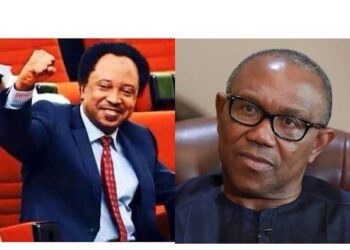









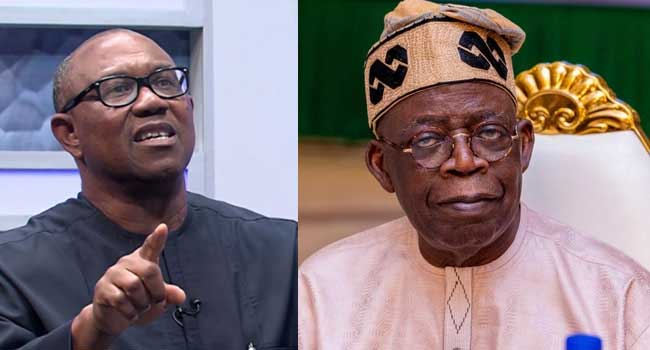
 Nigeria’s deepening economic strain and security concerns have again moved to the centre of political debate, as former presidential candidate Peter Obi publicly challenged President Bola Ahmed Tinubu over remarks suggesting Nigerians are better off than citizens of some African countries.
The exchange, triggered by Tinubu’s comments during a recent visit to Yenagoa, reflects a broader contest over how the government frames hardship — and how citizens are expected to interpret it.
Obi rejects “comfort in comparison”
In a statement posted Monday on his X account, Obi criticised the President’s call for Nigerians to “thank God” that their situation is not as dire as that of countries like Kenya. He argued that such comparisons risk minimising the severity of hardship currently experienced across the country.
Tinubu had acknowledged the pain caused by rising fuel prices but urged citizens to remain hopeful, saying Nigerians were still relatively better positioned than others on the continent.
Obi, however, said this framing shifts attention away from measurable realities. Drawing on religious references, he likened the comparison to moral self-justification rather than evidence-based governance, warning that it could distract from the urgency of reform.
“At a time when citizens are demanding clarity and results, comparisons without credible data can become a tool of deflection,” Obi said.
Debate over data and national performance
Central to Obi’s criticism is the role of data in shaping policy and public accountability. He revisited a campaign-era remark by Tinubu — “Na statistics we go shop?” — to argue that dismissing data undermines informed governance.
According to Obi, comparative metrics remain essential for assessing national progress. He contended that, on several key indicators — including human development, electricity access, literacy, and GDP per capita — Nigeria trails behind Kenya.
He also pointed to security rankings, claiming Nigeria remains among the world’s most terror-affected countries, a position Kenya does not share at the same scale.
While these claims reflect widely reported development challenges, the presidency has not issued a detailed rebuttal addressing the specific data cited by Obi.
Why this matters now
The exchange comes at a time when many Nigerians are grappling with rising living costs following fuel subsidy removal and broader economic reforms. Inflationary pressure, transport costs, and food prices have significantly altered household spending patterns, particularly for low- and middle-income earners.
For ordinary citizens, the debate is not merely rhetorical. How the government frames hardship can influence public trust, expectations, and tolerance for ongoing reforms. Messaging that appears to downplay lived realities risks widening the gap between policy intent and public perception.
A familiar tension in Nigerian politics
Public disagreements over economic conditions are not new in Nigeria’s political landscape. Successive administrations have often relied on regional or global comparisons to contextualise domestic challenges, while opposition figures push for more direct accountability using local indicators.
However, the current exchange stands out because it reflects a deeper question: whether Nigerians should measure progress by relative positioning or by improvements in their own daily lives.
What is known — and what remains unclear
It is confirmed that Tinubu made the remarks in Yenagoa while addressing concerns about economic hardship, and that Obi responded publicly with a detailed critique. What remains unclear is whether the federal government will formally engage the substance of Obi’s claims, particularly regarding comparative development data.
No official policy shift or clarification has yet followed the exchange.
What to watch next
Attention is likely to focus on whether the presidency reframes its communication strategy around economic reforms, especially as public pressure mounts. Analysts will also watch for more data-driven engagement from both government and opposition figures as Nigeria navigates a difficult economic transition.
For now, the debate highlights a growing divide between political messaging and public sentiment — one that could shape how Nigerians assess leadership in the months ahead.