








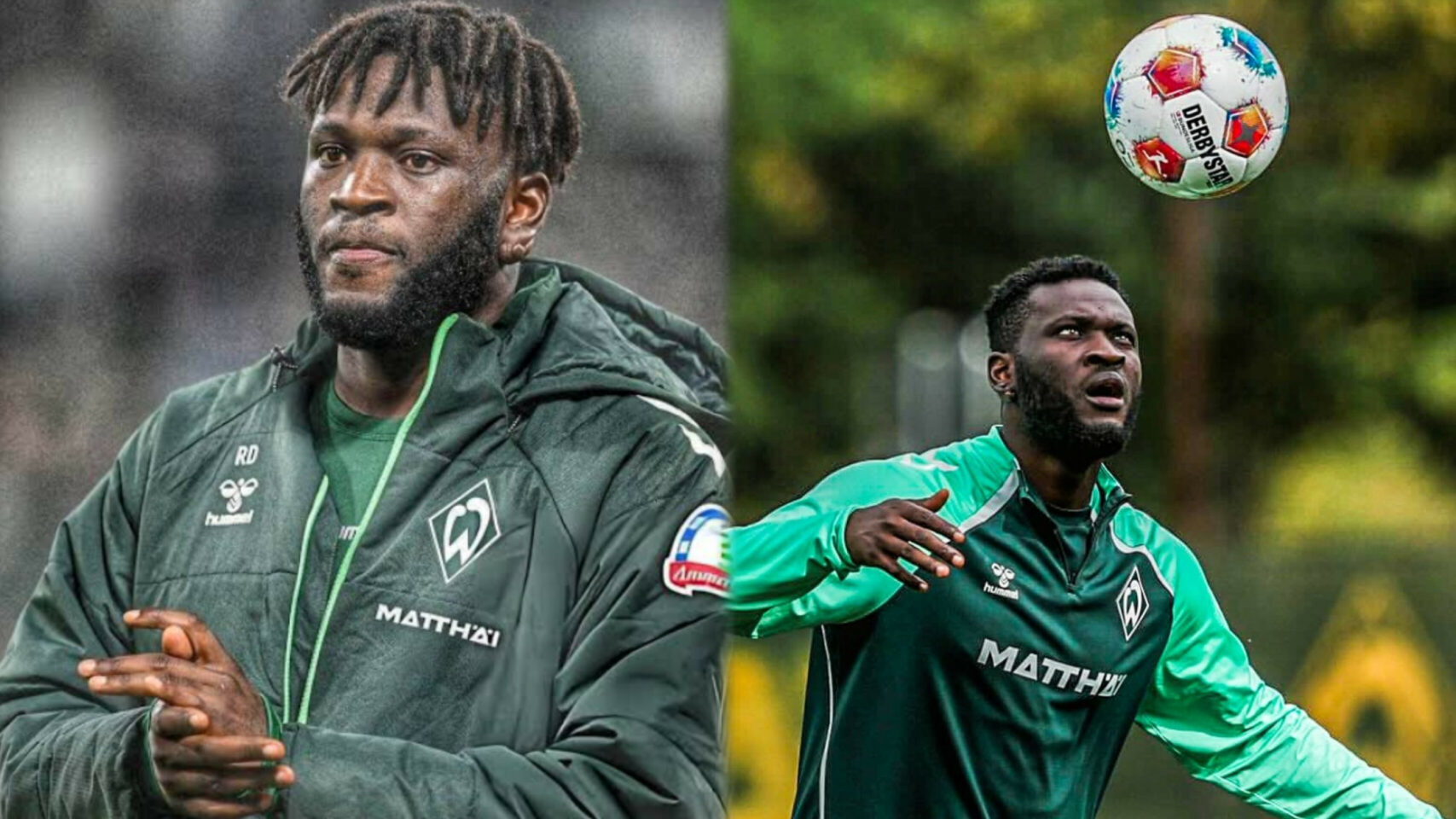
 When Victor Boniface left Bayer Leverkusen on loan, the move raised eyebrows among fans who had watched him power the club to a historic, unbeaten domestic double. Now, the club’s hierarchy says the decision was less about form and more about survival — keeping a key player from being worn down by the demands of elite football.
Speaking this week, sporting director Simon Rolfes offered a candid explanation: Boniface needed time to train, not just play.
Managing success and its consequences
Boniface was central to Leverkusen’s title-winning campaign, contributing 21 goals and nine assists in 34 appearances. That season, which delivered the club’s first Bundesliga title alongside a domestic cup, marked a turning point not just for Leverkusen but for Nigerian football exports in Europe.
However, the intensity that came with success — including domestic and European fixtures every few days — quickly became a burden. According to Rolfes, the packed schedule left little room for recovery or structured training, particularly for a player already struggling with recurring injuries.
“We spoke together,” Rolfes said. “He needs more training to get in his best shape again. If you’re playing every three days, the reality is that you’re not training anymore with a team.”
The decision to send Boniface to Werder Bremen was therefore framed internally as a recalibration — a chance to rebuild his physical condition away from the relentless pace at Leverkusen.
A plan disrupted by injury
That strategy has, however, encountered a significant setback. During his loan spell, Boniface suffered a knee injury that required surgery, halting any immediate hopes of a return to form.
Rolfes confirmed the procedure was successful and expressed cautious optimism about the player’s recovery. “His knee is much better. It’s a good situation, and now he has to build up his fitness again,” he said.
Boniface has resumed individual training in Bremen, but remains some distance from full match fitness — a reminder of how fragile recovery timelines can be for players returning from repeated injuries.
Why this matters beyond Leverkusen
For Nigerian fans, Boniface’s situation highlights a broader issue facing the country’s top football exports: the physical toll of European football at its highest level. Players who break through with standout seasons often find themselves caught between maintaining performance and managing their bodies, particularly in leagues where fixture congestion is unavoidable.
The case also raises questions about player welfare in modern football. While loan moves are often seen as opportunities for more game time, Boniface’s situation suggests they can also serve as rehabilitation tools — though not without risk.
What comes next
Leverkusen’s immediate priority is ensuring Boniface returns fully fit rather than rushing him back into competition. The club’s long-term plans still appear to include the Nigerian forward, but much will depend on how well he recovers in the coming months.
For now, there is no confirmed timeline for his return to competitive action. What is clear, however, is that a player once central to one of Europe’s most remarkable seasons is now in a quieter, more uncertain phase — rebuilding not just form, but fitness.
The coming weeks will determine whether the loan move achieves its original aim or becomes another chapter in a season disrupted by injury.