









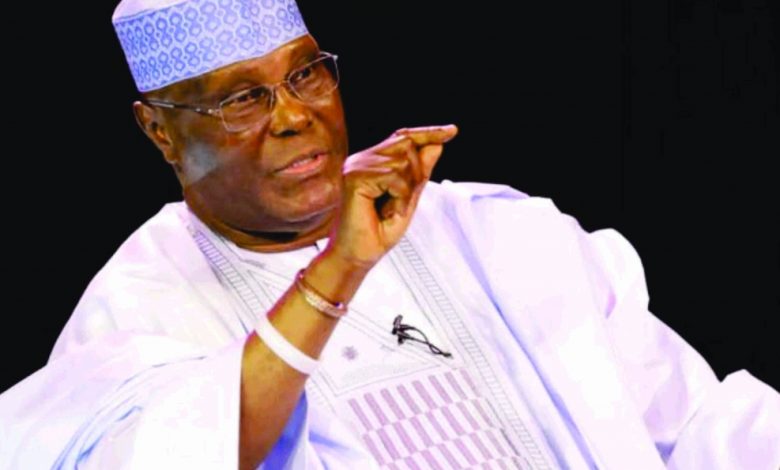
 Former Vice President Atiku Abubakar has sharply criticised the economic direction of President Bola Tinubu, citing a recent World Bank assessment that an estimated 60 per cent of Nigerians are living below the poverty line as evidence of deepening hardship.
In a statement issued Friday by his media aide, Phrank Shaibu, Atiku argued that the report reflects what millions of Nigerians are already experiencing, warning that poverty is not only widespread but worsening under current policies.
‘Not accidental, but policy-driven’
Atiku described the economic strain facing Nigerians as the result of “poorly conceived and harshly implemented policies,” pointing specifically to the removal of fuel subsidies and the devaluation of the naira.
According to him, these measures — though framed as reforms — were introduced without adequate safeguards for vulnerable households and small businesses. He said the fallout is now visible across the country: rising food prices, shrinking purchasing power, and mounting pressure on informal and small-scale enterprises.
“This is not reform,” he said. “It is economic shock therapy imposed on a vulnerable population.”
His remarks mark one of the most direct attempts by a leading opposition figure to tie macroeconomic policy decisions to the everyday economic distress reported by households.
The data behind the politics
While the World Bank’s poverty estimates have long been a reference point in Nigeria’s economic debates, the latest figure — placing roughly six in ten Nigerians below the poverty threshold — intensifies scrutiny of ongoing reforms.
Nigeria has struggled with high poverty rates for decades, but recent policy shifts have coincided with sharp increases in inflation, particularly in food and transport. Analysts say the removal of petrol subsidies in 2023 triggered cascading price adjustments across sectors, while exchange rate unification contributed to a surge in import costs.
The Tinubu administration has consistently argued that these steps are necessary to stabilise public finances and attract investment, even as it rolls out targeted social interventions. However, critics maintain that the pace and sequencing of reforms have worsened short-term hardship.
Impact on ordinary Nigerians
For many households, the debate is less about policy theory and more about survival. Food inflation has significantly eroded incomes, particularly among wage earners and those in the informal sector, who lack social protection buffers.
Small businesses — often described as the backbone of Nigeria’s economy — are also under strain, grappling with higher input costs, unstable exchange rates, and reduced consumer spending. In rural areas, rising costs of transportation and farming inputs have compounded existing vulnerabilities.
Atiku’s intervention speaks directly to these pressures, positioning economic hardship as a central political issue ahead of future electoral contests.
What is known — and what is contested
The World Bank’s poverty estimate provides a broad snapshot, but methodologies and thresholds can vary, and government officials have in the past challenged aspects of such assessments. As of now, the Tinubu administration has not publicly responded to Atiku’s latest remarks.
What is clear, however, is that inflation remains elevated and cost-of-living concerns dominate public discourse. Whether current reforms will yield medium- to long-term gains sufficient to offset present hardship remains an open question.
Competing visions for recovery
Atiku used the statement to outline an alternative approach, calling for policies that prioritise productivity — particularly in agriculture, small businesses, and industry — alongside better coordination between fiscal and monetary authorities.
He argued that economic reforms should be judged primarily by their impact on citizens’ welfare, not just macroeconomic indicators.
What to watch next
The exchange highlights a deepening divide over Nigeria’s economic path, with implications for policy continuity and political stability. As inflation persists and poverty figures remain a focal point, pressure is likely to grow on the federal government to demonstrate tangible improvements in living conditions.
In the coming months, attention will be on whether social intervention programmes can cushion the most vulnerable — and whether economic reforms begin to translate into measurable relief for households.
For now, the World Bank’s figures — and the political reactions they have triggered — reinforce a central reality: economic policy is no longer an abstract debate in Nigeria, but a daily lived experience shaping public sentiment and political accountability.