









 Nigeria’s electoral umpire has shelved plans for a nationwide voter revalidation exercise, opting instead to concentrate resources on preparations for the 2027 general elections — a decision that raises fresh questions about the state of the country’s voter register ahead of the polls.
Decision taken after internal review
The Independent National Electoral Commission (INEC) announced on Friday that the exercise, initially slated to precede the next elections, will now take place after 2027.
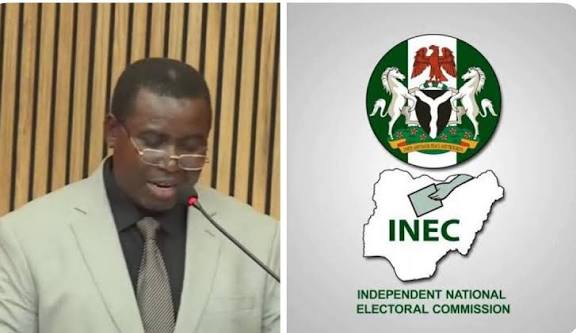
The announcement was conveyed in a statement by Mohammed Haruna, the commission’s National Commissioner and Chairman of its Information and Voter Education Committee.
According to Haruna, the decision followed a meeting between INEC leadership and Resident Electoral Commissioners (RECs) from across the country, where the commission reviewed its operational priorities.
“Following deliberations, the commission resolved to postpone the exercise until after the 2027 General Election,” the statement said.
Why the exercise matters
Voter revalidation is a routine but critical process designed to clean up Nigeria’s voter register — confirming existing records, removing invalid or duplicate entries, and capturing updates from eligible voters whose details may have changed.
In a country where election credibility is often contested, the integrity of the voter register is central. Past elections have seen disputes over inflated figures, under-registration in certain regions, and logistical challenges tied to outdated data.
By postponing the exercise, INEC is effectively relying on the current voter register — with only incremental updates through ongoing registration — to underpin the 2027 elections.
A shift in priorities — and its implications
INEC’s decision reflects a broader institutional calculation: that conducting a full-scale revalidation exercise before 2027 could strain time, logistics, and funding needed for the elections themselves.
However, the move carries trade-offs.
For voters, especially in rural and underserved communities, revalidation exercises often provide a rare opportunity to correct errors, transfer registration, or re-enter the system after being excluded. Delaying it may mean some eligible Nigerians head into the next election cycle with unresolved registration issues.
Election observers may also raise concerns about the accuracy of the register if a comprehensive audit is deferred until after voting has already taken place.
What is known — and what remains unclear
INEC has confirmed the postponement and linked it directly to its focus on 2027 preparations. What remains unclear is whether alternative mechanisms will be introduced to compensate for the absence of a full revalidation exercise before the elections.
The commission has not detailed how it plans to address potential gaps in the voter register beyond existing continuous voter registration processes.
Looking ahead
Attention will now shift to how INEC balances speed with credibility in the run-up to 2027. Stakeholders — including political parties, civil society groups, and voters — are likely to scrutinise the commission’s next steps, particularly around data integrity and inclusiveness.
For many Nigerians, the question is straightforward: can an election be fully trusted if the system used to determine who votes is not comprehensively refreshed beforehand?