









 A fresh war of words between the Presidency and opposition figures has exposed deepening political fault lines ahead of Nigeria’s 2027 general elections, with accusations now extending beyond domestic rivalry to claims of foreign interference.
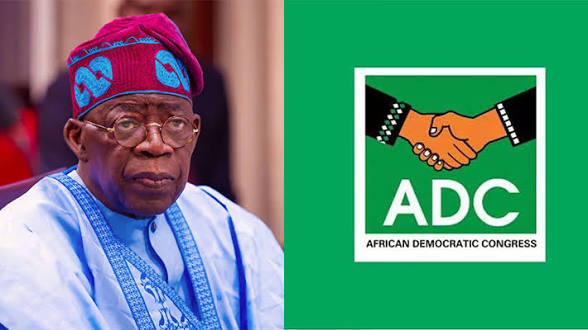
Daniel Bwala, Special Adviser to President Bola Tinubu on Policy Communication, has accused the African Democratic Congress (ADC) of attempting to internationalise Nigeria’s electoral process. In a strongly worded post on X, Bwala alleged that elements within the opposition coalition were seeking foreign sympathy by portraying Nigeria as drifting toward a one-party state.
His remarks signal a notable escalation in rhetoric from the Presidency, framing opposition criticism not just as political dissent but as a potential threat to national sovereignty.
Presidency Pushes Back on ‘One-Party State’ Narrative
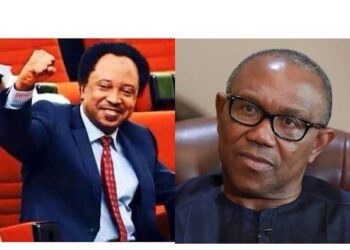
The dispute follows recent comments by Peter Obi, a former presidential candidate, who warned that Nigeria risks sliding into a one-party system. Obi, speaking alongside other political actors, called on Nigerians to defend democratic values and resist what he described as a creeping imbalance in the political space.
“We are saying that our democracy must not be killed,” Obi said. “We say no to a one-party system.”
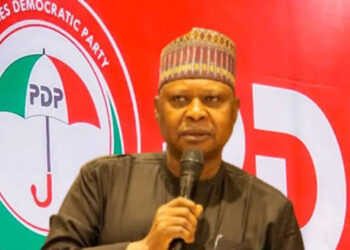
The Presidency has rejected that claim. Another presidential aide, Olusegun Dada, argued that Nigeria’s multiparty structure remains intact, pointing to the number of registered political parties and the spread of elected offices across parties at federal and state levels.
Dada’s response went further, dismissing Obi’s concerns as politically motivated and rooted in internal challenges within the ADC-led coalition.
What’s Behind the ADC Coalition Struggles?
Bwala’s critique focused heavily on what he described as disunity within the ADC. According to him, competing presidential ambitions among key figures have weakened the party’s ability to present a coherent opposition platform.
While his claims reflect the ruling party’s position, they also touch on a broader and more persistent issue in Nigerian opposition politics: fragmentation. Coalition-building in Nigeria has historically been difficult, with alliances often collapsing under the weight of personal ambition and ideological differences.
The ADC has recently emerged as a platform for a loose coalition of political actors seeking to challenge the dominance of the ruling party. However, questions remain about whether it can evolve into a disciplined political force capable of mounting a credible nationwide campaign.
Foreign Interference Claim: What Is Known — and What Is Not
Bwala’s allegation that the ADC is “importing foreign interference” hinges on opposition efforts to draw international attention to concerns about Nigeria’s democratic trajectory.
At this stage, there is no publicly available evidence that foreign governments are directly intervening in Nigeria’s electoral process. What is evident, however, is that Nigerian political actors increasingly frame domestic disputes in ways that resonate with international audiences—particularly on issues of democratic integrity and governance.
Diplomatic missions and international observers have historically played roles in monitoring Nigerian elections, but such involvement is typically formal and invited, rather than partisan.
Why This Matters Now
For ordinary Nigerians, this dispute is more than political theatre. It reflects early positioning for 2027 and raises questions about the quality of democratic competition.
If opposition parties remain divided, voters may face limited viable alternatives, potentially reinforcing perceptions—whether accurate or not—of political dominance by a single party. On the other hand, framing opposition criticism as foreign interference risks shrinking civic space and discouraging legitimate scrutiny of the electoral system.
The exchange also highlights a growing trend: political debates are increasingly fought not just on policy grounds, but through narratives about legitimacy, patriotism, and external influence.
What to Watch Next
As the 2027 elections draw closer, several developments will be critical:
- Whether the ADC coalition can resolve internal divisions and present a unified front
- How the Independent National Electoral Commission (INEC) manages public confidence in the electoral process
- The extent to which international actors engage with Nigeria’s democratic process—and how that engagement is interpreted domestically
For now, the sharp exchanges between the Presidency and opposition figures suggest that the battle lines for 2027 are already being drawn—not just over votes, but over the narrative of Nigeria’s democracy itself.