









 Gombe State has effectively entered a political transition phase nearly a year ahead of the next general election cycle, after Governor Muhammadu Yahaya dissolved his entire State Executive Council following what officials described as a strategic midterm review of his administration.
The decision, announced on Thursday in Gombe, came after an “extraordinary session” convened to assess performance midway into the governor’s second term. While framed as a routine evaluation, the timing and scope of the dissolution point to deeper political calculations as 2027 approaches.
A performance review—or political reset?
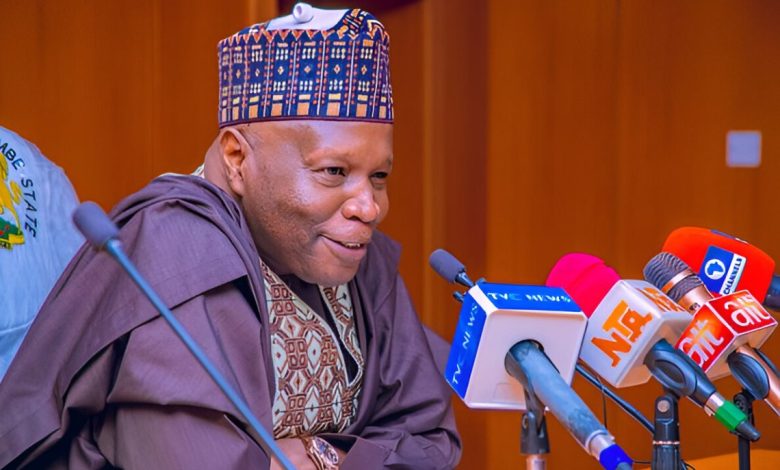
Addressing journalists after the meeting, Secretary to the State Government, Ibrahim Njodi, described the session as a “postmortem” of government activities, suggesting a comprehensive audit of policies and delivery across sectors.
According to him, the administration recorded “excellent results” in governance and development programmes. Yet the decision to disband the cabinet indicates that performance alone was not the sole consideration.
Njodi acknowledged that the move followed a review of both governance outcomes and the “current political climate”—a phrase that often signals internal party dynamics, succession planning, and early positioning for elections.
Opening the field ahead of 2027
The official explanation for the sweeping action is unusually explicit: to allow appointees with political ambitions to pursue them without the advantage—or burden—of incumbency.
All commissioners have been directed to hand over to permanent secretaries by April 10, while political appointees and civil servants interested in contesting elections must resign by the same deadline.
This effectively clears the field within government ranks, forcing would-be candidates to step out early and compete on equal footing.
In practical terms, the decision may reduce accusations of incumbency abuse—a recurring issue in Nigerian politics where officeholders leverage state resources for campaigns. It also signals that the governor is keen to manage succession politics within his camp rather than allow it to fester internally.
Why this matters now
Cabinet dissolutions are not uncommon in Nigerian states, but they are typically tied to scandals, underperformance, or the end of a tenure. In this case, the move comes midstream, suggesting a proactive recalibration rather than a reactive purge.
For ordinary residents, the immediate impact will depend on how quickly a new cabinet—or interim administrative structure—emerges. With permanent secretaries now overseeing ministries, bureaucratic continuity is expected, but major policy decisions and new initiatives could slow in the short term.
More broadly, the development underscores how governance and politics are increasingly intertwined as the 2027 elections draw closer. Early maneuvering of this kind may shape not only who emerges as candidates but also how state resources and attention are allocated over the next year.
Background: second-term pressures
Governor Yahaya, who is also Chairman of the Northern States Governors’ Forum, secured a second term in 2023, a period that traditionally shifts focus from campaign promises to legacy-building.
Midterm reviews are often used to measure progress and recalibrate priorities. However, they can also expose internal fractures within ruling parties, especially where multiple aspirants begin positioning for succession.
In Gombe, where political alignments have remained relatively stable compared to more volatile states, this move may be aimed at preserving cohesion by enforcing clear rules of engagement early.
What happens next
What remains unclear is how quickly the governor will appoint a new cabinet—or whether he will delay appointments to maintain tighter control during this politically sensitive period.
Key questions include:
- Whether outgoing commissioners will re-emerge in new roles or transition fully into campaign mode
- How the reshuffle affects ongoing projects and budget implementation
- Whether the move triggers similar actions in other states as governors begin early election preparations
Governor Yahaya, through Njodi, thanked the outgoing officials for their service and urged the media to maintain “responsible reporting.” The tone suggests an attempt to project stability, even as the administration undergoes a significant internal reset.
For now, Gombe’s governance structure remains intact but politically reconfigured—less about administration as usual, and more about managing the road to 2027.