









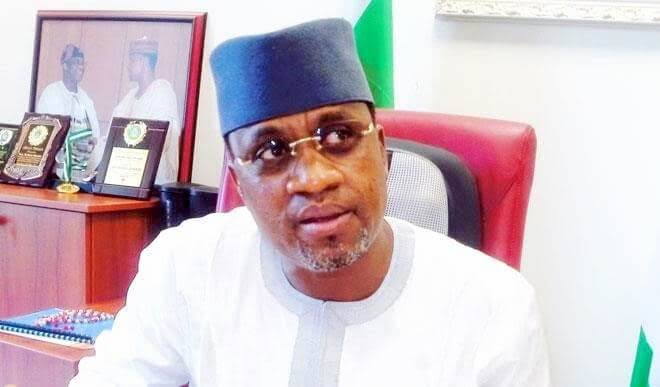
 With barely a year to the next general election cycle taking shape, concerns over the neutrality of Nigeria’s electoral system are resurfacing—this time from within the ranks of the ruling party itself. Senator Kabiru Marafa, a former coordinator of the Tinubu/Shettima Presidential Campaign Organisation in Zamfara State, has alleged that the country’s electoral umpire is increasingly compromised by partisan interests.
In a recent interview, Marafa claimed that the Independent National Electoral Commission (INEC) is “filled with members” of the ruling All Progressives Congress (APC), warning that such a development could erode public trust and undermine the credibility of the 2027 elections.
Allegations of Partisanship
Marafa’s central argument rests on what he describes as a deviation from the legal framework guiding appointments into INEC. Nigerian law requires that officials of the commission be non-partisan, a safeguard intended to ensure electoral fairness in a politically diverse federation.
However, the former Zamfara Central senator insists that, in practice, this principle is no longer being upheld. According to him, individuals with clear political affiliations are being placed in sensitive positions within the commission—raising doubts about its ability to act independently in critical moments.
His remarks reflect a broader anxiety within parts of the political class: that control of institutions, rather than popular support, may increasingly determine electoral outcomes.
A Warning Against One-Party Dominance
Beyond INEC, Marafa’s comments also signal unease about the trajectory of Nigeria’s multi-party democracy. He warned against what he perceives as a subtle drift toward a one-party state, arguing that such an outcome would be both unrealistic and destabilising.
Nigeria’s political history, marked by regional diversity and competitive party systems, makes any attempt at total dominance inherently fragile, he said. “You cannot railroad a country of nearly 300 million people into just one political party,” Marafa argued, pointing to the country’s size and complexity as natural checks against political monopolies.
INEC’s Role Under Scrutiny
The credibility of INEC has been a recurring issue in Nigeria’s democratic journey. While the commission has overseen multiple transitions since 1999, it has also faced persistent criticism over logistical failures, delayed results, and allegations of bias.
The 2023 general elections, in particular, drew mixed reactions, with some observers praising improvements in technology while others questioned the transparency of result transmission. Marafa’s latest claims build on this backdrop of cautious public confidence.
His criticism extended to INEC’s handling of internal party disputes, including its interpretation of legal directives in the leadership crisis within the African Democratic Congress (ADC). Though details remain limited, he suggested that the commission’s stance in such matters raises legitimate questions about its neutrality.
What Is Known—and What Is Not
At this stage, Marafa has not provided specific names or documentary evidence to support his claim that INEC is dominated by APC members. INEC itself has not publicly responded to the allegations.
What is clear, however, is that appointments into the commission are made by the executive and confirmed by the Senate—a process that has, over time, drawn criticism from civil society groups who argue it leaves room for political influence.
Whether Marafa’s claims reflect systemic bias or political positioning ahead of 2027 remains to be seen.
Why This Matters Now
For ordinary Nigerians, the integrity of INEC goes beyond political rhetoric. It directly affects confidence in the ballot—whether votes count, whether outcomes reflect the will of the people, and whether peaceful transitions remain possible.
If trust in the electoral process weakens, it risks voter apathy at best and political unrest at worst—especially in a country where elections are often tightly contested and regionally sensitive.
Looking Ahead to 2027
Marafa also questioned the proposed election timetable, particularly the gap between party primaries and the general election, suggesting it may create unnecessary political tension and uncertainty.
His broader warning is less about any single institution and more about the cumulative effect of political decisions taken now. Attempts to over-centralise power, he argued, often provoke resistance and ultimately fail.
As preparations for 2027 gradually begin, attention is likely to focus not just on candidates and parties, but on the credibility of the institutions that will manage the process.
For INEC, the coming months may prove decisive in shaping public perception. For the political class, Marafa’s intervention is a reminder that disputes over fairness and legitimacy often begin long before the first vote is cast—and can define the outcome just as much as the election itself.