









 A coalition of opposition figures and party loyalists converged on Abuja on Tuesday in a show of force against Nigeria’s electoral umpire, signalling a deepening crisis of confidence in the country’s election management system just two years after the last general polls.
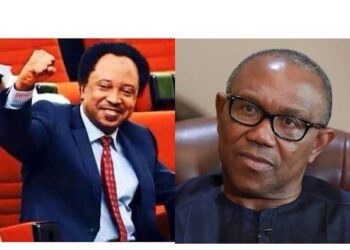
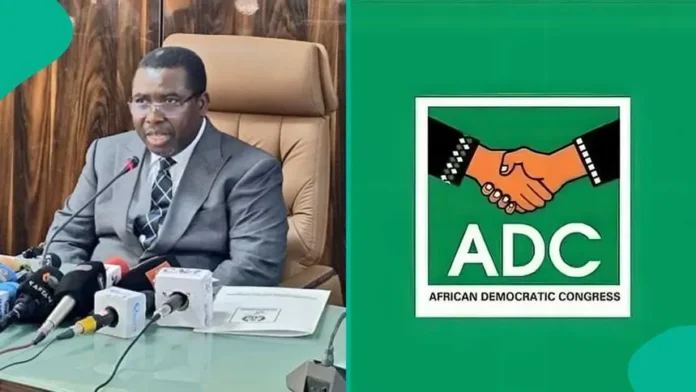
Under the banner #OccupyINEC, leaders of the African Democratic Congress (ADC) led a protest to the Maitama Roundabout, accusing the Independent National Electoral Commission (INEC) of overstepping its constitutional role and undermining internal party processes. The demonstration drew prominent political actors, including former Senate President David Mark, former Vice President Atiku Abubakar, Labour Party’s 2023 presidential candidate Peter Obi, and former governors Rauf Aregbesola and Rabiu Kwankwaso—an unusual convergence that underscores the breadth of elite dissatisfaction with the commission.
At the centre of the dispute is the ADC’s demand for the resignation or removal of the INEC chairman, Professor Joseph Amupitan, whom the party accuses of partisanship and constitutional breaches.
Dispute over constitutional boundaries
In a statement read at the protest, ADC leaders argued that the controversy was triggered by what they described as the chairman’s public interpretation of court rulings related to party leadership disputes—an act they insist falls strictly within the judiciary’s remit.
“Your recent media interview was not only disgraceful and unbecoming of the high office you occupy, but it also exposed a troubling willingness to descend into partisan controversy,” the party said.
The ADC contends that such actions risk blurring institutional boundaries and could set a precedent where the electoral body becomes entangled in political contests it is meant to arbitrate impartially.
INEC has not publicly responded to the specific allegations as of press time.
Internal party crisis or institutional overreach?
The dispute appears rooted in a leadership tussle within the ADC, which the party says was resolved through National Executive Committee (NEC) meetings in 2025 that produced its current leadership under David Mark.
According to the party, those processes were conducted transparently and monitored by INEC officials without objection. It further claims that the commission formally acknowledged the outcomes and even affirmed their legitimacy in a sworn affidavit before the Federal High Court.
What has changed since then remains unclear. The ADC alleges that unnamed actors are now pressuring officials to reverse earlier positions—a claim it has not substantiated with documentary evidence.
This gap between what is asserted and what is independently verifiable will likely become central if the dispute proceeds to court.
Six demands and threat of legal action
The ADC has issued a six-point demand to INEC, including the immediate resignation or removal of the chairman, withdrawal of what it termed “offensive” correspondence, and a formal apology.
It also called for a clear commitment from the commission to refrain from interfering in the internal affairs of political parties—an area that has historically generated friction between regulators and party structures.
Failure to meet these demands, the party warned, would trigger legal proceedings and broader civic mobilisation.
“Failure to comply will leave us with no option but to activate all lawful and constitutional mechanisms to ensure accountability,” the statement read.
Why this matters
The protest taps into a wider, lingering debate about INEC’s independence and credibility following the contentious 2023 general elections. For many Nigerians, trust in electoral institutions remains fragile, shaped by disputes over results transmission, court interventions, and intra-party conflicts.
If political parties increasingly perceive INEC as partial—or are seen to be using public pressure to influence it—the risk is a cycle of institutional weakening: the umpire’s authority erodes, while election disputes become more politicised and less predictable.
For ordinary citizens, the implications are tangible. Electoral uncertainty can discourage participation, heighten political tensions, and, in extreme cases, trigger instability in already fragile regions.
What happens next
The immediate next step is likely to be legal. The ADC has signalled readiness to approach the courts, where the core issues—INEC’s role in party disputes and the limits of its public commentary—could receive judicial clarification.
At the same time, the involvement of high-profile პოლიტიკური figures suggests this may evolve beyond a single-party grievance into a broader opposition campaign around electoral reform and accountability.
What remains uncertain is whether INEC will engage the concerns directly, ignore them, or seek to clarify its position through official channels. Its response—or lack of it—could shape public perception as much as any court ruling.
For now, the #OccupyINEC protest marks an escalation in tensions that, if not carefully managed, could redefine the relationship between Nigeria’s political parties and the institution tasked with overseeing their competition.