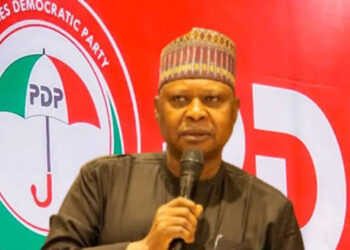










 The deepening leadership dispute within the African Democratic Congress (ADC) took a new turn on Tuesday as factional National Chairman Nafiu Bala publicly distanced himself from the controversial unveiling of an interim leadership led by David Mark, insisting his presence at the event has been widely misinterpreted.
Bala’s clarification follows days of online speculation triggered by viral video clips from the July 2, 2025 gathering, where he was seen actively participating despite his earlier stance rejecting the legitimacy of the new leadership—one he says has not been recognised by the Independent National Electoral Commission (INEC).
A Meeting That Took an “Unexpected Turn”
In a statement issued on April 7, Bala described the event as originally convened to formalise ADC’s role as a coalition platform ahead of future political alignments—not to install a new leadership.
According to him, proceedings shifted abruptly when then National Chairman Ralph Okey Nwosu announced his resignation during his welcome address. Nwosu, Bala said, went further to issue party membership cards on the spot to Mark and Rauf Aregbesola, declaring them Acting National Chairman and National Secretary respectively.
Bala characterised the move as both “shocking” and unconstitutional, arguing that the party’s internal rules do not grant a sitting chairman the authority to unilaterally appoint successors.
No Consensus, No Vote
Central to Bala’s argument is the absence of due process. He maintains that members of the National Working Committee (NWC) were neither consulted nor informed prior to the announcement.
“There was no vote, no consensus, and no prior discussion,” he said, adding that many party officials present were caught off guard.
This claim directly challenges the legitimacy of the Mark-led interim structure and raises questions about whether the process meets the standards required for formal recognition by INEC—a crucial factor in determining which faction can legally act on behalf of the party.
Background: A Party in Search of Relevance
The ADC has, in recent years, positioned itself as a potential coalition vehicle for opposition figures seeking alternatives to Nigeria’s dominant parties. Talks involving political realignments intensified between 2024 and 2025, with various actors exploring the party as a neutral platform.
The involvement of high-profile figures such as Mark and Aregbesola signalled an attempt to elevate the party’s national relevance. However, the manner of their emergence now risks undermining that objective.
Leadership disputes are not new in Nigerian party politics, but they often carry legal and electoral consequences. Past conflicts in other parties have led to prolonged court battles, parallel conventions, and—in some cases—exclusion from ballots due to unresolved factional claims.
What This Means for Ordinary Nigerians
While the dispute may appear internal, its implications extend beyond party insiders. Political instability within smaller parties like the ADC weakens the broader opposition landscape, limiting choices available to voters.
For citizens already disillusioned with mainstream parties, such fractures reduce confidence in emerging alternatives. It also complicates coalition-building efforts that could shape future elections, particularly if the ADC was being positioned as a unifying platform.
What Happens Next
The immediate question is whether the matter will escalate into a legal contest. If INEC maintains its position on non-recognition of the interim leadership, the Mark-led faction may be forced to seek judicial validation.
Alternatively, internal reconciliation remains possible, though increasingly unlikely as public positions harden.
For now, Bala’s statement attempts to draw a clear line between attendance and endorsement—but the political damage from the optics of the viral footage may already be done.
What to watch in the coming weeks is whether the party can resolve its leadership question before it evolves into a full-blown institutional crisis—one that could ultimately determine whether the ADC remains a viable political platform or slips further into irrelevance.