







![Viral House Party Video Sparks Conversation on Changing Social Norms Among Nigerian Mothers [Watch Video]](https://kumornews.com/wp-content/uploads/2026/02/Viral-House-Party-Video-Sparks-Conversation-on-Changing-Social-Norms-Among-Nigerian-Mothers-Watch-Video-1-360x180.jpg)

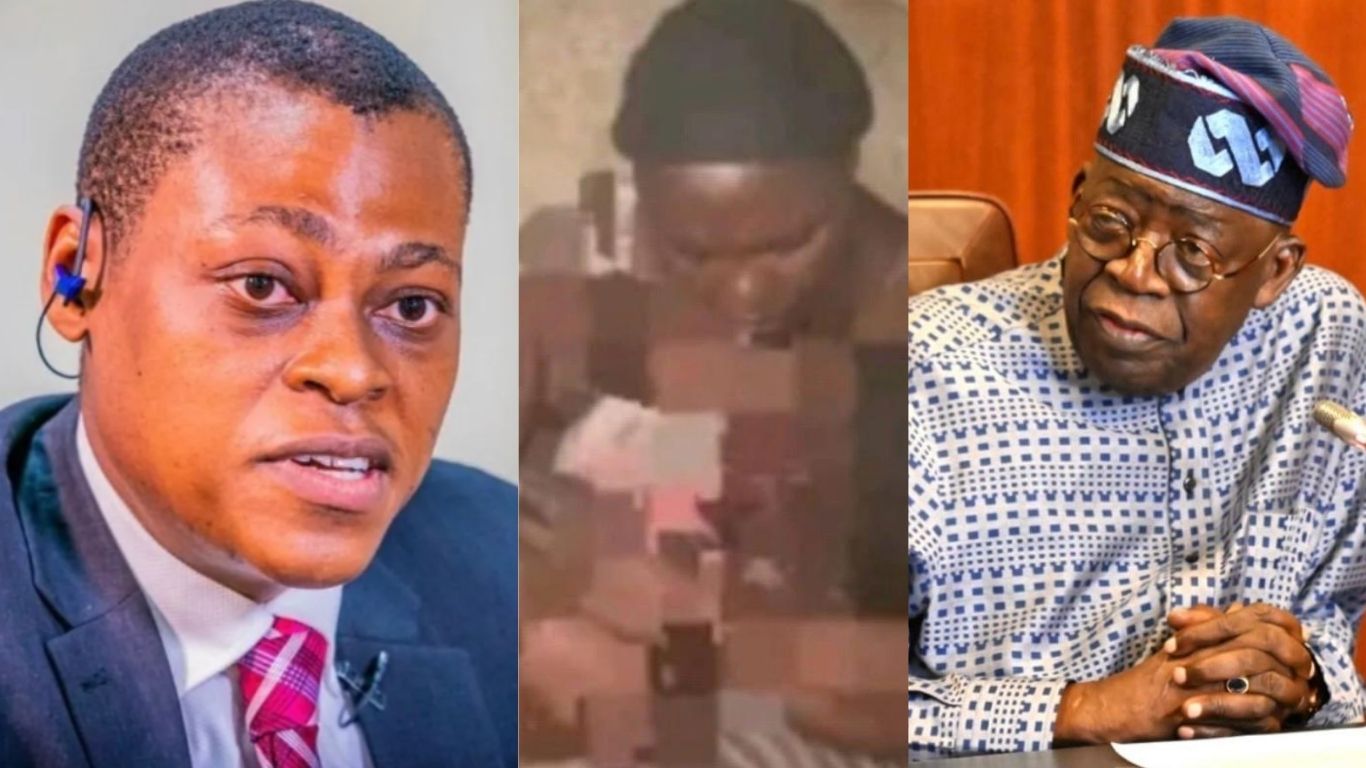
President Bola Ahmed Tinubu’s response to the recent killings in Plateau State has come under scrutiny, not only for what he said to grieving families but for where he chose to say it. A visit intended to signal federal concern has instead sparked debate about empathy, leadership optics and the expectations Nigerians place on public officials in moments of national grief.
The criticism intensified after a video circulated online showing the president meeting victims’ families in Jos following the Palm Sunday attack in Anguwan Rukuba, which reportedly left more than 40 people dead. In the footage, Tinubu is seen consoling mourners while also referencing time constraints linked to logistics, including electricity concerns.
Rufai Oseni’s Critique
Speaking on Arise TV, broadcaster Rufai Oseni openly questioned the handling of the visit, arguing that it fell short of what affected communities needed in the aftermath of such violence.
“President Tinubu went to Jos over the recent attack but stopped at the airport. What level of insensitivity is this?” he said.
Oseni suggested that the president’s decision not to visit the actual site of the attack weakened the symbolic value of the trip. For communities grappling with loss, he argued, physical presence at the scene carries weight that official statements cannot replace.
He also took issue with the president’s interaction with victims, particularly a bereaved mother.
“I saw him telling a woman who lost her son that he understands her pain—no, Mr. President, you don’t understand her pain. Nobody does,” Oseni added.
What Is Confirmed—and What Remains Unclear
The presidency has not publicly issued a detailed account of the president’s movements during the visit beyond confirming that he travelled to Jos and met with victims’ families. It remains unclear why the visit did not extend to Anguwan Rukuba itself, whether due to security assessments, time constraints or other logistical considerations.
Similarly, while the viral video has shaped public perception, there has been no official clarification on the context of the president’s remarks about leaving early.
Why Physical Presence Matters
In Nigeria’s political culture, visits to sites of tragedy are often seen as more than ceremonial. They are interpreted as signals of seriousness, empathy and accountability. From communal clashes to natural disasters, past leaders have faced criticism when their responses appeared distant or overly managed.
Plateau State, in particular, has endured recurring cycles of violence. For residents, many of whom feel caught between inadequate security and slow justice, symbolic gestures—such as a president walking through affected streets or meeting survivors on their ground—carry emotional and political significance.
The absence of such gestures can deepen perceptions of neglect, even when government officials express concern through formal channels.
A Region on Edge
The attack in Anguwan Rukuba is the latest in a series of violent incidents in Plateau, a state long troubled by tensions often framed along ethnic and religious lines. While the precise motive behind the Palm Sunday killings has not been officially confirmed, the pattern of sporadic attacks has left communities wary and security agencies under pressure.
For ordinary citizens, the implications are immediate: disrupted livelihoods, heightened fear, and lingering uncertainty about safety. Traders, farmers and families in affected areas often bear the brunt, with recovery stretching far beyond the initial incident.
Optics Versus Governance
Oseni’s remarks tap into a broader national conversation about leadership during crises. In an era where every public appearance is recorded and dissected, the line between governance and optics has narrowed. A president’s words, tone and physical movements are now part of how citizens assess responsiveness.
Yet, beyond optics lies a more substantive question: what follows the visit? Communities affected by violence typically look for concrete outcomes—enhanced security deployment, credible investigations, and support for victims.
So far, there has been no detailed public update on arrests, compensation plans or long-term security measures tied specifically to the Anguwan Rukuba incident.
What to Watch
The immediate test for the federal government will be whether it can move beyond symbolic engagement to tangible action. Residents will be watching for increased security presence, clearer communication from authorities, and progress in identifying those responsible for the attack.
For the presidency, the episode underscores the delicate balance between managing logistics and meeting public expectations of empathy. In a country where trust in institutions is often fragile, how leaders show up in moments of crisis can shape not just perception—but confidence in governance itself.