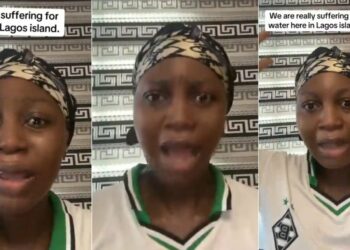









 A survivor of last week’s deadly assault on Mbwelle village in Plateau State has accused security forces of failing to intervene during a prolonged attack that left more than 20 people dead, deepening concerns about civilian protection in one of Nigeria’s most volatile regions.
The woman, who said she lost eight members of her family in the April 9 нападение, claimed that soldiers stationed less than three kilometres from the community did not respond despite repeated distress calls as gunmen rampaged through the village for hours.
Eyewitness account raises serious questions
The attack occurred in Mbwelle, a rural settlement in Kwatas district of Bokkos Local Government Area. According to the survivor’s testimony, suspected Fulani militia stormed the village at night, firing indiscriminately and moving from house to house.
She said residents — including community leaders — reached out to troops under Operation Ensuring Peace, a military task force deployed in the area, but received no assistance.
“We pleaded with them to come to our aid but they refused,” she said, describing how the assault continued for more than two hours without interruption.
The woman recounted that eight members of her family, including a pregnant relative, were killed during the нападение. Homes were destroyed, and many residents fled into nearby communities, where they remain displaced.
Her account has not yet been independently verified, and military authorities had not issued an official response as of the time of filing this report.
Allegations of complicity
Beyond claims of inaction, the survivor made a more serious allegation: that soldiers were later seen positioned near Korong, a nearby settlement reportedly occupied by the attackers after earlier displacements.
She alleged that a military gun truck was stationed in front of the area, effectively shielding the attackers’ retreat while leaving Mbwelle residents exposed.
These claims, if substantiated, could have far-reaching implications for public trust in security operations in Plateau State. However, there is currently no official confirmation of these specific allegations.
A region under strain
Plateau State has long been a flashpoint for violent конфликтs, often framed as farmer-herder clashes but increasingly involving organised вооруженные группы operating across rural communities. Bokkos and neighbouring local government areas have experienced recurring cycles of нападения, reprisals, and displacement.
In recent years, federal and state authorities have deployed joint security operations to contain the violence, yet residents frequently report delayed responses and inadequate protection — especially in remote settlements.
The latest incident adds to a growing list of attacks that have tested the credibility of these interventions.
Impact on civilians
For communities like Mbwelle, the последствия are immediate and severe. Survivors are now displaced, livelihoods disrupted, and entire families wiped out. The psychological toll is equally significant, with many residents expressing fear about returning home.
The reliance on nearby military formations for protection means that allegations of inaction — whether proven or not — can quickly erode confidence and fuel tension between communities and security agencies.
Calls for investigation
Community leaders and local observers have called for an independent investigation into the incident, insisting that any lapses — operational or otherwise — must be addressed transparently.
As of now, what is confirmed is that an attack occurred, casualties exceeded 20, and multiple homes were destroyed. What remains unclear is the precise timeline of military response and whether there were operational constraints that affected troop deployment.
What to watch
Attention is now on the military’s expected response to the allegations and whether authorities will open a formal inquiry. The handling of this case could influence public trust in ongoing security operations not just in Plateau, but across Nigeria’s conflict-prone rural belts.
For residents of Mbwelle and similar communities, the central question remains unresolved: whether those tasked with their protection can respond when it matters most.