










 For many Nigerians, Lagos Island represents prestige — a place of commerce, old wealth and enduring influence. But beneath that image, residents say a basic necessity is becoming increasingly difficult to access: clean, usable water.
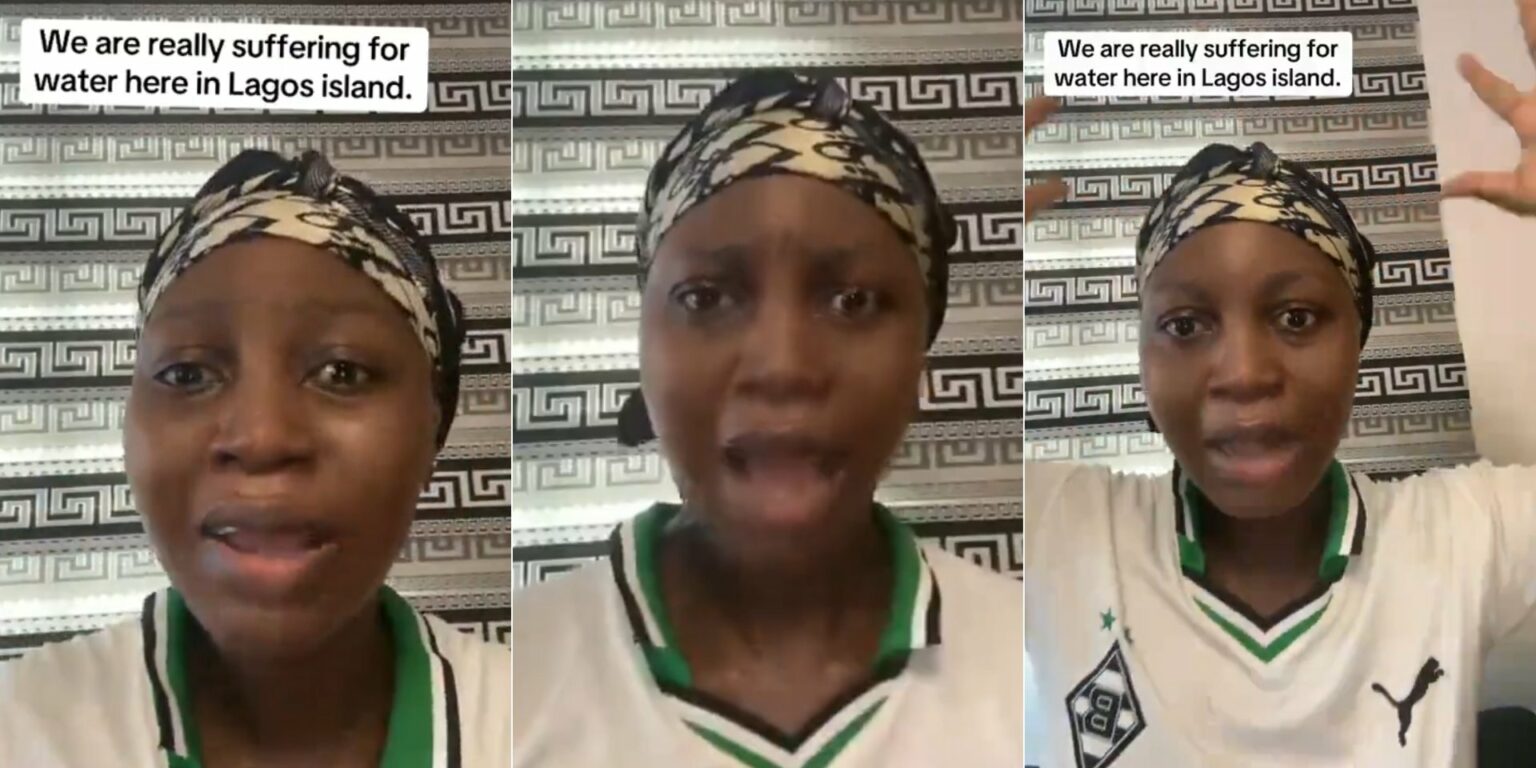
A resident of the area recently drew attention to the situation in a video circulating online, describing daily life as far removed from the polished perception often associated with the island. Her account points to a growing dependence on privately sourced water, with households forced to spend regularly just to meet basic needs.
“We’re really suffering here on Lagos Island… we are suffering and smiling,” she said, adding that even those who attempt to drill boreholes often encounter saline water that is unsuitable for domestic use.
The cost of survival in a high-value district
According to the resident, water scarcity has created a steady financial burden for households. She said residents frequently rely on sachet water or pay for truck deliveries, with a single supply reportedly costing around ₦3,000.
While such coping mechanisms are not new in parts of Lagos, their persistence in a historically prominent district like Lagos Island underscores a deeper infrastructure gap. For low- and middle-income earners living in the area, the cost of water now competes with other essentials, quietly eroding household income.
What is clear from the account is that access to water is inconsistent and largely privatized. What remains unclear, however, is the current level of state intervention in the specific neighbourhood referenced, as authorities have yet to respond directly to the claims in the viral video.
A longstanding structural problem
Water scarcity in Lagos is not new. Despite its coastal geography, much of the city struggles with potable water due to a mix of factors — ageing infrastructure, rapid population growth, and limited expansion of public waterworks.
On Lagos Island, the challenge is compounded by geography. Being surrounded by the Atlantic and lagoon systems increases the likelihood of saltwater intrusion into groundwater sources. This makes borehole solutions unreliable in many parts, leaving residents dependent on alternative supply chains.
Historically, state water agencies have faced difficulties keeping pace with demand. Large-scale projects have been announced over the years to boost supply, but distribution gaps persist, particularly in densely populated or older districts.
Beyond perception: the reality for residents
The resident’s remarks highlight a recurring theme in urban Nigeria: the contrast between outward affluence and underlying infrastructure deficits. Lagos Island, often seen as a symbol of economic activity, is not immune to the systemic issues affecting the wider city.
For ordinary residents, the implications are immediate. Access to clean water affects hygiene, health, and overall quality of life. Inconsistent supply also increases reliance on informal vendors, where quality control is uncertain and prices fluctuate.
What comes next
The viral video has renewed attention on water access in Lagos Island, but whether it prompts a policy response remains to be seen. Authorities may face renewed pressure to clarify current supply efforts and outline concrete steps to address gaps in coastal communities.
In the short term, residents are likely to continue relying on private solutions. In the longer term, the situation raises broader questions about urban planning in Lagos — particularly whether infrastructure development is keeping pace with the city’s reputation as Nigeria’s economic hub.
For now, the phrase “suffering and smiling” — often used to describe resilience in the face of hardship — is taking on a more literal meaning for those navigating daily life on Lagos Island.