










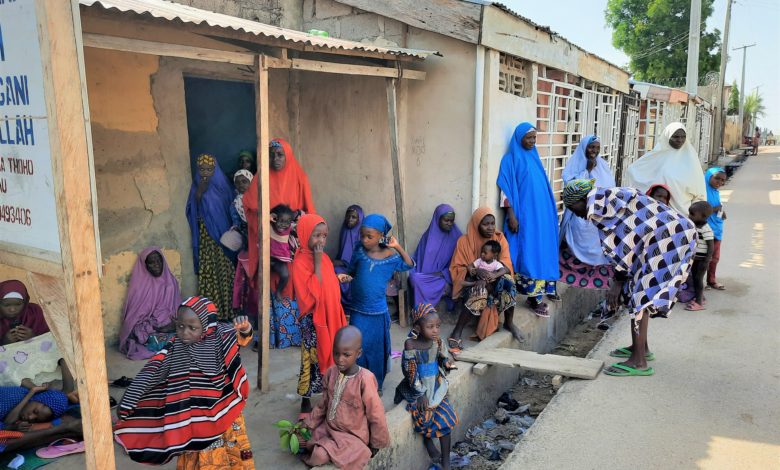
 More than 2,000 residents in parts of Tsafe Local Government Area of Zamfara State have abandoned their homes, reflecting a growing climate of fear in Nigeria’s north-west where even unverified threats can trigger mass displacement.
The movement, which began earlier this week, saw families from Kunchin Kalgo and surrounding villages trekking or relocating with their belongings toward the Tsafe local government headquarters. Many cited fears of imminent reprisal attacks by bandits following a recent security operation in the area.
Fear spreads after security shifts
Residents who spoke from the area said anxiety escalated after some security personnel reportedly withdrew from strategic positions shortly after neutralising suspected bandits.
“Some security personnel deployed to our villages vacated from their strategic points two days after neutralizing some bandits. Now we are afraid that the bandits may return,” one villager said.
Although the exact sequence of events remains contested, the perception of a security vacuum appears to have been enough to trigger a mass exodus.
Officials downplay threat, cite rumours
Tsafe Local Government Chairman, Garba Panchase, confirmed the displacement but attributed it largely to misinformation rather than an immediate security breakdown.
According to him, the situation was fuelled by rumours suggesting an impending attack. He clarified that while members of the civilian Joint Task Force (JTF) had been redeployed, conventional security forces remained in place.
“The people fled their communities as a result of rumours initiated by people that do not mean well for the government,” Panchase said.
However, this official position contrasts with accounts from some residents, who insist that the withdrawal of certain security actors coincided with signs that bandits were regrouping in nearby areas.
A region shaped by repeated displacement
Zamfara has become one of the epicentres of banditry in Nigeria, with rural communities frequently caught in cycles of attack, military response, and retaliatory violence. Over the past decade, repeated raids, kidnappings, and forced taxation by armed groups have eroded public confidence in both state and federal security efforts.
In many parts of the state, displacement is no longer an exceptional event but a recurring survival strategy. Villagers often flee at the slightest indication of danger, having learned from past incidents where delayed responses proved costly.
Tsafe itself has witnessed several waves of violence, making it a fallback location for those escaping more remote settlements.
Impact on civilians and local economy
The immediate consequence of the latest displacement is humanitarian strain. Families arriving in Tsafe town face overcrowding, limited access to shelter, and uncertainty about how long they will remain displaced.
For largely agrarian communities, leaving their homes also means abandoning farms and livestock at the peak of critical agricultural periods. This not only threatens household incomes but could have ripple effects on local food supply in the coming months.
Beyond economics, the psychological toll is significant. Repeated displacements deepen trauma and reinforce a sense of insecurity that extends beyond affected villages.
What is known — and what remains unclear
Authorities have confirmed that over 2,000 people have relocated and that security forces are still present in the area. However, it remains unclear whether there is credible intelligence indicating an imminent bandit reprisal.
There has also been no official clarification on the extent of any recent military operation that may have triggered fears of retaliation.
What happens next
The situation places pressure on security agencies to not only maintain presence but also rebuild public trust through clear communication and visible patrols. Without this, rumours — whether accurate or not — are likely to continue driving displacement.
For the Zamfara State government, the incident highlights a persistent challenge: managing both real threats and the perception of insecurity in communities already on edge.
In the coming days, attention will be on whether displaced residents feel safe enough to return home — or whether Tsafe will become, once again, a temporary refuge that slowly turns into a longer-term camp for those fleeing a conflict with no clear end.