









 More than five decades after its creation in the aftermath of Nigeria’s civil war, the National Youth Service Corps (NYSC) is being reaffirmed by one of its founding figures as a vital instrument for national cohesion — even as questions persist about its relevance in a changing country.
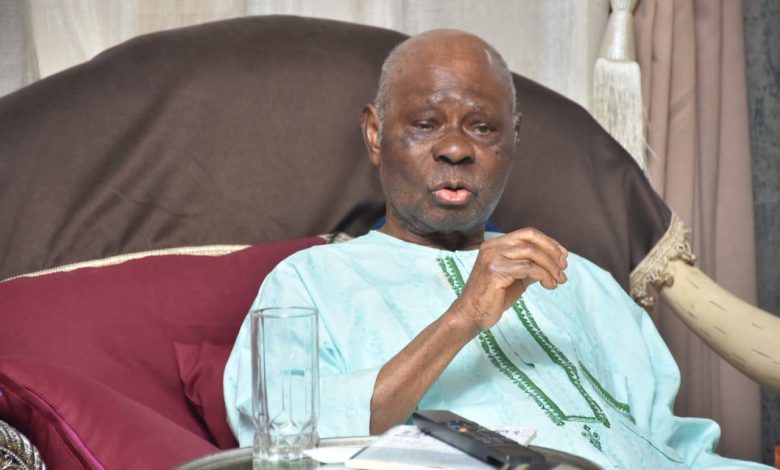
Speaking in Abuja during a courtesy visit by the NYSC Director-General, Brigadier-General Olakunle Nafiu, the scheme’s pioneer chief executive, Ahmadu Ali, said the programme continues to play a central role in fostering unity and tolerance among Nigerian youths.
According to him, the core strength of the NYSC lies in its ability to expose young graduates to cultures and communities beyond their immediate environment — an experience he described as both transformative and necessary in a diverse country like Nigeria.
“People have the privilege to go to other states which ordinarily they wouldn’t have,” Ali said, noting that such interactions encourage adaptability and mutual understanding among participants.
A post-war idea that endured
The NYSC was established in 1973 under the administration of Yakubu Gowon, as part of efforts to rebuild national unity following the civil war. At the time, mistrust and ethnic divisions threatened the fragile peace, and policymakers saw youth mobilisation as a pathway to reconciliation.
Ali, who served as the scheme’s first chief executive, recalled that the programme initially faced scepticism from graduates wary of relocation and uncertain conditions. Over time, however, participation became widely accepted, with many young Nigerians viewing it as a rite of passage.
That transition, he suggested, is evidence of the scheme’s staying power — and its continued relevance despite shifting social and economic realities.
Recognition from current leadership
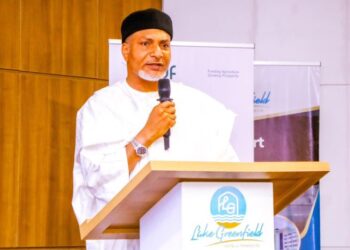
During the visit, Brigadier-General Nafiu said his decision to meet Ali was both symbolic and strategic, describing the pioneer DG as a foundational figure whose leadership helped stabilise the scheme in its formative years.
He credited Ali with laying structures that have allowed the NYSC to remain operational for over 50 years — a rare continuity in Nigeria’s public institutions.
Relevance amid changing realities
While Ali’s remarks emphasise the NYSC’s successes, they also arrive at a time when the scheme faces renewed scrutiny. Security concerns in parts of the country, rising unemployment, and debates over whether the one-year service model still meets Nigeria’s development needs have all shaped recent public discourse.
For many corps members today, the experience is a mix of opportunity and uncertainty — offering exposure and networking, but also raising concerns about safety and post-service prospects.
What this means going forward
Ali’s endorsement reinforces the argument for preserving the NYSC as a unifying institution, but it also indirectly highlights the need for reform. Maintaining its original mission in today’s Nigeria may require adapting to new realities — including improved security arrangements, better welfare for corps members, and clearer pathways from service to employment.
What remains clear is that the scheme still occupies a symbolic place in Nigeria’s nation-building project. Whether it can continue to translate that symbolism into practical impact will likely shape the next phase of debate around its future.