









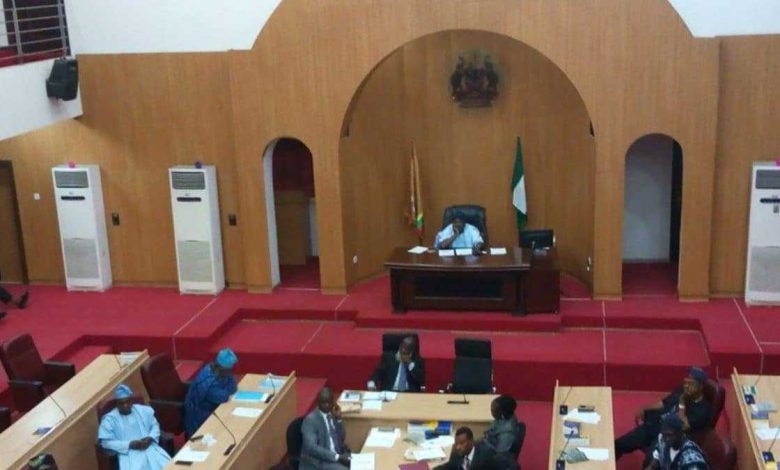
 The Zamfara State House of Assembly has suspended two local government chairmen in a move lawmakers say is meant to reassert legislative authority and tighten oversight of public funds at the grassroots level. The decision, taken during Wednesday’s plenary, affects Mannir Mu’azu Haidara of Kaura Namoda and Umar A. Faru of Bukkuyum Local Government Areas.
The suspension follows the presentation of a committee report examining financial activities across all 14 local councils in the state for the 2025 fiscal year. Lawmakers adopted the recommendation without dissent, underscoring what insiders describe as growing impatience within the Assembly over compliance failures by local officials.
Refusal to Appear Triggers Sanctions
At the centre of the Assembly’s action is the refusal of the affected chairmen to honour multiple invitations issued by the House Committee on Local Government and Chieftaincy Affairs. The invitations, according to House spokesperson Bello Kurya, were intended to allow the officials explain how council funds were utilised.
Their absence was interpreted not merely as administrative negligence but as a direct challenge to legislative oversight. “The invitations were issued to enable them to provide explanations regarding the expenditure of funds,” Kurya said, adding that ignoring them amounted to “disrespect to the legislative institution.”
The report was presented by Deputy Speaker Adamu Aliyu Gumm, who also serves as vice chairman of the committee. Presiding over the session, Speaker Bilyaminu Moriki put the recommendation to a vote, where it passed without opposition.
Immediate Leadership Changes at Local Level
The Assembly directed the suspended chairmen to hand over to their respective vice chairmen with immediate effect, a step aimed at preventing administrative paralysis in the affected councils. The resolutions have also been transmitted to the state executive for enforcement.
While no specific figures or detailed allegations of misappropriation have yet been made public, lawmakers insist the suspensions are precautionary, pending the outcome of a broader probe into council finances.
Why This Matters
For many residents in Zamfara, where insecurity and underdevelopment persist, local governments represent the closest tier of authority responsible for basic services—ranging from primary healthcare to rural infrastructure. Allegations of financial mismanagement at this level often translate directly into deteriorating living conditions.
The Assembly’s assertiveness may therefore signal a shift toward more active scrutiny of local councils, which have historically operated with limited transparency. In recent years, concerns over how federal allocations to local governments are spent have intensified nationwide, particularly amid economic strain and rising public expectations.
A Wider Accountability Test
This is not the first time state legislatures have clashed with local government officials over accountability, but the speed and unanimity of the Zamfara Assembly’s decision stand out. It reflects a broader political calculation: demonstrating responsiveness to public concerns about governance while reinforcing institutional authority.
What remains unclear, however, is the depth of the alleged financial irregularities and whether further sanctions—or possible prosecutions—will follow. The ongoing probe into all 14 councils suggests the current suspensions may be only the first in a series of actions.
What to Watch
The next phase will depend on the findings of the Assembly’s investigation and the response of the state executive. If the probe uncovers systemic issues, it could trigger wider administrative shake-ups across Zamfara’s local government system.
For now, the suspensions serve as both a warning and a test case: whether legislative oversight can translate into tangible accountability—or remain another episode in Nigeria’s long-running struggle to enforce transparency at the grassroots.