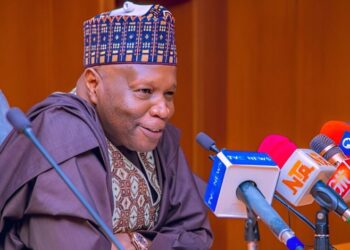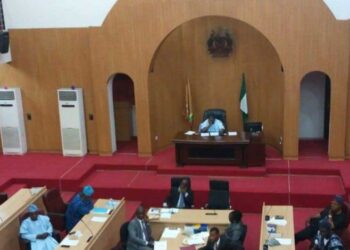










 Governor Bala Mohammed on Thursday convened a closed-door meeting with Bauchi State members of the House of Representatives elected on the platform of the All Progressives Congress (APC), in a move that signals a potentially significant political shift in the state ahead of the next electoral cycle.
The meeting, held without prior public notice, comes amid mounting indications that the governor—currently a leading figure in the Peoples Democratic Party (PDP)—is weighing a defection to the ruling party. While no formal announcement has been made, remarks from participants suggest that discussions have advanced beyond exploratory talks.
An unnamed federal lawmaker from Bauchi, speaking to journalists in the governor’s presence after the meeting, described the engagement as part of a broader “realignment” underway both nationally and within the state. He said the group had reached a “positive conclusion,” adding that details of their deliberations would be made public “within a short period of time.”
Quiet Talks, Strategic Calculations
Thursday’s meeting follows earlier consultations between Mohammed and stakeholders of the African Democratic Congress (ADC), indicating that the governor is keeping multiple political pathways open. Sources familiar with the discussions say the engagements are part of a broader strategic reassessment as alliances shift ahead of future elections.
For Mohammed, a potential defection would mark a dramatic turn. A former minister of the Federal Capital Territory and a prominent PDP figure, he has, until recently, been seen as a stabilising force within the opposition. His movement to the APC would not only reshape Bauchi’s political landscape but could also weaken the PDP’s standing in the North-East.
Historical Context: A Pattern of High-Profile Defections
Party defections are not new in Nigerian politics, particularly as elections approach. Since the return to civilian rule in 1999, politicians have frequently switched allegiances, often citing ideological differences but more commonly driven by strategic considerations such as access to federal power structures or electoral advantage.
In recent election cycles, the APC has benefited from high-profile defections, consolidating its influence across several states. However, such moves often come with internal tensions, especially where incoming figures disrupt established party hierarchies.
What This Means for Bauchi Residents
For ordinary citizens in Bauchi, the implications of a potential defection are more practical than ideological. Alignment with the ruling party at the federal level can influence access to infrastructure funding, federal appointments, and project approvals. Supporters of such moves often argue that it enhances a state’s bargaining power in Abuja.
However, critics warn that frequent political shifts undermine accountability and weaken party-based governance, leaving voters with little clarity on policy direction.
What Is Known—and What Isn’t
At this stage, no official statement has been issued by Governor Mohammed confirming a defection. It is also unclear whether the discussions with APC lawmakers have the backing of the party’s national leadership, or how local APC structures in Bauchi would respond to his entry.
Similarly, details of his engagement with ADC stakeholders remain limited, raising questions about whether those talks are exploratory or part of a fallback strategy.
What to Watch Next
Attention will now turn to the promised public statement from the lawmakers and the governor’s camp. Any formal declaration could trigger a cascade of defections at the state level, particularly among political officeholders seeking alignment with emerging power blocs.
Equally important will be the reaction within the PDP, where Mohammed’s potential exit could deepen existing fractures in the opposition ahead of future elections.
For now, Bauchi stands at the centre of a familiar but consequential Nigerian political ritual: the quiet negotiation of power, before the public declaration that reshapes the map.