










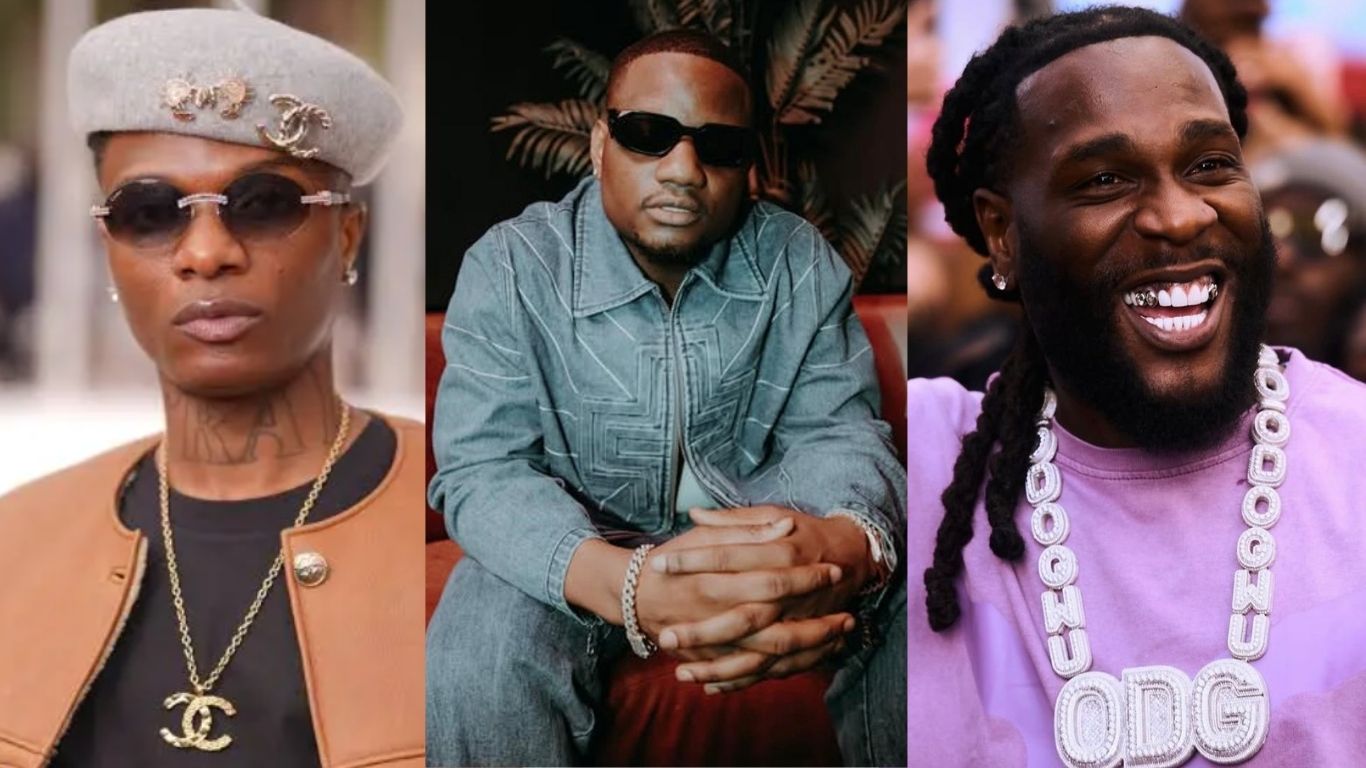
 Nigeria’s Afrobeats scene has been thrown back into familiar tensions after Wizkid publicly condemned an alleged assault on his longtime collaborator and official DJ, DJ Tunez, during a late-night altercation in Lagos involving Grammy-winning artist Burna Boy.
Videos circulating on social media since Monday night show a chaotic scene inside what witnesses describe as a high-end Lagos nightclub. In the footage, DJ Tunez—also known as Ogbafia—is seen overwhelmed during a confrontation, reportedly involving multiple individuals. Eyewitness accounts claim the DJ was knocked to the ground and beaten by a group of men, though the precise trigger of the dispute remains unclear.
Wizkid’s response, posted on social media hours after the clips went viral, framed the incident as a “cowardly” group attack. He alleged that DJ Tunez was targeted by as many as ten men, a claim that has not been independently verified.
Public reaction and escalating rhetoric
Beyond condemning the physical altercation, Wizkid’s reaction quickly veered into personal territory, reviving a long-simmering rivalry between two of Nigeria’s most globally recognised artists. In a series of posts, he accused Burna Boy of celebrating the incident, referencing another viral clip in which Burna Boy appears to mock the fallen DJ, chanting “Ogbafia dey for ground” while dancing.
Wizkid’s language escalated further with a pointed insult linking Burna Boy to embattled American music executive Sean Diddy Combs, popularly known as Diddy. The remark—along with an image of baby oil shared shortly after—has fuelled online speculation and fan-driven narratives, though Wizkid did not provide context for the reference.
Burna Boy has yet to issue a formal statement addressing either the alleged assault or Wizkid’s accusations as of the time of reporting.
What is known—and what remains unclear
At present, key details about the incident remain unconfirmed. There has been no official police statement, and neither DJ Tunez nor his management team has publicly outlined the extent of any injuries sustained. It is also unclear whether Burna Boy directly participated in the physical altercation or was present only before or after it occurred.
The absence of verified accounts highlights a recurring challenge in Nigeria’s digital media space, where viral videos often outpace confirmed reporting, leaving room for misinformation and exaggeration.
A rivalry with history
Tensions between Wizkid and Burna Boy are not new. Both artists have, at different times, traded subtle and overt jabs online, often amplified by fiercely loyal fanbases. While the two have occasionally maintained public civility, underlying competition—fueled by global recognition, awards, and commercial success—has periodically resurfaced.
Their rivalry also reflects the broader evolution of Afrobeats into a high-stakes global industry, where personal branding and perceived dominance carry significant commercial implications.
Impact beyond celebrity drama
While the incident may appear as another episode in celebrity rivalry, it raises broader concerns about safety and conduct within Nigeria’s nightlife and entertainment ecosystem. High-profile figures often set the tone for fan behaviour and industry norms. Public displays of violence—or endorsement of it—risk normalising aggression in spaces already struggling with security oversight.
For ordinary Nigerians, particularly young fans who engage heavily with celebrity culture, such incidents blur the line between entertainment and real-world consequences. They also spotlight the lack of accountability mechanisms in informal social settings where influential figures operate.
What to watch next
Attention now turns to whether law enforcement or venue management will address the incident, and whether either camp will de-escalate the situation. Industry stakeholders may also come under pressure to reinforce standards around artist conduct in public spaces.
For now, the episode underscores a persistent reality: as Afrobeats continues its global ascent, the personal conflicts of its leading figures are no longer private matters—they shape perceptions of the industry at home and abroad.