









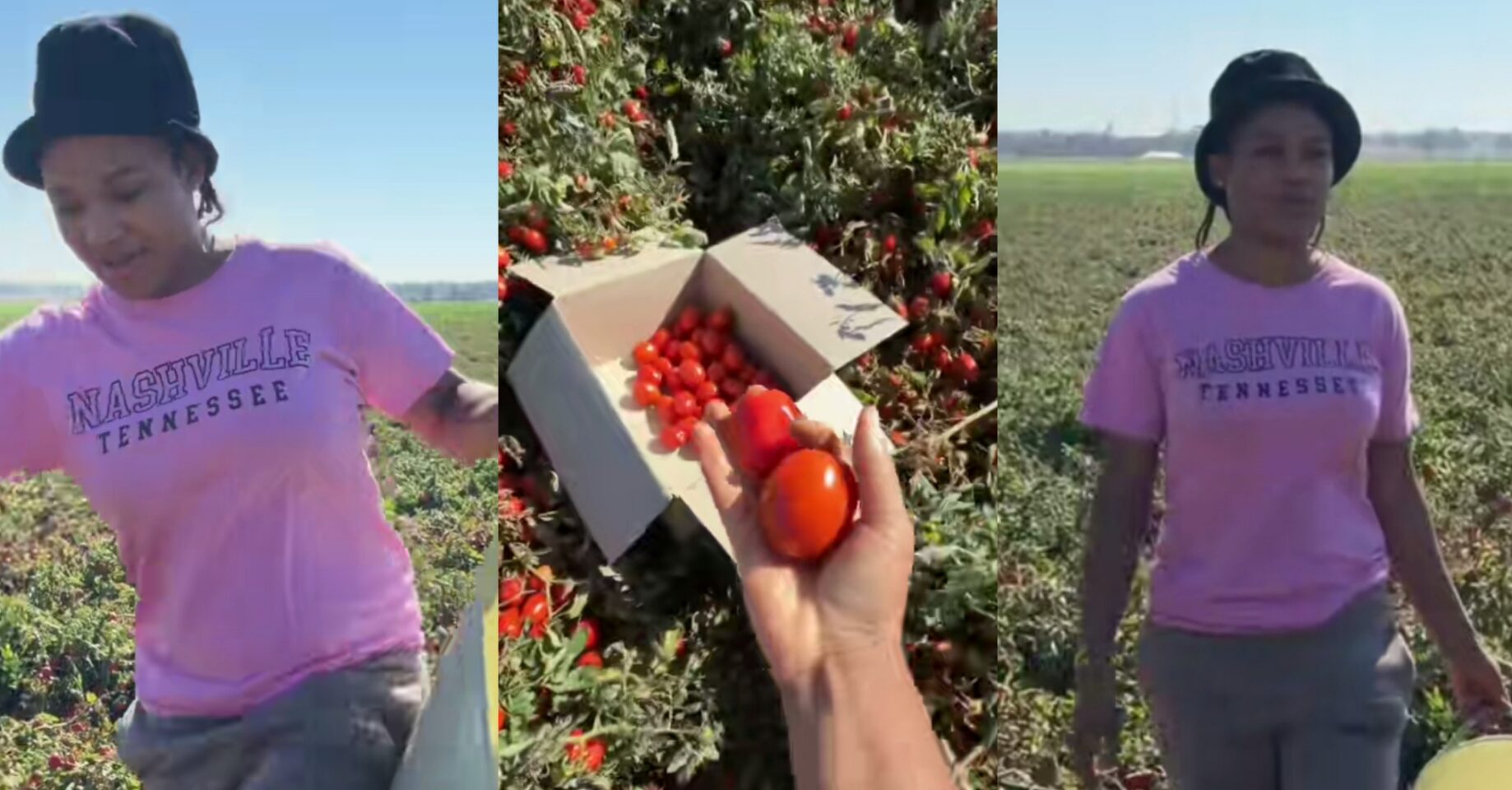
 A Nigerian nurse who built her career abroad has returned home and swapped hospital wards for farmland—a decision that is drawing both admiration and questions about shifting priorities among young professionals in the diaspora.
The woman, known on TikTok as @nurse-deo, recently shared a video of herself harvesting fresh tomatoes on a farm in Nigeria, describing the move as a deliberate transition rather than an impulsive leap. In her words, the return marks a new phase: a long-term plan to “connect with nature” and establish farming as a retirement pathway.
Her announcement has quickly gained traction online, with many viewers expressing surprise that someone trained and employed in Australia’s healthcare system would voluntarily exit such a career path.
A deliberate return, not a sudden exit
In follow-up remarks accompanying the viral video, the former nurse pushed back against scepticism, noting that the decision had been carefully considered. She clarified that her relocation to Nigeria was not staged or temporary, but part of a broader personal and financial strategy.
“At this point, I want to concentrate on farming… this is my retirement plan,” she said, framing agriculture not as a fallback, but as a primary investment in her future.
The imagery in the video—hands-on harvesting, baskets filled with tomatoes, and visible enthusiasm—appears crafted to counter the perception that farming is a last resort for those without options.
Why this story resonates now
Her move taps into a growing conversation among Nigerians at home and abroad about the limits of traditional career success. For years, the “japa” wave—mass emigration in search of better opportunities—has been driven by economic instability, insecurity, and underemployment.
Yet, in parallel, there has been a quieter trend of returnees exploring agriculture, agribusiness, and other locally rooted ventures. Rising food prices, import dependency, and government rhetoric around food security have made farming appear both economically viable and socially relevant.
For ordinary Nigerians, however, the picture is more complex. While agriculture holds promise, it remains fraught with challenges: access to land, insecurity in rural areas, poor storage infrastructure, and volatile market prices. A successful transition like this often depends on capital, planning, and risk tolerance—advantages not universally available.
Public reactions: admiration, advice, scepticism
Online responses to the video reflect a mix of encouragement and disbelief. Some commenters praised her courage and entrepreneurial thinking, while others offered practical advice on reducing post-harvest losses, particularly for perishable crops like tomatoes.
A few questioned whether the move was genuine, prompting the TikToker to directly address doubts and insist on the authenticity of her new path.
The reactions also highlight a broader shift in perception: farming, once seen by many urban Nigerians as labour-intensive and low-status, is increasingly being reframed as a viable business—especially when approached with modern techniques and branding.
The bigger picture: agriculture as opportunity—and risk
Nigeria’s agricultural sector has long been positioned as a key driver of diversification away from oil. Successive governments have introduced policies and programmes aimed at boosting local production, though results have been uneven.
For returnees like @nurse-deo, agriculture offers both opportunity and uncertainty. On one hand, demand for locally grown food is high, and gaps in the value chain—processing, storage, distribution—present business openings. On the other, structural challenges can quickly erode profits without adequate planning.
Her emphasis on farming as a “retirement plan” suggests a long-term outlook that may include scaling operations, processing produce, or integrating into broader agribusiness networks.
What to watch next
What remains unclear is the scale of her farming operation, the level of investment involved, and whether she intends to commercialise beyond small-scale production. These factors will determine whether her story evolves from a viral moment into a sustainable business case.
More broadly, her decision raises questions about whether similar moves could gain momentum among Nigerians abroad—or whether this remains an exception shaped by personal circumstances.
For now, her journey underscores a quiet but significant shift: in a country where leaving is often seen as the only path forward, some are beginning to test what it means to come back—and build differently.