









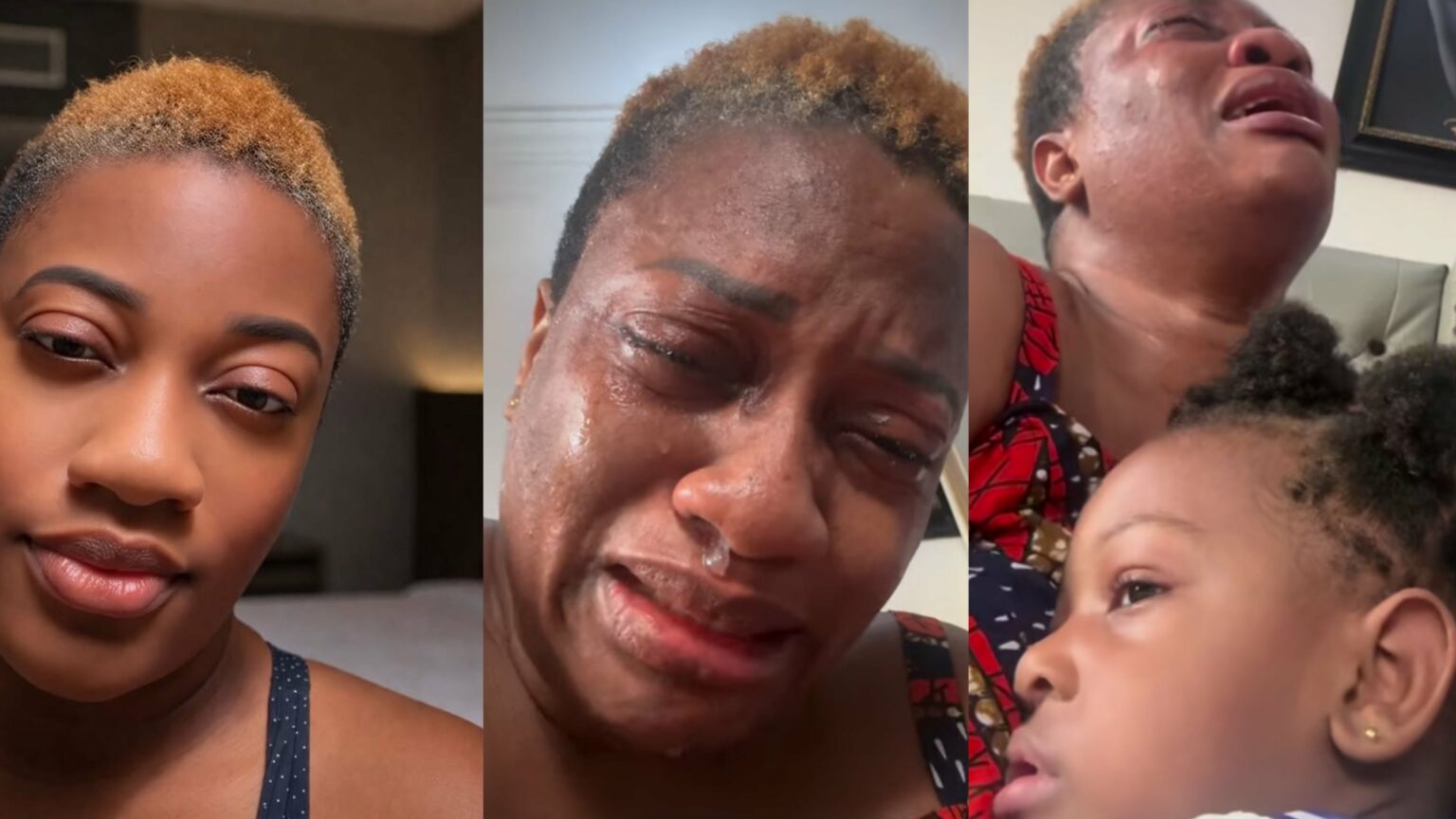
 Nollywood actress Witney John has publicly accused a business associate of excluding her from official land ownership documents despite what she describes as a joint financial investment—an allegation that is resonating beyond celebrity circles and reigniting concerns about informal property agreements in Nigeria.
In an emotional video shared on her social media page, the actress broke down in tears as she recounted how the arrangement allegedly unravelled at the documentation stage. According to her, both parties contributed to the purchase of the land, but when it came time to formalise the transaction, only the man’s name appeared on the receipt.
“The man I trusted and bought land with… he put only his name and removed my name,” she said, visibly distressed. “I trusted him with everything, and this is what I get in return.”
As of the time of reporting, the accused individual has not publicly responded to the claim.
A Familiar Dispute in Nigeria’s Property Market
While the details of the transaction remain unclear—including whether any written agreement or legal safeguards were in place—the situation reflects a broader and persistent issue in Nigeria’s real estate sector: disputes arising from undocumented or loosely structured joint ownership.
Across cities like Lagos, Abuja, and Port Harcourt, land transactions are often conducted with minimal legal oversight, especially when buyers rely on personal trust rather than formal contracts. Legal practitioners have repeatedly warned that receipts alone, particularly those not backed by properly executed deeds or registered titles, offer limited protection in ownership disputes.
Cases similar to the one described by John have, in recent years, escalated into protracted court battles, family feuds, and, in some instances, criminal allegations involving fraud or forgery.
Why This Matters Beyond Celebrity Headlines
For ordinary Nigerians, the implications are immediate. With land increasingly viewed as a stable investment amid economic uncertainty, more individuals are entering informal partnerships—among friends, relatives, or romantic partners—to pool resources.
However, without clear documentation, such arrangements can collapse quickly, leaving one party without legal standing. In many cases, proving financial contribution is not enough to establish ownership unless it is reflected in registered documents.
John’s case, though unverified in parts, underscores a recurring vulnerability: trust-based transactions operating outside formal legal frameworks.
What Is Known—and What Is Not
At this stage, the public account rests solely on the actress’s statement. Key details remain unconfirmed, including:
- The exact nature of the agreement between both parties
- Whether any legal documents were drafted prior to the purchase
- The location and registration status of the land
- Whether legal action has been initiated
Without these details, the matter remains an allegation, albeit one that has struck a chord online.
Public Reaction and Legal Next Steps
The video has drawn mixed reactions, with some social media users expressing sympathy while others emphasise the risks of entering joint investments without legal safeguards. A recurring theme in the commentary is the need for written agreements, independent legal advice, and proper title registration.
If the actress chooses to pursue the matter legally, the case would likely hinge on evidence of financial contribution, witness testimony, and any existing documentation—even informal records such as messages or bank transfers.
What to Watch Next
Whether this dispute moves from social media to the courtroom will determine its broader impact. For now, it serves as a cautionary tale at a time when land ownership remains both an aspiration and a legal minefield for many Nigerians.
As property values continue to rise, the lesson is stark: in Nigeria’s real estate market, trust without documentation can come at a high cost.