





![Viral House Party Video Sparks Conversation on Changing Social Norms Among Nigerian Mothers [Watch Video]](https://kumornews.com/wp-content/uploads/2026/02/Viral-House-Party-Video-Sparks-Conversation-on-Changing-Social-Norms-Among-Nigerian-Mothers-Watch-Video-1-360x180.jpg)



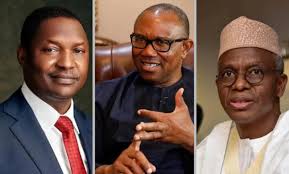
A senior figure in the African Democratic Congress (ADC), Peter Obi, has said he is willing to work with political actors facing corruption allegations, arguing that reform is more likely through engagement than exclusion—a position that is already stirring debate about the boundaries between political pragmatism and ethical accountability.
Speaking during an interview on Magic FM in Aba, Obi addressed concerns about his openness to collaborate with controversial figures, including former Attorney-General of the Federation Abubakar Malami and former Kaduna State governor Nasir El-Rufai, both of whom are currently dealing with legal scrutiny.
His remarks come at a time when public confidence in Nigeria’s anti-corruption framework remains fragile, and political alliances ahead of the next election cycle are beginning to take shape.
Engagement Over Isolation
Obi framed his position as a strategy rooted in influence rather than endorsement. Drawing a biblical analogy, he argued that meaningful reform often requires working directly with those whose conduct is under question.
“When Jesus came, his friends were tax collectors and prostitutes… it was part of what he was trying to change,” Obi said, suggesting that leadership involves guiding individuals toward better conduct rather than distancing from them.
He questioned what he described as selective application of justice, noting that individuals once regarded as credible public officials are now under prosecution.
“Most of them are actually facing persecution, even though yesterday they were considered saints,” he said.
Legal Cases in Focus
The comments come against the backdrop of ongoing investigations involving the two figures he referenced.
Nasir El-Rufai has been arraigned by the Independent Corrupt Practices and Other Related Offences Commission (ICPC) over allegations linked to fraud and money laundering. Separately, Abubakar Malami, alongside members of his family, is facing a 16-count charge brought by the Economic and Financial Crimes Commission (EFCC).
Both men have denied the allegations and pleaded not guilty. The cases are ongoing, and no court has reached a final determination.
A Familiar Dilemma in Nigerian Politics
Obi’s stance reflects a recurring tension in Nigerian politics: whether coalition-building should prioritise electability or ethical distance. Political parties, particularly those outside the ruling establishment, often rely on broad alliances that cut across ideological and reputational lines to remain competitive.
Historically, anti-corruption rhetoric has featured prominently in campaign messaging, but critics argue that post-election alliances frequently dilute those commitments. The perception of “selective justice”—which Obi referenced—has also been a persistent concern, with successive administrations accused by opponents of targeting rivals while shielding allies.
For ordinary Nigerians, this debate is not abstract. Corruption cases—especially those involving high-ranking officials—are closely watched as indicators of whether public institutions can enforce accountability without political interference. When politicians signal willingness to work with individuals under investigation, it can reinforce scepticism about the sincerity of reform efforts.
Political Ambition and Positioning
Obi also used the interview to reaffirm his ambition within the ADC ahead of the next presidential election. He presented himself as the most capable contender within the party, emphasising his record and leadership capacity.
“I’m the most qualified to become ADC candidate… if you check our backgrounds, I believe I’m the most qualified,” he said.
The statement positions him early in what is expected to be a competitive internal process, as opposition parties seek to consolidate ahead of the polls.
What This Means Going Forward
Obi’s comments are likely to generate scrutiny from both supporters and critics. For reform-minded voters, the key question will be whether engagement with embattled figures can coexist with a credible commitment to accountability. For political strategists, the remarks signal a willingness to prioritise coalition-building in a fragmented landscape.
The legal proceedings involving Malami and El-Rufai will also shape how this position is received. If prosecutions advance with strong evidence, public pressure for political distancing may intensify. Conversely, if cases falter or appear politically motivated, Obi’s argument about selective justice could gain traction.
As the election cycle approaches, voters will be watching not just what candidates promise, but the company they keep—and what that reveals about how they intend to govern.